


The White Eyes (白目樂隊)
Kiss Your Eyes
Avant Garden Records
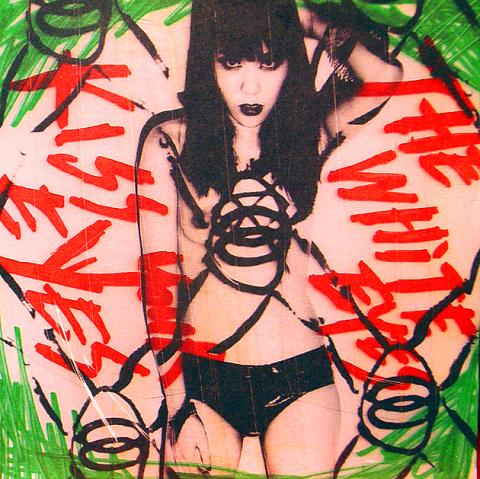
The White Eyes (白目樂隊) have released their first full-length CD, a satisfying garage and synth rock romp that ought to please their ever-growing fan base and attract a few new indie rock enthusiasts.
Both in the band’s live shows and on the 10-track Kiss Your Eyes, the undeniable center of attention is female lead singer Gao Xiao-gao (高小糕).
Gao’s chirpy but sultry vocals, not to mention the wild and provocative outfits she dons on stage, make her the Taiwanese indie scene’s answer to Karen O of the Yeah Yeah Yeahs.
The album, which was recorded in Beijing, builds on the retro-punk guitar sound of the group’s first EP, Get My Body If You Want It. The band adds sonic depth not by turning it up to 11, but rather by bringing in different colors: So Much More Than More (比多更多) swirls with spacey synthesizers and Joy Division-esque drums.
Gao shows her versatility as a singer on this song, and another new wave-ish tune, Love Hurt (愛傷害). With these tracks, her voice is given more space to glide and hang, and she sounds sweet without being cutesy.
In contrast, the title track is full of gothic creepiness, as Gao taunts, moans and yells, leading the band into a grunge frenzy.
Despite Gao’s charisma and the band’s blazingly awesome jam, Hardcore Porn Star is the least sexiest song of the album. The lyrics don’t really go anywhere — she chants the word “porn” a lot — but maybe that emptiness is the point.
A few tracks from the White Eyes’ EP show up again on Kiss Your Eyes. Narcissism Personality Disorder (自戀人格異常), A More Beautiful Life (多美好的人生) and All The Things have been, all for the better.
All in all, this CD is worth checking out for those wondering who’s leading the pack of Taiwan’s newest generation of indie bands. The White Eyes are among a number of groups representing Taiwan’s indie scene at South by Southwest next year.
— David Chen
Anthony Neely (倪安東)
Lesson One (第一課)
HIM
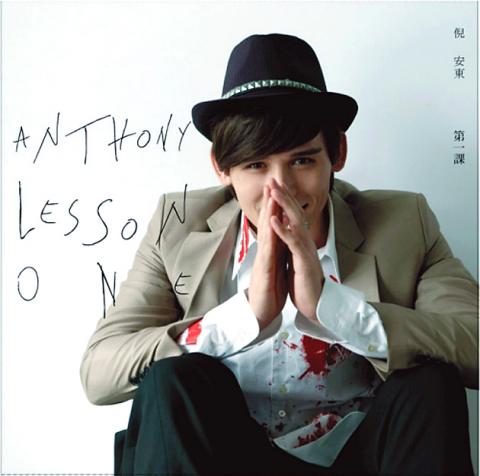
Taiwanese American singer Anthony Neely (倪安東) follows in the footsteps of pan-Pacific icon Fei Hsiang (費翔, also known as Kris Phillips) by “returning to his roots” and pursuing a career in the East. A contestant who made his TV debut on talent show One Million Star (超級星光大道) last year, Neely was quickly snatched up by music label HIM based on his three perfect scores on the show and his heartthrob good looks.
Neely’s debut album, Lesson One (第一課), proves that he might not be just a flash in the Mando-pop pan. With matinee idol charm, emotive vocals and songwriting talent, Neely is one of this year’s most promising newcomers.
Produced by Bing Wang (王治平), the album showcases Neely’s versatility by roaming across a spectrum of rock, folksy pop and Mando-pop ballads. Defying his pretty-boy image, Neely demonstrates a penchant for conveying edgy emotions.
The lead single, Sorry That I Loved You, whose lyrics were written by Neely, is a ruminative gem that grieves love lost. With sparse guitar in the background, Neely achieves an emotional urgency reminiscent of Jeff Buckley. Another highlight is the deliciously catchy The Gentleman (紳士), a rock-meets-pop gem featuring velvety, suave vocals.
Neely displays a knack for delivering anguish-driven rock anthems in Happy Armageddon (末日快樂) and Fed Up (不耐煩), visits the well-trodden path of the Mando-pop ballad on The Little Things (幸福事小) and tackles the dreamy, string-and-piano Nightmares (惡夢) with atmospheric vocals.
The Blower’s Daughter, Neely’s cover of Damien Rice’s song that drew so much attention on One Million Star, is included here as a bonus track. The singer displays an actor’s capacity for conveying a range of moods by repeating the same chorus line with varying emotions.
Although he struggles with Mandarin, Neely’s diligent preparation enabled him to handle the language better than Wang Lee-hom (王力宏). A solid and diverse album, Lesson One firmly establishes Neely as one of Mando-pop’s rising stars.
— Andrew C.C. Huang
Maggie Chiang (江美琪)
The Weight of Love (愛情的重量)
XY Music
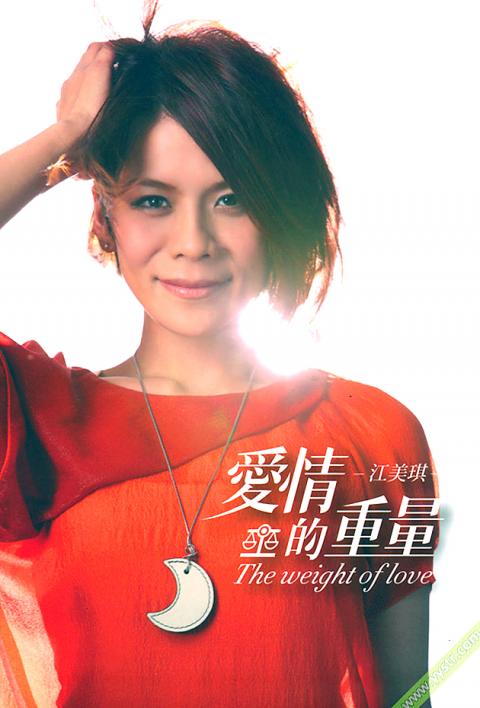
After her contract with the now defunct Virgin Records expired, Mando-pop songstress Maggie Chiang (江美琪) tried out a short-lived relationship with Seed Music before venturing into digital publishing. She reemerges as a songwriter with The Weight of Love (愛情的重量), a new EP that collates three digital singles she previously released through her new label XY Music.
Chiang has been highly acclaimed for her spellbinding delivery of heartbreakers with poetic titles such as Squandering a Lover’s Patience (揮霍愛人的耐性) and Poet of the Night (夜的詩人), and her Virgin phase, which culminated in the poetry-meets-pop concept album A Poem in Lover’s Heart (戀人心中有一首詩).
On this EP, Chiang pushes her love goddess persona further with romantic tunes of differing styles. Having penned the melodies of all three songs, Chiang demonstrates she has enough musical nous to shape her own image.
The title track is a rock-infused gem that deliberates on the responsibilities that love entails. With a clanging guitar in the background, Chiang delivers effervescent vocals that match the song’s light-hearted tone.
With the second track, Under the Moonlight (月光下), Chiang does what she does best: delivery of an entrancing, emotional ballad. The instant classic reminisces about a past love under the moonlight, with Chiang’s tour-de-force vocals carrying what is one of this year’s best Mando-pop songs. Her crystalline, emotionally riveting vocal timbre is at its spine-tingling best when showcased in an almost acoustic background, as it is for this track.
With the third track, You Do Love Me (你是愛我的), Chiang switches gear to a refreshing joyousness. In this chirpy number, she blithely affirms her happiness in romance with elated vocals backed by breezy guitar chords.
Long identified as a ballad singer, Chiang attempts to prove her versatility in this EP by tackling more up-tempo tracks. While she won’t become the next dance diva or howling rocker, she successfully proves that she can write her own moving love tales.
— Andrew C.C. Huang
Gary Chaw (曹格)
Back in Control (曹之在我)
BMA Seed
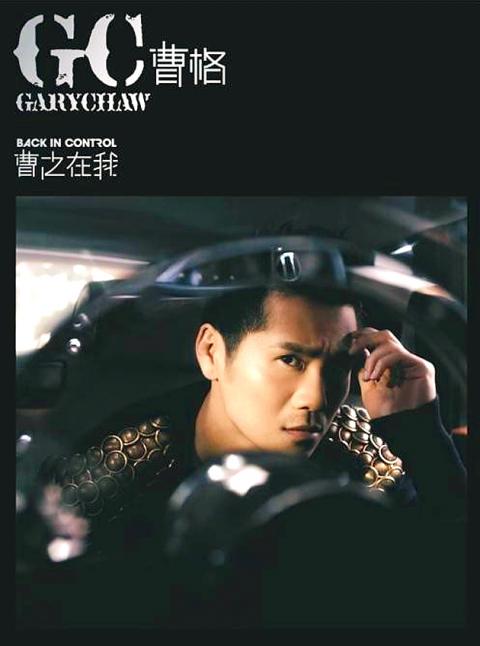
Despite doubts that singer/songwriter Gary Chaw (曹格) was past his prime following a series of scandals over the past few years, the bad boy’s new album proves he has a bona fide talent that can survive his fall from grace.
Back in Control (曹之在我), Chaw’s fifth album, could have easily been a contrived public apology. Instead, he channels his contrition into musical soul-searching and has turned out 10 impassioned songs chock-full of contemplation.
In the opening track, Grand Daddy (爺爺), Chaw delivers, in a style redolent of Jay Chou’s (周杰倫) East Wind Hill (東風坡), a tribute to his grandfather.
Chaw’s persona as a lady’s man shows through in highlights such as Oh Love (喔愛) and I Love You Too (我也愛你). These old-school love songs feature virtuosic R ’n’ B vocals with his idiosyncratic off-key note coming in at the end of the lines.
The temperature climbs a few degrees when Chaw turns flirtatious in tracks such as Big Woman (大女人) and Champagne Time (香檳時光), Barry-White-esque come-ons in which he summons up the type of sultry vocals that are suitable for romantic get-togethers.
Not satisfied with simply being apologetic or amorous, Chaw tackles rock in the explosive manifesto Sky Shakes and Earth Trembles (驚天動地), and sinks his teeth into reggae in the deliciously naughty Why Why.
Although he may be a naughty celebrity, at least you can’t call him bland. Let’s hope he rediscovers his modesty and continues to deliver the fervid love songs that once endeared him to so many of his fans.— Andrew C.C. Huang


Taiwan’s English education system is being pulled apart by three opposing forces. Bilingual Nation 2030 pulls students toward English and global communication. Artificial Intelligence (AI) readiness pulls them toward digital judgment, verification and AI-mediated work. But Taiwan’s old exam culture pulls them back toward memorization, grammar drills, timed reading and correct answers. If the education system keeps using old exams to define success, it risks producing graduates who are neither genuinely bilingual nor genuinely AI-ready, but trained for tasks machines can already perform. The first force is Bilingual Nation 2030. Launched in 2018, the policy aimed to “help Taiwan’s workforce connect

“Taiwan’s Opposition Leader Comes to US With a Message Straight Out of Beijing” read a May 31 headline in the Wall Street Journal. Top US administration officials and members of Congress almost certainly read the WSJ, and if there was a bullet point takeaway that people in Washington should absorb ahead of Chinese Nationalist Party (KMT) Chair Cheng Li-wun’s (鄭麗文) arrival in DC on June 9, that headline is it. The last few columns have discussed this very topic, and the timing is not coincidental. While those top officials likely do not read the Taipei Times, judging by the number

With weighty, anxiety-inducing geopolitical topics dominating the headlines, checking in on the wild and weird state of local politics can take some of the edge off. This November’s elections will determine who will be in charge of fixing potholes in your neighborhood, not the potholes in Taiwan’s complicated geopolitical space. Recently, after an online interview with a Taipei-based journalist, I commented that Taipei journalists never go further than the MRT can take them. He laughed and agreed. Naturally, the Taipei mayoral race is eating up much of the press attention. TAIPEI CITY Democratic Progressive Party (DPP) candidate Puma Shen (沈伯洋) has
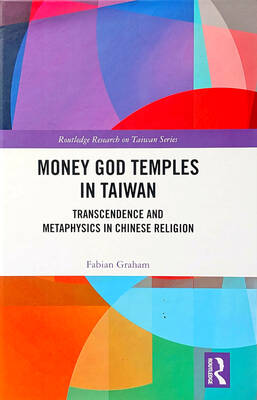
As someone who normally steers clear of books with “transcendence” or “metaphysics” in their subtitles, this reviewer — a casual observer of local belief systems since the 1990s — found Fabian Graham’s Money God Temples in Taiwan a challenging read. Those who’ve only dipped their toes into temple culture will likely need to parse several sections with special care if they’re to keep up with the author, a British ethnographic researcher whose previous books have investigated religious practices among ethnic Chinese in Southeast Asia. This scholarly volume examines a facet of Taiwan’s religious landscape that didn’t exist a century ago, and


 RSS
RSS