


Until the end of October, visitors to Suho Paper Museum (樹火紀念紙博物館) can fly back to their childhood dreams on the wings of paper planes. The museum is marking its 15th anniversary with The Season When Dreams Take Off (夢想起飛的季節), an homage to the humble plaything that includes an exhibit featuring work by 15 artists, performances by indie singer-songwriters and hands-on classes for children.
The museum opened in 1995 to advocate environmental conservation and cultural awareness by showcasing paper as more than just a disposable material. It was the brainchild of Chen Suho (陳樹火), the founder of Chang Chuen Cotton Paper (長春綿紙), but before Chen could see his plan come to fruition he was killed in an airplane crash. The Suho Memorial Paper Culture Foundation (樹火紀念紙文化基金會) was established to carry on his legacy.
“Our 15th anniversary is an important milestone for us,” says Daniel Chou (周耀俊), Suho Paper Museum’s spokesman. “We want to look at what we’ve accomplished, as well as the dreams and expectations we have for the future, which we hope will take off like paper planes.”
Artists and musicians were asked to put their own spin on
the theme.
“It’s very relevant to me because I’m practical, but I keep working on doing what I like and creating music, though anywhere you’ll face challenges,” says Yujun Wang (王榆鈞), a songwriter who will perform at Suho next month.
Like other exhibits at Suho this year, The Season When Dreams Take Off, which runs through Oct. 23, takes its inspiration from the intersection of everyday life and art. Suho asked artists, who have all contributed to the museum before, to incorporate recycled paper and other environmentally friendly materials into their work.
Items in the art exhibit range from an intricate corset folded
out of old maps by costume designer Li Yu-sheng (李育昇) to a
delicate, lacelike angel cut and assembled from layers of paper by Liu Yunn-jwu (劉韻竹).
Other exhibits highlight the beauty of handmade paper, including Japanese artist Kobayashi Junko’s installation, which features 36 paper planes made from dyed washi paper and shaped like sparrows in mid-flight. The piece represents the diversity of personalities and viewpoints among the artists and staffers who have contributed to the museum since its inception.
Design duo Owen Chuang (莊瑞豪) and Cloud Lu (盧袗雲) of Biaugust (兩個八月) are represented with postcards shaped like the silhouette of a paper airplane. The two were inspired by the notes schoolchildren send darting to each other across classrooms. Biaugust’s cards, however, are meant to remind grown-ups to put their busy lives on pause for a few moments and get back in touch with friends and relatives.
Cassie Lin’s (林文貞) quirky papier-mache blimp looks as light as air yet ponderous at the same time, with acrylic paint applied to highlight the rough texture of the paper pulp. Rose blossoms and petals, also made of papier-mache, are scattered around the blimp, emphasizing its resemblance to a fat flower bud.
The Season When Dreams Take Off also pays tribute to the most dedicated creators of paper planes: children. One wall is filled with 40 paper planes colored and folded by students from Da-Li Elementary School (大里國小) in Yilan County. Along with Suho’s regular papermaking lessons, special classes will teach children how to fold cardboard pinwheels or build colorful mobiles made out of airy rice paper pith. A session this Saturday will be taught by Cho Chih-hsien (卓志賢), a Miaoli schoolteacher who draws on engineering concepts to make paper planes that fly higher and further. The greatest distance Cho has achieved with one of his folded aircraft, several of which are featured in the exhibit, is 52m, according to the museum.
The indie singer-songwriter performances start tomorrow with acoustic musician Koumis (蓓麗). Renowned guitarist Dong Yun-chang (董運昌) and mandolin player Chen Ya-hui perform on Aug. 21. Wang takes the stage on Sept. 11. All music performances will take place outdoors on Suho’s roof, under the shelter of a large, cocoon-shaped structure made entirely out of bamboo latticework by conceptual artists Wang Yangenn (王揚恩) and Hsiao Yu-chin (蕭有志).



Taiwan’s English education system is being pulled apart by three opposing forces. Bilingual Nation 2030 pulls students toward English and global communication. Artificial Intelligence (AI) readiness pulls them toward digital judgment, verification and AI-mediated work. But Taiwan’s old exam culture pulls them back toward memorization, grammar drills, timed reading and correct answers. If the education system keeps using old exams to define success, it risks producing graduates who are neither genuinely bilingual nor genuinely AI-ready, but trained for tasks machines can already perform. The first force is Bilingual Nation 2030. Launched in 2018, the policy aimed to “help Taiwan’s workforce connect
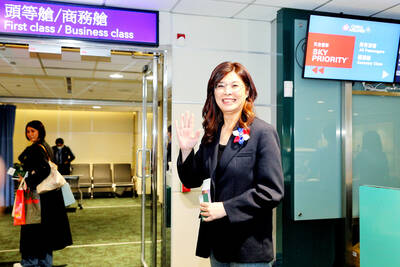
“Taiwan’s Opposition Leader Comes to US With a Message Straight Out of Beijing” read a May 31 headline in the Wall Street Journal. Top US administration officials and members of Congress almost certainly read the WSJ, and if there was a bullet point takeaway that people in Washington should absorb ahead of Chinese Nationalist Party (KMT) Chair Cheng Li-wun’s (鄭麗文) arrival in DC on June 9, that headline is it. The last few columns have discussed this very topic, and the timing is not coincidental. While those top officials likely do not read the Taipei Times, judging by the number
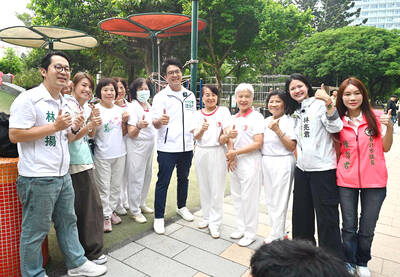
With weighty, anxiety-inducing geopolitical topics dominating the headlines, checking in on the wild and weird state of local politics can take some of the edge off. This November’s elections will determine who will be in charge of fixing potholes in your neighborhood, not the potholes in Taiwan’s complicated geopolitical space. Recently, after an online interview with a Taipei-based journalist, I commented that Taipei journalists never go further than the MRT can take them. He laughed and agreed. Naturally, the Taipei mayoral race is eating up much of the press attention. TAIPEI CITY Democratic Progressive Party (DPP) candidate Puma Shen (沈伯洋) has
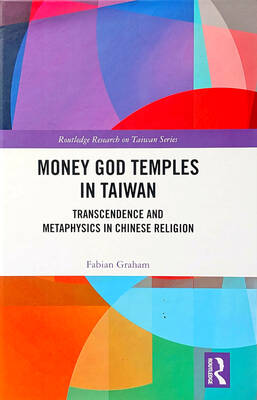
As someone who normally steers clear of books with “transcendence” or “metaphysics” in their subtitles, this reviewer — a casual observer of local belief systems since the 1990s — found Fabian Graham’s Money God Temples in Taiwan a challenging read. Those who’ve only dipped their toes into temple culture will likely need to parse several sections with special care if they’re to keep up with the author, a British ethnographic researcher whose previous books have investigated religious practices among ethnic Chinese in Southeast Asia. This scholarly volume examines a facet of Taiwan’s religious landscape that didn’t exist a century ago, and



 RSS
RSS