


When Teron Beal, a songwriter and aspiring actor in Manhattan, was looking to drop weight quickly for a photo shoot, he didn't double up on gym visits, gulp metabolic boosting pills or limit his diet to leafy greens and lean protein. Instead, he took a more drastic approach: He tried the "master cleanse," a fast that requires subsisting for 10 or more days solely on an elixir of fresh-squeezed lemon juice, cayenne pepper, maple syrup and water.
"I had only three weeks and I needed the difference to be noticeable," said Beal, adding that he lost nearly 4.5kg during his 12-day fast in July. "The first few days were horrible, but by the fifth day I woke up and looked in the mirror and saw two ab muscles that had eluded me for years. I was grumpy no longer."
While popular diets and fasts come and go, master cleanse remains a perennial favorite, a kind of folk regimen that owes its popularity to word of mouth and the Internet. Created in the 1940s by a nutrition guru, Stanley Burroughs, to treat ulcers and other internal ailments, the fast enjoyed a vogue in the late 1970s after the publication of his book The Master Cleanser. Its fans then were health-conscious types, interested in purging their bodies of impurities and toxins like pesticides and food additives.

PHOTO: NY TIMES NEWS SERVICE
But in recent years master cleanse has enjoyed yet another vogue among people seeking to shed kilograms in a short time. Celebrities, of course, are in the vanguard. On Oprah Winfrey's show, the singer and actress Beyonce Knowles announced that she had lost 9kg on the fast to prepare for her starring role in the new film Dreamgirls.
Robin Quivers, Howard Stern's long-suffering sidekick, told People magazine that she did the fast on three separate occasions in 2004 and shrunk to 67.7kg from a peak of 98.8kg. (She heard about it from the magician David Blaine, no stranger to challenging his body.)
And on a recent episode of 30 Rock, the NBC comedy, Tina Fey's character is asked: "What are you doing? South Beach? Master cleanse?"
She did look skinnier.
The Internet teems with testimonials to the cleanse, also known as the lemonade diet, claiming that it fights disease, clears the mind as well as acne, and increases energy. Bloggers chronicle their daily fasting. Master cleanse video diaries can be found on YouTube, and a cottage industry has developed with various companies peddling cleansing kits including all ingredients for the beverage except lemons.
Never mind that most nutrition and diet experts advise against multi-day fasting.
"I cannot believe how this thing has had a total revival," said Joy Bauer, a nutritionist and the author of The 90/10 Weight-Loss Plan. "People want a quick fix, and they want to be thin so badly that they're vulnerable and open to almost anything."
Bauer estimated that fasters who drink six glasses of the lemony potion a day — the low end of the recommended amount — are consuming about 650 calories, far less than the 1,600-plus calories the average woman needs to maintain her weight or the roughly 2,400 calories a man requires.
"Of course you're going to lose weight," she said. "You're starving yourself." Seldom do the kilograms stay off, she added, and people have a tendency to binge once they begin eating again.
Still, many are willing to disregard the word of nutritionists, seduced by the notion that the only things standing between them and a slimmer body are a citrus-flavored drink and several days of discomfort.
Last week at Amoy's Beauty, the hair salon of Amoy Pitters in the East Village, a brunette complained about her holiday weight gain. "Girl," Pitters said, "you need to do master cleanse."
Pitters, who first tried the fast four years ago at the prompting of one of her clients, Kacy Duke, a personal trainer to several celebrities, said she was skeptical at first. But 10 days and dozens of lemons later, she was 3.6kg lighter, and elated. "I fit into my ultraskinny jeans, and I couldn't believe it," Pitters, a petite clotheshorse, said. "I was so proud of myself for sticking with it, because it wasn't easy."
Pitters estimated that 85 percent of her more than 200 clients have tried the cleanse after hearing her rave. She uses it after the holiday season and before trips to bikini-friendly locales. "I know it works," she said. "And you'd be surprised how many models I know who do it, too."
Kristina Wong, a performance artist in Los Angeles, lasted on the fast for only five days, but she also saw results. "I looked great," said Wong, who uploaded a video diary of her fasting experience on YouTube in September. "No more stomach rolls. I was such a skinny mini."
Duke, who puts herself on the lemonade diet four times a year for a week to 12 days, pointed to other supposed benefits. "My eyes are clearer, my skin has a different glow and some of my best running times have been while I'm on master cleanse," she said. She introduced it to her client Denzel Washington and "he loved it," she said.
The enduring popularity of the cleanse may have as much to do with its instant results as with the drink's relatively inoffensive taste (think lemon Gatorade with a spicy kick) and simple recipe: 2 tablespoons lemon juice, 2 tablespoons Grade-B maple syrup, 1/10 teaspoon cayenne pepper and 236ml of spring or purified water.
According to The Master Cleanser, Burroughs' book, the lemon acts as a purifier and provides potassium, the cayenne pepper adds B and C vitamins and aids in circulation, and maple syrup, a sugar, provides energy and minerals. Burroughs suggested that fasters drink anywhere from six to 12 glasses of the stuff a day as well as a mixture of water and sea salt in the morning and an herbal laxative tea in the evening, to help aid in waste removal.
On message boards at Web sites like CureZone.com, writers warn that it's best to stay close to a restroom. "One day it was just two hours of me running back and forth to the bathroom," Wong said.
All that time in the loo can adversely affect one's social life. Many fasters also say so long to the business lunch, the after-work cocktail and dinner at the latest restaurant, for fear of temptation.
Samuel Klein, the director of the Center for Human Nutrition at the medical school of Washington University in St. Louis, is leery of master-cleanse-like regimens because there is no data that prove they provide any medical benefit and no evidence that fasting helps rid the body of toxins, which happens naturally, he said.
While fasting for a few days is not dangerous, Klein said, "Fasting for too long can deplete muscle tissue, including your heart muscle, and it can reduce the size and functioning of organs like the kidney and liver."
He is just one of many nutritionists who caution that fasting can be counterproductive. Some say it can even slow down the metabolism, making it even more difficult to lose weight in the future.
Try telling that to the converts. Peter Glickman, the author of Lose Weight, Have More Energy and Be Happier in 10 Days, is among them. Glickman, who at 188cm once weighed more than 104kg, had already made over his lifestyle, going on a vegan diet and losing 19kg, when he came across the fast three years ago online. He lost 10kg in 20 days, he said. He sold his software company and went into the business of promoting the diet.
It has proved lucrative. On his Web site, themastercleanse.com, he sells Burroughs' original book (US$8.95), his updated version and an accompanying CD (US$31.95), and a master cleanse kit (US$49.95; just add lemons). He wouldn't give specifics, but he said his book is in its fourth printing. "I just put in an order for 10,000 more the other day," he said.
Adaora Udoji, an anchor at Court TV, grew up watching her father use the fast. "We all just thought he was a weirdo," she said.
But after quitting smoking last year, she fasted for 14 days, and now she is a believer. "It's almost like a religious experience," she said. "The first few days you're obsessing about food and by the fourth or fifth day, you get this inexplicable burst of energy and you feel like you can run laps around the world."
Bauer, the nutritionist, is not convinced. "I really think this chanting about people feeling so invigorated by this really comes from the happiness that people feel about losing weight," she said.
Running laps was the furthest thing from Wong's mind during her fast. She found herself staring longingly at takeout menus and scouring food blogs. "I drive a car that runs on vegetable oil so it smells kind of like a fast-food restaurant, and there were times when I was so hungry I just wanted to pull over and put my mouth around the exhaust pipe," she said.
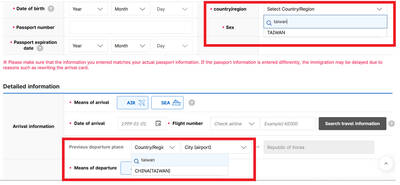
Jason Han says that the e-arrival card spat between South Korea and Taiwan shows that Seoul is signaling adherence to its “one-China” policy, while Taiwan’s response reflects a reciprocal approach. “Attempts to alter the diplomatic status quo often lead to tit-for-tat responses,” the analyst on international affairs tells the Taipei Times, adding that Taiwan may become more cautious in its dealings with South Korea going forward. Taipei has called on Seoul to correct its electronic entry system, which currently lists Taiwan as “China (Taiwan),” warning that reciprocal measures may follow if the wording is not changed before March 31. As of yesterday,

The Portuguese never established a presence on Taiwan, but they must have traded with the indigenous people because later traders reported that the locals referred to parts of deer using Portuguese words. What goods might the Portuguese have offered their indigenous trade partners? Among them must have been slaves, for the Portuguese dealt slaves across Asia. Though we often speak of “Portuguese” ships, imagining them as picturesque vessels manned by pointy-bearded Iberians, in Asia Portuguese shipping between local destinations was crewed by Asian seamen, with a handful of white or Eurasian officers. “Even the great carracks of 1,000-2,000 tons which plied

It’s only half the size of its more famous counterpart in Taipei, but the Botanical Garden of the National Museum of Nature Science (NMNS, 國立自然科學博物館植物園) is surely one of urban Taiwan’s most inviting green spaces. Covering 4.5 hectares immediately northeast of the government-run museum in Taichung’s North District (北區), the garden features more than 700 plant species, many of which are labeled in Chinese but not in English. Since its establishment in 1999, the site’s managers have done their best to replicate a number of native ecosystems, dividing the site into eight areas. The name of the Coral Atoll Zone might
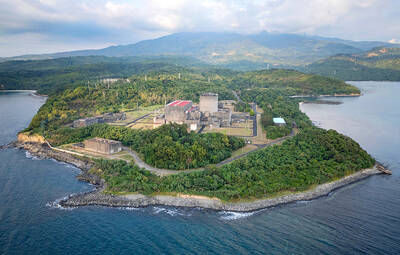
Nuclear power is getting a second look in Southeast Asia as countries prepare to meet surging energy demand as they vie for artificial intelligence-focused data centers. Several Southeast Asian nations are reviving mothballed nuclear plans and setting ambitious targets and nearly half of the region could, if they pursue those goals, have nuclear energy in the 2030s. Even countries without current plans have signaled their interest. Southeast Asia has never produced a single watt of nuclear energy, despite long-held atomic ambitions. But that may soon change as pressure mounts to reduce emissions that contribute to climate change, while meeting growing power needs. The


 RSS
RSS