


For the past 14 months local epicureans have been privy to the existence of a little known French restaurant, La Petite Cuisine, part owned and run by one of Singapore's top chefs, Justin Quek
After almost one decade at the helm of Les Amis Group, which has opened internationally acclaimed restaurants in Singapore, and having cooked for a catalogue of dignitaries at places like Le Gavroche, it is surprising that a chef of such high caliber -- a member of the Confrerie de la Chaine des Rotisseurs -- would open a restaurant in Taipei without much of a media frenzy.
This place is understated and elegant. The decor is luxurious without being brash and the service is impeccable. The waiters are well-trained and Vincent Tan (
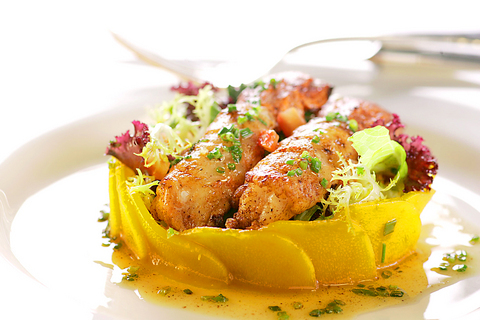
PHOTO COURTESY OF LA PETITE CUISINE
The intimate basement room is superior to the upstairs room, which has a strange flower mural, a fairly noisy air onditioning system and Henry Kissinger, sat next to Quek [the chef], peering in on the room from a photograph on the wall.
Elegance, good service and fine food do not come cheap. The wine list is fairly priced with Jacquesson and Fils, Brut Cuvee No. 729 at NT$2,700 a bottle, and there is a range of set menus from NT$750 up to NT$3,300.
The difficulty in choosing from the menu comes from the tantalizing dishes on offer; warm salad of pan-fried foie gras and fricassee of mushroom with raspberry vinegar, ravioli of guinea fowl with foie gras and black trumpet mushroom.
A la carte choices include roasted langoustines with vegetables and herbs at NT$1,600. The smoked escalope of chicken with grilled persimmon salad was refreshing. Made with frisee, radicchio, rocket and segments of grapefruit, the slightly bitter flavor of the salad leaves and the sour grapefruit juxtaposed with the sweet persimmon and delicately smoked chicken.
A slice of rich tarte aux pomme with a drizzle of raspberry sauce and a dollop of homemade vanilla ice cream was a fine end to a haute cuisine lunch.

Taiwan’s English education system is being pulled apart by three opposing forces. Bilingual Nation 2030 pulls students toward English and global communication. Artificial Intelligence (AI) readiness pulls them toward digital judgment, verification and AI-mediated work. But Taiwan’s old exam culture pulls them back toward memorization, grammar drills, timed reading and correct answers. If the education system keeps using old exams to define success, it risks producing graduates who are neither genuinely bilingual nor genuinely AI-ready, but trained for tasks machines can already perform. The first force is Bilingual Nation 2030. Launched in 2018, the policy aimed to “help Taiwan’s workforce connect

“Taiwan’s Opposition Leader Comes to US With a Message Straight Out of Beijing” read a May 31 headline in the Wall Street Journal. Top US administration officials and members of Congress almost certainly read the WSJ, and if there was a bullet point takeaway that people in Washington should absorb ahead of Chinese Nationalist Party (KMT) Chair Cheng Li-wun’s (鄭麗文) arrival in DC on June 9, that headline is it. The last few columns have discussed this very topic, and the timing is not coincidental. While those top officials likely do not read the Taipei Times, judging by the number
With weighty, anxiety-inducing geopolitical topics dominating the headlines, checking in on the wild and weird state of local politics can take some of the edge off. This November’s elections will determine who will be in charge of fixing potholes in your neighborhood, not the potholes in Taiwan’s complicated geopolitical space. Recently, after an online interview with a Taipei-based journalist, I commented that Taipei journalists never go further than the MRT can take them. He laughed and agreed. Naturally, the Taipei mayoral race is eating up much of the press attention. TAIPEI CITY Democratic Progressive Party (DPP) candidate Puma Shen (沈伯洋) has
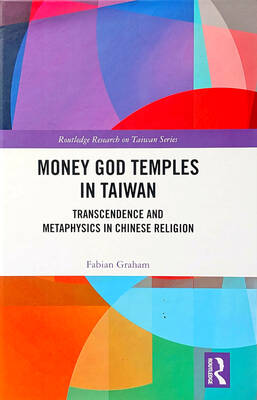
As someone who normally steers clear of books with “transcendence” or “metaphysics” in their subtitles, this reviewer — a casual observer of local belief systems since the 1990s — found Fabian Graham’s Money God Temples in Taiwan a challenging read. Those who’ve only dipped their toes into temple culture will likely need to parse several sections with special care if they’re to keep up with the author, a British ethnographic researcher whose previous books have investigated religious practices among ethnic Chinese in Southeast Asia. This scholarly volume examines a facet of Taiwan’s religious landscape that didn’t exist a century ago, and


 RSS
RSS