


With a background in chemical engineering and experience working for a patent company, Lee Kuei-shien (李魁賢) seems an odd candidate for the top position of a major art foundation, until he mentions his leisure pursuit: writing poetry. An established poet and newly elected chairperson of the National Culture and Arts Foundation (NCAF), Lee considers himself to be in an opportune position to stimulate the Taiwanese literary scene.
"I participate in both artist groups and social groups where I am involved with issues concerning arts and culture in Taiwan. I find myself not only a poet but also somewhat of a spokesperson and representative of the point of view of an artist. When working with government bodies on cultural policies, I am able to represent the point of view of an artist as well as a administrator," Lee said.
In 2000 Lee was invited by the NCAF to sit on the board of directors, where he spent five years reviewing grant applications, judging at awards ceremonies, and evaluating existing policies. Then, in January of this year, he was elected chairman for the next three-year term, to replace outgoing chairwoman Lin Mun-lee (林曼麗).
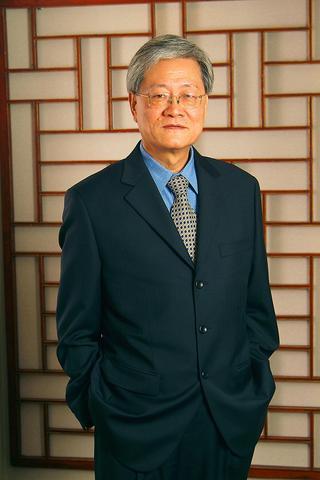
PHOTO COURTESY OF NATIONAL CULTURE AND ARTS FOUNDATION
His own artistic endeavors may be a part-time hobby, but Lee's writing has received generous praise from the public and critics alike. He has published several volumes of works, including critical essays, poetry, and translations of modern European poetry into Chinese.
The history of contemporary Chinese literature in Taiwan is short and complicated, according to Lee. He considers the end of the Japanese occupation in 1945 to be the beginning of local literature. When the official language was switched from Japanese to Chinese, under the Chinese Nationalist Party (KMT), the result was a new generation of authors writing in Mandarin.
In terms of literary development, 60 years is a short period of time. While the first half of this era has produced a small but wide selection of written materials translated into many languages, the second half has not been as fruitful.
"In one way I am proud of the development of literature in Taiwan, but I do not feel personally satisfied with this result. Given the improvement of our economy over the last two decades, we should be producing more literature."
The decline, he feels, is in part a worldwide phenomenon that sees the younger generation preferring Internet Web sites to printed material. While the Internet has provided a new outlet for young authors looking to get published, it is not necessarily viewed with the same amount of respect.
"The problem with this trend is that it [Web publishing] is not a sustainable and authentic recognition of their work. After their work is exposed on the Web, they still need to get it published [in print] because that is still viewed as the traditional and official form of recognition as an author."
Establishing credit as an author in literary circles in Taiwan is difficult enough, not to mention the challenge of generating any income or recognition from Chinese communities abroad, he added. Apart from a few writers, such as San Mao (三毛), Xi Mu-rong (席慕容) and Cyong Yao (瓊瑤), few others have gained much fame or fortune from their works.
To help foster the talents of new writers and strengthen the literary scene, the NCAF awards annual creative writing, research, and publication grants. Two years ago it launched a test project specifically designed for novel writing. The project was designed on the premise that in order to produce a novel, an author needs to immerse themselves in their work. Each year four recipients receive NT$500,000, which enables them to take leave or quit their jobs and still be able to cover basic needs. In turn, the writer has two years to produce a novel, which the NCAF will then help them get published.
So far, response from the public has been positive, with a total of eight recipients. What has impressed the foundation more, however, is the interest expressed from the corporate side. Publishing companies and the Taipei City Government have established similar grants to encourage novel writing.
Lee's next project is to introduce exchanges similar to the residency programs available to Taiwanese visual artists, in which an artist can spend up to a year in a foreign country. More specifically, he would like to work with international government offices in Taiwan on funding foreign translators to come and work with writers on translating their work. The project, he feels, would be of mutual benefit to both countries.
"Having translators come to work here provides them with a cultural background, giving them more insight into the piece they are translating. It would also help to bring more Taiwanese literature into the international community."

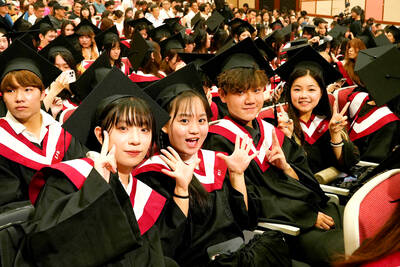
Taiwan’s English education system is being pulled apart by three opposing forces. Bilingual Nation 2030 pulls students toward English and global communication. Artificial Intelligence (AI) readiness pulls them toward digital judgment, verification and AI-mediated work. But Taiwan’s old exam culture pulls them back toward memorization, grammar drills, timed reading and correct answers. If the education system keeps using old exams to define success, it risks producing graduates who are neither genuinely bilingual nor genuinely AI-ready, but trained for tasks machines can already perform. The first force is Bilingual Nation 2030. Launched in 2018, the policy aimed to “help Taiwan’s workforce connect

“Taiwan’s Opposition Leader Comes to US With a Message Straight Out of Beijing” read a May 31 headline in the Wall Street Journal. Top US administration officials and members of Congress almost certainly read the WSJ, and if there was a bullet point takeaway that people in Washington should absorb ahead of Chinese Nationalist Party (KMT) Chair Cheng Li-wun’s (鄭麗文) arrival in DC on June 9, that headline is it. The last few columns have discussed this very topic, and the timing is not coincidental. While those top officials likely do not read the Taipei Times, judging by the number
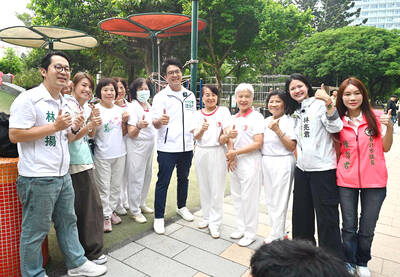
With weighty, anxiety-inducing geopolitical topics dominating the headlines, checking in on the wild and weird state of local politics can take some of the edge off. This November’s elections will determine who will be in charge of fixing potholes in your neighborhood, not the potholes in Taiwan’s complicated geopolitical space. Recently, after an online interview with a Taipei-based journalist, I commented that Taipei journalists never go further than the MRT can take them. He laughed and agreed. Naturally, the Taipei mayoral race is eating up much of the press attention. TAIPEI CITY Democratic Progressive Party (DPP) candidate Puma Shen (沈伯洋) has
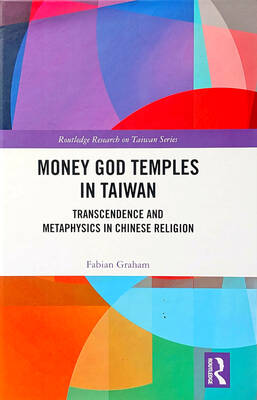
As someone who normally steers clear of books with “transcendence” or “metaphysics” in their subtitles, this reviewer — a casual observer of local belief systems since the 1990s — found Fabian Graham’s Money God Temples in Taiwan a challenging read. Those who’ve only dipped their toes into temple culture will likely need to parse several sections with special care if they’re to keep up with the author, a British ethnographic researcher whose previous books have investigated religious practices among ethnic Chinese in Southeast Asia. This scholarly volume examines a facet of Taiwan’s religious landscape that didn’t exist a century ago, and


 RSS
RSS