


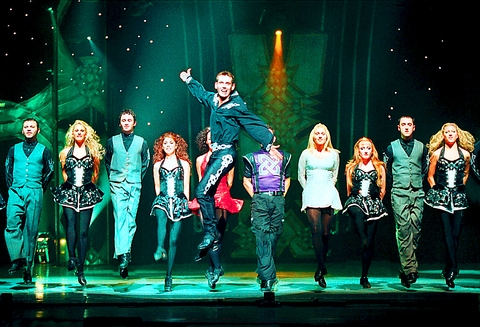
Unparalleled in ticket sales and extravagance, Michael Flatley's Lord of the Dance may not have introduced contemporary Irish dance to the international arena, but images of men in black stretch-plants performing a Celtic-infused tap dance are embedded in the memories of millions -- whether they have seen the show or not.
Lord of the Dance made a strong impression in Taiwan last year with two visits to the island in January and November. For those who missed it the first two times or just can't get enough, the production is back with a cast of new and familiar faces, and they are booked to perform in eight cities around the country.
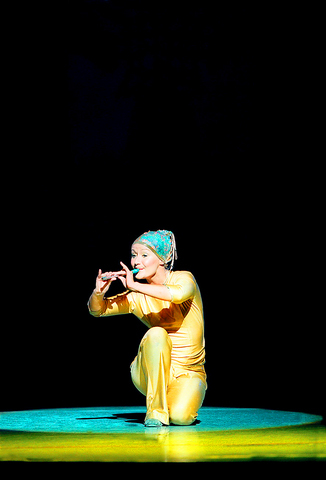
This year Desmond Bailey will reign as lord of the fourth troupe, leading 40 dancers on their first trip to Taiwan. The new company was recently formed to meet increasing demands for the show in Asia and Africa. Bailey will also be joined by Helen Egan who, on her third trip to Taiwan, remains in her famed role as Spirit.
PHOTOS COURTESY OF KHAM ARTS
Barely six months since their last visit, there is no shortage of enthusiasm in Taiwan, where tickets for the Taipei and Kaohsiung shows are selling quickly. There is even a loyal fan club that maintains a Chinese Web site dedicated to the man behind the show. The former lead dancer of Riverdance, Michael Flatley moved on to write, choreograph and produce his own dance sensation.
While Bill Whelan's Riverdance is often considered the more authentic representation of traditional Irish dancing, Flatley's Lord of the Dance can be credited for turning it into a flashy spectacle equipped with pyrotechnics. Regardless of which is more true to its Celtic roots, both have simple storylines energized by quick, aggressive movements.
Each show requires 35-crew members and 35 locally hired individuals to construct the set. At home, in Ireland, performances use more than 100km of cable to produce the 3,000 amps of power necessary for each production.
PHOTOS COURTESY OF KHAM ARTS
Having pre-examined the location for all productions staged in Taiwan, a member of the crew said the stages are about the same in length as those in Europe but smaller in depth. The set design and same amount of equipment will be used at each venue, but for some shows it will be modified -- mostly placing pieces closer together.
During a short preview at the Taipei International Convention Center on Wednesday, it appeared as if the dancers were slightly squished, which obstructed their movement on stage.
A more recent form of criticism has come from accusations suggesting that the troupe uses a tapping soundtrack during their performances. When asked about this, Bailey replied that yes there is a soundtrack to the entire show but that it never gets used during a live show.
"Everything we do up here is real, all the sounds on the stage are live," he said.
The show opened in Taipei on Wednesday and will continue until Sunday before making its way to Taichung. A complete list of tour dates and venues is available at www.lordofthedance.com (in English) or www.kham.com.tw (in Chinese).
Performance notes:
What: Lord of the Dance
Where: Taipei International Convention Center at 1 Xinyi Rd, Sec 5, Taipei (
When: Today and tomorrow at 7:30pm, plus a matinee tomorrow at 2:30pm.
Tickets: NT$800 to NT$4,800 available on-line at www.kham.com.tw.
Telephone: (07) 740 1526
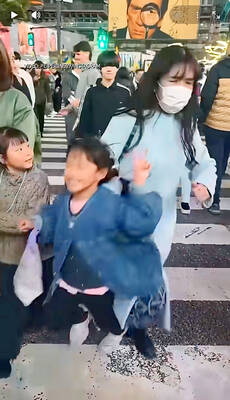
It starts out as a heartwarming clip. A young girl, clearly delighted to be in Tokyo, beams as she makes a peace sign to the camera. Seconds later, she is shoved to the ground from behind by a woman wearing a surgical mask. The assailant doesn’t skip a beat, striding out of shot of the clip filmed by the girl’s mother. This was no accidental clash of shoulders in a crowded place, but one of the most visible examples of a spate of butsukari otoko — “bumping man” — shoving incidents in Japan that experts attribute to a combination of gender

The race for New Taipei City mayor is being keenly watched, and now with the nomination of former deputy mayor of Taipei Hammer Lee (李四川) as the Chinese Nationalist Party’s (KMT) candidate, the battle lines are drawn. All polling data on the tight race mentioned in this column is from the March 12 Formosa poll. On Christmas Day 2010, Taipei County merged into one mega-metropolis of four million people, making it the nation’s largest city. The same day, the winner of the mayoral race, Eric Chu (朱立倫) of the Chinese Nationalist Party (KMT), took office and insisted on the current
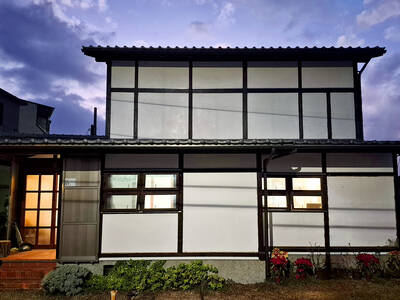
When my friend invited me to take a tour of a wooden house hand-built by a Pingtung County resident, my curiosity was instantly piqued and I readily agreed to join him. If it was built by a single person, it would surely be quite small. If it was made of wood, it would surely be cramped, dingy and mildewy. If it was designed by an amateur, it would surely be irregular in shape, perhaps cobbled together from whatever material was easily available. I was wrong on all counts. As we drove up to the house in Fangliao Township (枋寮鄉), I was surprised
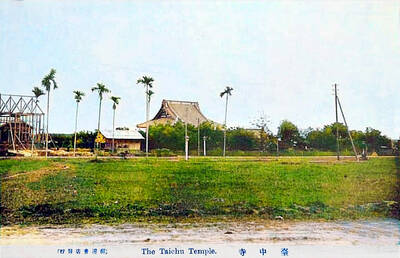
March 16 to March 22 Hidden for decades behind junk-filled metal shacks, trees and overgrowth, a small domed structure bearing a Buddhist swastika resurfaced last June in a Taichung alley. It was soon identified as a remnant of the 122-year-old Gokokuzan Taichuu-ji (Taichung Temple, 護國山台中寺), which was thought to have been demolished in the 1980s. In addition, a stone stele dedicated to monk Hoshu Ono, who served as abbot from 1914 to 1930, was discovered in the detritus. The temple was established in 1903 as the local center for the Soto school


 RSS
RSS