


Authoritarian Xi’s paranoia
On May 7, two former Chinese defense ministers and members of the Chinese Communist Party’s (CCP) Central Military Commission (CMC) — Wei Fenghe (魏鳳和) and Li Shangfu (李尚福) — were sentenced to death with a two-year “reprieve.” The penalties were the heaviest imposed on chief Chinese People’s Liberation Army generals so far since Chinese President Xi Jinping (習近平) launched two waves of anti-corruption campaigns.
Wei and Li had previously been Xi’s confidants. Xi promoted Wei when he came to power in 2012. He even held a promotion ceremony for Wei, a rare honor. Granting a title in a tailored ceremony is like an emperor telling the world that “this is my man.”
In 2022, at the International Institute for Strategic Studies’ Shangri-La Dialogue in Singapore, Wei said that “if anyone dares to split Taiwan [from China], the Chinese military will be ready to fight,” which shook the international community at that time.
As Wei’s successor, Li also made threats on the Taiwan issue when attending the event the following year, as if the Chinese military was ready to turn against the world. Now, even Xi’s “wolf warrior confidants” are being sentenced to death. On the surface, the reason was corruption and bribery; in fact, Xi was simply unhappy with them, thinking that they might have a “change of heart.”
On May 2, French news outlet RFI published an article titled “Is Xi Jinping paranoid?” The article pointed out that the latest wave of military purges is so severe that even senior generals are being removed, one after another. Even General Zhang Youxia (張又俠), the CMC vice chairman and Xi’s closest confidant, is being investigated. What is behind these purges?
One assessment from a US intelligence agency is that Xi’s paranoia has reached an extreme level. Academics also believe that this is the “structural contradiction” of authoritarian politics.
With Xi treating his wolf warrior confidants like this, how does Chinese Nationalist Party (KMT) Chairwoman Cheng Li-wun (鄭麗文), who only shook his hand once during their meeting last month, expect he would treat her? She has shown herself to be naive: She has overestimated herself, and knows little about the CCP’s power struggle culture.
Chumuyikung
Taipei
KMT Chairwoman Cheng Li-wun’s (鄭麗文) recent visit to Beijing and her upcoming visit to Washington will serve as a high-level test of her diplomatic mettle. In Beijing, Cheng was received with symbolic gestures, a warm reception, and high-level access. In Washington, she will receive far less pomp and far sharper questions about the KMT’s vision for the future of Taiwan. Her challenge will be to persuade Washington that the KMT’s engagement with China can coexist with strong deterrence. Cheng’s April 7-12 visit to mainland China coincided with an intense period of conflict in Iran. Despite the strategic significance of Cheng’s trip,
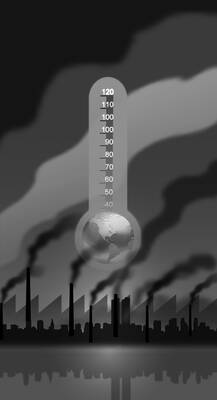
The closure of the Strait of Hormuz has sent the vast Asian chemicals industry into a tailspin. Deprived of the likes of Qatari natural gas and Saudi Arabian oil, the region’s fertilizer and plastics plants are slowing production or even shutting down. Everywhere except China, that is. In petrochemicals, China is unique. As well as a traditional industry that uses oil and gas as feedstock, it has parallel output that relies on its abundant domestic coal. Unsurprisingly, India and other regional powers want to copy and paste the Chinese method. This would not be easy — or climate friendly. The
US President Donald Trump recently repeated his claim that “Taiwan stole America’s chip industry,” reigniting public debate on the issue. As a former Taiwanese minister of economic affairs and an entrepreneur deeply involved in semiconductor supply chain development, I feel a responsibility to clarify this misunderstanding. From the perspective of global industrial evolution and the economic principle of comparative advantage, such a statement appears overly simplistic and risks obscuring the essence of the issue. The rise of Taiwan’s semiconductor industry was not built on “replacing America,” but rather emerged as a result of countries pursuing different development paths within the
The Presidential Office on Saturday reiterated that Taiwan is a sovereign, independent nation after US President Donald Trump said that Taiwan should not “go independent.” “We’re not looking to have somebody say: ‘Let’s go independence because the United States is backing us,’” Trump said in an interview with Fox News aired on Friday. President William Lai (賴清德) on Monday said that the Republic of China (ROC) — Taiwan’s official name — and the People’s Republic of China (PRC) are not subordinate to each other. Speaking at an event marking the 40th anniversary of the establishment of the Democratic Progressive Party (DPP), Lai said


 RSS
RSS