


Every year on May 28, the world marks Menstrual Hygiene Day. It is a reminder that menstrual health is not a niche concern, but a public issue that affects human dignity, education and participation in society. Yet an estimated 500 million people still lack access to menstrual products and adequate facilities for menstrual hygiene management.
That is called period poverty: the reality that menstruation can become a barrier to learning, working and living with dignity simply because basic products are out of reach.
Period poverty is often treated as a personal inconvenience, even though its impacts extend far beyond the individual. When people cannot afford pads or tampons, they are forced to choose between food and menstrual products, between attending class and staying home, between dignity and survival. Some choices lead to unsafe alternatives or result in people using products far beyond their intended use, which can create health risks and deepen stigma.
Across the world, governments are beginning to recognize that menstrual health should be public policy. South Korea is preparing to launch a pilot program in July to distribute free menstrual products in public facilities, with a budget of about 3 billion won (US$1.99 million). The locations include community service centers, public health centers and village halls, especially in rural and underserved areas. That matters because access should not depend on where someone studies, lives or works.
Taiwan has already taken significant steps. In 2023, the Ministry of Education expanded a program to offer free menstrual products in schools and universities, alongside support for some low-income students and select public venues. This was a meaningful move, showing that Taiwan understands menstrual equity as part of gender equality.
However, the current approach remains largely administrative. It depends on budgets, institutional willingness and uneven implementation.
Scotland offers a useful example of why free menstrual products should not be treated as a temporary program, but rather guaranteed through law. Its Period Products (Free Provision) (Scotland) Act 2021 places a legal duty on local authorities and education providers to make period products available free of charge to anyone who needs them. The act did more than expand access to menstrual products.
It also put Scotland on the global map as a policy innovator. When it became the first nation in the world to make sanitary products free, international media attention quickly followed, turning a domestic social policy into a symbol of progressive governance.
For Taiwan, the issue should be viewed in a similar context. As the nation continues to position itself internationally as a democratic and progressive society in Asia, gender equity policies increasingly carry diplomatic and symbolic weight alongside their domestic impact.
Addressing period poverty through stronger and more institutionalized measures would not only improve public welfare, but also reinforce Taiwan’s credibility in advocating for human rights and social inclusion.
In that sense, menstrual equity is not merely a “women’s issue.” It is a governance issue that tests whether democratic values are reflected in everyday life, particularly in whether basic needs and dignity are made genuinely accessible to all citizens.
Vanessa Aurelia Yotania is a recipient of last year’s New Southbound Policy Elite Study Program from the Ministry of Foreign Affairs, and an International Relations undergraduate at Universitas Padjadjaran in Indonesia.
KMT Chairwoman Cheng Li-wun’s (鄭麗文) recent visit to Beijing and her upcoming visit to Washington will serve as a high-level test of her diplomatic mettle. In Beijing, Cheng was received with symbolic gestures, a warm reception, and high-level access. In Washington, she will receive far less pomp and far sharper questions about the KMT’s vision for the future of Taiwan. Her challenge will be to persuade Washington that the KMT’s engagement with China can coexist with strong deterrence. Cheng’s April 7-12 visit to mainland China coincided with an intense period of conflict in Iran. Despite the strategic significance of Cheng’s trip,
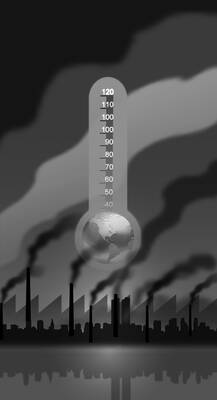
The closure of the Strait of Hormuz has sent the vast Asian chemicals industry into a tailspin. Deprived of the likes of Qatari natural gas and Saudi Arabian oil, the region’s fertilizer and plastics plants are slowing production or even shutting down. Everywhere except China, that is. In petrochemicals, China is unique. As well as a traditional industry that uses oil and gas as feedstock, it has parallel output that relies on its abundant domestic coal. Unsurprisingly, India and other regional powers want to copy and paste the Chinese method. This would not be easy — or climate friendly. The
US President Donald Trump recently repeated his claim that “Taiwan stole America’s chip industry,” reigniting public debate on the issue. As a former Taiwanese minister of economic affairs and an entrepreneur deeply involved in semiconductor supply chain development, I feel a responsibility to clarify this misunderstanding. From the perspective of global industrial evolution and the economic principle of comparative advantage, such a statement appears overly simplistic and risks obscuring the essence of the issue. The rise of Taiwan’s semiconductor industry was not built on “replacing America,” but rather emerged as a result of countries pursuing different development paths within the
The Presidential Office on Saturday reiterated that Taiwan is a sovereign, independent nation after US President Donald Trump said that Taiwan should not “go independent.” “We’re not looking to have somebody say: ‘Let’s go independence because the United States is backing us,’” Trump said in an interview with Fox News aired on Friday. President William Lai (賴清德) on Monday said that the Republic of China (ROC) — Taiwan’s official name — and the People’s Republic of China (PRC) are not subordinate to each other. Speaking at an event marking the 40th anniversary of the establishment of the Democratic Progressive Party (DPP), Lai said


 RSS
RSS