


After a 29-year-old woman employed at a horror-themed escape room in Taipei died due to a performance accident earlier this month, the Taipei City Government said that it had already required escape room operators to incorporate public safety management measures and had issued safety guidelines.
Some politicians and city government officials criticized the central government for the lack of a dedicated law and unified regulations, saying that made it difficult for the local government to manage the situation.
How did the issue so quickly shift from “whether on-site safety measures had been implemented” to “who failed to pass legislation”?
Labor inspections, fines, business suspensions and an investigation into negligent homicide have been initiated, indicating that the situation is not entirely without legal recourse — rather, it is that the system had not been adequately implemented.
The Occupational Safety and Health Act (職業安全衛生法) requires employers to implement safety management measures for high-risk operations, the Labor Inspection Act (勞動檢查法) authorizes inspections of such venues, and the Fire Services Act (消防法) and the Building Act (建築法) cover evacuation and public safety standards. The fact that prosecutors are now investigating the situation as one involving negligent homicide demonstrates that there was never a legal vacuum to begin with.
Whenever an accident occurs, many politicians seem to have one instinctive response: to immediately call for a “special law.” What should be done are the most basic things: Were proper risk assessments conducted? Were there safety mechanisms in place for high-risk performances? Were labor inspections actually enforced? Did the authorities carry out regular inspections? Or did officials only suddenly remember that this was a high-risk venue after an irreversible tragedy?
Would a “pedestrian walking special act” be proposed if someone were to trip and fall on uneven pavement? If someone walked down the stairs after eating breakfast at a soy milk shop, lost their footing and fell, injuring themselves and throwing up as a result, would a “special ordinance on post-breakfast pedestrian stair navigation and anti-vomiting safety” be needed?
If every incident is attributed to the central government failing to enact the proper legislation, what is the purpose of having a local government?
Those calling for the central government to enact a special law have yet to put forward any concrete proposals. The Legislative Yuan exists and the legislators who are loudest in their demands are not without the power to amend laws. Yet what has increased rapidly since the incident is not the implementation of safety mechanisms, but the frequency of news conferences and verbal battles.
What is truly absurd is not the lack of laws, but the failure to properly enforce those that are on the books. If every incident simply triggers a call for a special law, there would be a plethora of “special acts” without a reduction in accidents.
Chang Shang-yang is a farmer.
Translated by Kyra Gustavsen
KMT Chairwoman Cheng Li-wun’s (鄭麗文) recent visit to Beijing and her upcoming visit to Washington will serve as a high-level test of her diplomatic mettle. In Beijing, Cheng was received with symbolic gestures, a warm reception, and high-level access. In Washington, she will receive far less pomp and far sharper questions about the KMT’s vision for the future of Taiwan. Her challenge will be to persuade Washington that the KMT’s engagement with China can coexist with strong deterrence. Cheng’s April 7-12 visit to mainland China coincided with an intense period of conflict in Iran. Despite the strategic significance of Cheng’s trip,
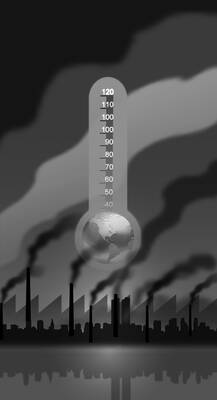
The closure of the Strait of Hormuz has sent the vast Asian chemicals industry into a tailspin. Deprived of the likes of Qatari natural gas and Saudi Arabian oil, the region’s fertilizer and plastics plants are slowing production or even shutting down. Everywhere except China, that is. In petrochemicals, China is unique. As well as a traditional industry that uses oil and gas as feedstock, it has parallel output that relies on its abundant domestic coal. Unsurprisingly, India and other regional powers want to copy and paste the Chinese method. This would not be easy — or climate friendly. The
US President Donald Trump recently repeated his claim that “Taiwan stole America’s chip industry,” reigniting public debate on the issue. As a former Taiwanese minister of economic affairs and an entrepreneur deeply involved in semiconductor supply chain development, I feel a responsibility to clarify this misunderstanding. From the perspective of global industrial evolution and the economic principle of comparative advantage, such a statement appears overly simplistic and risks obscuring the essence of the issue. The rise of Taiwan’s semiconductor industry was not built on “replacing America,” but rather emerged as a result of countries pursuing different development paths within the
The Presidential Office on Saturday reiterated that Taiwan is a sovereign, independent nation after US President Donald Trump said that Taiwan should not “go independent.” “We’re not looking to have somebody say: ‘Let’s go independence because the United States is backing us,’” Trump said in an interview with Fox News aired on Friday. President William Lai (賴清德) on Monday said that the Republic of China (ROC) — Taiwan’s official name — and the People’s Republic of China (PRC) are not subordinate to each other. Speaking at an event marking the 40th anniversary of the establishment of the Democratic Progressive Party (DPP), Lai said


 RSS
RSS