


Soft power: An American pope understands and wields it; an American president does not understand it and keeps destroying it.
Those two have been at it for a while. Their differences run deep. Pope Leo XIV is clear that god hates war, including the one that US President Donald Trump launched for no good reason in Iran. Trump and his secretary of defense seem to relish violence, as long as they are the ones doling it out.
The pope (like the US in the past), stands for international and humanitarian law. Trump scorns lawfulness at home and abroad. His attack on Iran violated the UN Charter and on his orders the US keeps illegally blowing up civilian boats — 51 as of this week — on the mere suspicion that they are carrying drugs.
The Bishop of Rome projects a grounded humility. “Enough of the idolatry of self and money!” he said at a prayer service. “Enough of the display of power! Enough of war!” That exhortation described Trump and by extension — at least as viewed from much of the world — the US in his second term.
The pope and president each have their fan base. Leo XIV’s is vastly larger, including many of the world’s approximately 1.4 billion Catholics and other believers and nonbelievers besides. Trump’s is limited to “Make America Great Again” supporters in the US and its sympathizers abroad.
One by one, and sometimes in droves, former friends of the US are turning away in distaste. Giorgia Meloni, the prime minister of Italy, is the latest. She used to be among Trump’s few allies in the EU, which he otherwise loathes. Unfortunately, she dislikes his bullying of NATO, his war against Iran and now his diatribes against the pope, who, after all, lives next door.
Something similar is happening almost everywhere. Prabowo Subianto, the president of Indonesia, tried to stay in Trump’s good graces. However, he was “saddened” when Trump opened fire on Iran. “I don’t feel there’s any rationality in this,” he said. The leaders of Canada or Denmark, two loyal US allies whom Trump has threatened with different forms of annexation, feel the same way, but more strongly.
Citizens in these and other countries are ahead of their leaders in falling out of love with the US. Many people are boycotting US-made goods or booking vacations anywhere but the US. Even as global tourism grew last year, the US was the only major destination that declined.
Many people abroad are afraid of being harassed by thuggish immigration or border control officers — Germany and the UK have even issued travel warnings. Others are put off by new and onerous visa requirements, or cannot visit at all, even if they wanted to, because the Trump administration has banned travel from their countries.
In effect, the US under Trump is flipping the world the bird, just as the world, in normal times, should be getting excited about visiting for the soccer World Cup that starts in June. “Football unites the world,” is the mantra of the organizers. And this tournament, cohosted by the US and its former friends in Canada and Mexico, could have risen to the motto.
Instead, Amnesty International, known for monitoring police states, warns that fans following their teams to the US might risk “troubling attacks on human rights,” from getting swept up in mass deportations to undergoing random searches of their social media.
The estrangement is also happening in education. US universities have long been nurseries, incubators and mentors of future world leaders. That is now changing, after the Trump administration started harassing and intimidating international students. New enrollments from abroad dropped last year. Many of these students (and professors) are going to campuses in Europe, Asia and elsewhere, forming the networks and ideas that shape the future there instead of stateside.
The trajectory is similar in other categories of cultural rizz. Hollywood, which used to have a quasi-monopoly of global box offices, now faces competition from China and other countries. American music is up against K-pop and Latin competition. Even Americans are increasingly “Chinamaxxing” — adopting and emulating ways of life that are not American.
Many of these trends predate Trump’s second term but are accelerating because of it. There is no good measure of soft power, but those that exist indicate that the US is losing it faster than any other nation. The US as a brand used to be cool. Increasingly, it has become toxic.
That change could indicate a dramatic weakening in the US global position. The late Joseph Nye, a doyen among international-relations scholars, defined soft power as the ability of one country to get others to “want what it wants.” It is about seducing rather than coercing, attracting rather than dominating. It is subtler, but also immeasurably more cost effective, than hard power.
During the Cold War and the brief “unipolar” moment that followed it, US soft power was unrivaled. The Ivy League, Hollywood, Silicon Valley and Wall Street were “platforms” for shaping global notions of right and wrong, good and bad, cutting-edge and backward. US aid programs and global news voices (which Trump has gutted) helped persuade generations of foreigners that the US was, on balance, on the side of the good guys and a worthy friend.
Trump broadcasts the opposite message: His US wields hard power at his whim, stands ready to coerce smaller nations irrespective of norms and law and acts only in its narrowly conceived self-interest. This US does not stand for universal values. It is not an ally others can depend on.
As the US image shifts “to one that is uncaring, cruel, reflexively dishonest and out only for itself, even leaders who want to do business with Washington are going to be wary of getting too close,” said Stephen Walt at Harvard University’s Kennedy School.
For Americans and everybody else, that is a slow-moving disaster. Other powers, such as China, are going to gather up the soft power that the US cedes, and their values do not necessarily prize freedom and justice. Trump’s second term is not even at half-time yet. However, the world is already bidding adieu to its old global dream factory and bracing for more Nightmare on Pennsylvania Avenue.
Andreas Kluth is a Bloomberg Opinion columnist covering US diplomacy, national security and geopolitics. Previously, he was editor-in-chief of Handelsblatt Global and a writer for The Economist. This column reflects the personal views of the author and does not necessarily reflect the opinion of the editorial board or Bloomberg LP and its owners.
Minister of Labor Hung Sun-han (洪申翰) on April 9 said that the first group of Indian workers could arrive as early as this year as part of a memorandum of understanding (MOU) between the Taipei Economic and Cultural Center in India and the India Taipei Association. Signed in February 2024, the MOU stipulates that Taipei would decide the number of migrant workers and which industries would employ them, while New Delhi would manage recruitment and training. Employment would be governed by the laws of both countries. Months after its signing, the two sides agreed that 1,000 migrant workers from India would
In recent weeks, Taiwan has witnessed a surge of public anxiety over the possible introduction of Indian migrant workers. What began as a policy signal from the Ministry of Labor quickly escalated into a broader controversy. Petitions gathered thousands of signatures within days, political figures issued strong warnings, and social media became saturated with concerns about public safety and social stability. At first glance, this appears to be a straightforward policy question: Should Taiwan introduce Indian migrant workers or not? However, this framing is misleading. The current debate is not fundamentally about India. It is about Taiwan’s labor system, its
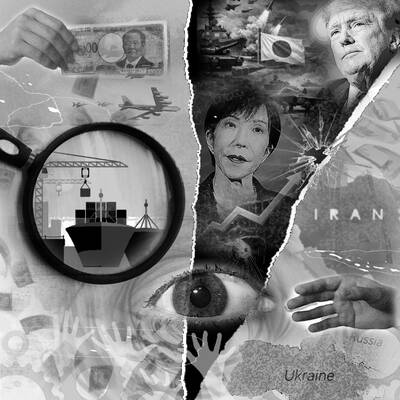
Japan’s imminent easing of arms export rules has sparked strong interest from Warsaw to Manila, Reuters reporting found, as US President Donald Trump wavers on security commitments to allies, and the wars in Iran and Ukraine strain US weapons supplies. Japanese Prime Minister Sanae Takaichi’s ruling party approved the changes this week as she tries to invigorate the pacifist country’s military industrial base. Her government would formally adopt the new rules as soon as this month, three Japanese government officials told Reuters. Despite largely isolating itself from global arms markets since World War II, Japan spends enough on its own
On March 31, the South Korean Ministry of Foreign Affairs released declassified diplomatic records from 1995 that drew wide domestic media attention. One revelation stood out: North Korea had once raised the possibility of diplomatic relations with Taiwan. In a meeting with visiting Chinese officials in May 1995, as then-Chinese president Jiang Zemin (江澤民) prepared for a visit to South Korea, North Korean officials objected to Beijing’s growing ties with Seoul and raised Taiwan directly. According to the newly released records, North Korean officials asked why Pyongyang should refrain from developing relations with Taiwan while China and South Korea were expanding high-level


 RSS
RSS