


In last year’s film KPop Demon Hunters, a slick South Korean boy band acts as cover for a plot to feed humanity to a ravenous, fiery, subterranean monster. It is an oddly apt way of thinking about its energy policy.
There has been lots of reasons for fans of the energy transition to idolize the country lately. President Lee Jae Myung was one of the first world leaders to name the Iran war as a reason to accelerate the switch to clean power. “Relying on fossil energy is extremely dangerous for the future,” he said during a visit to Jeju island, an aspiring wind and solar hub. “All energy sources must be rapidly transitioned to renewable energy.”
By 2030, the country wants to generate more than 30 percent of its electricity from renewables and 70 percent from clean sources, including nuclear. Even parking lots are now required to install solar panels on canopies.
Such statements and initiatives are catnip for a world enamored with the soft-power allure of Korean entertainment. The truth is a lot less shiny.
South Korea is the biggest consumer of coal per capita after Kazakhstan, China and Australia. Unlike those three, its build-out of renewables is minuscule, at less than 10 percent of generation, and stalling. About 60 percent of grid power comes from fossil fuels and debt-laden state monopoly Korea Electric Power Corp, or Kepco, is an implacable impediment to change.
As it stands, Lee’s clean energy targets have no chance of being met. In the new world sparked by the Iran conflict, that is not just a disappointment in climate terms. It is a strategic threat to the country, as well as to a global electronics industry that feeds on South Korea’s dominant share in memory chip production.
As with the demonic boy band in KPop Demon Hunters, this infernal mess is hidden behind a beautiful facade. South Korea is roughly the size of Oregon or Iceland, with a cherished rural heritage. Two-thirds is forest, one of the highest proportions anywhere. One in three Koreans goes hiking at least once a month. With less farmland than Libya, it is almost self-sufficient in rice.
That has helped drive potent “Not In My Backyard,” or NIMBY, sentiment. One of the world’s largest offshore wind projects was halted near Jeju in February after investors including Equinor ASA withdrew in the face of requirements that it sell all its power on the island and spend about US$1.8 billion in community profit-sharing fees. Others have faced entrenched opposition from fishing fleets, despite the absence of any evidence of harm to fisheries, after decades of offshore wind in the North Sea.
At Miryang near the industrial city of Ulsan, local retirees fought a six-year battle up to 2014 to block the building of transmission pylons. At Taebaek, a declining former coal mining town in the mountainous east, a small wind farm has only been built after residents were given a financial stake paying three times the yield on government bonds. Even onshore wind projects have typically taken 10 years to get approved and required negotiations over permits across eight different ministries and 22 sets of regulations.
Work is underway to improve some of this. New rules passed last year are meant to get wind farms approved in six years. Laws that have restricted solar to less than 1 percent of the land area in many counties are also being overturned.
For now, entrenched and conflicted vested interests are still dominant. Kepco has effectively banned all new generators in the renewables-rich east and Jeju until 2032, because its crumbling grid is supposedly incapable of accepting new connections. That decision does nothing to advance South Korea’s energy transition. It does mean that Kepco’s own power plants do not have to compete with new entrants.
It is this regulatory morass, rather than South Korea’s unforgiving geography and NIMBYism, that is most responsible for renewable power costs that are the highest of any major economy.
The crisis in the Strait of Hormuz could be the catalyst needed to change things. The popularity of nuclear power, a homegrown success story that produces about 30 percent of electricity, shows the public might be ready to acknowledge some of the hard choices that need to be made around its energy mix.
Iran’s success in blocking the strait is a blunt reminder of the risks of asymmetric warfare to sea lanes. Like its neighbor Taiwan, South Korea depends on a constant flow of imported fuel that could be easily disrupted by mines laid by North Korea, or even China. Kepco’s huge generation plants provide tempting targets for rocket attacks, something that distributed clean energy could help fix.
In KPop Demon Hunters, the threat from the demonic boy band is ultimately defeated when a key character finally accepts some painful facts. This is another difficult truth: South Korea’s sleek modern society is built on an insatiable appetite for fossil fuels that is undermining its economy, its environment and its security.
If that is to change, the government, Kepco and society at large need to start fighting the demons that have kept them hooked on polluting power.
David Fickling is a Bloomberg Opinion columnist covering climate change and energy. Previously, he worked for Bloomberg News, the Wall Street Journal and the Financial Times. This column reflects the personal views of the author and does not necessarily reflect the opinion of the editorial board or Bloomberg LP and its owners.
Minister of Labor Hung Sun-han (洪申翰) on April 9 said that the first group of Indian workers could arrive as early as this year as part of a memorandum of understanding (MOU) between the Taipei Economic and Cultural Center in India and the India Taipei Association. Signed in February 2024, the MOU stipulates that Taipei would decide the number of migrant workers and which industries would employ them, while New Delhi would manage recruitment and training. Employment would be governed by the laws of both countries. Months after its signing, the two sides agreed that 1,000 migrant workers from India would
In recent weeks, Taiwan has witnessed a surge of public anxiety over the possible introduction of Indian migrant workers. What began as a policy signal from the Ministry of Labor quickly escalated into a broader controversy. Petitions gathered thousands of signatures within days, political figures issued strong warnings, and social media became saturated with concerns about public safety and social stability. At first glance, this appears to be a straightforward policy question: Should Taiwan introduce Indian migrant workers or not? However, this framing is misleading. The current debate is not fundamentally about India. It is about Taiwan’s labor system, its
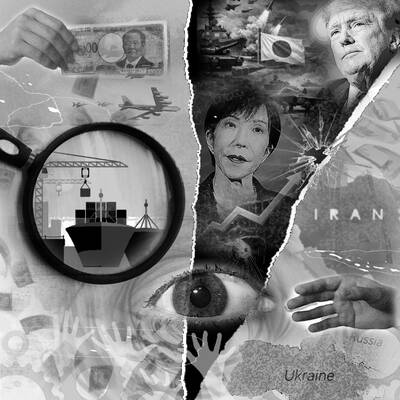
Japan’s imminent easing of arms export rules has sparked strong interest from Warsaw to Manila, Reuters reporting found, as US President Donald Trump wavers on security commitments to allies, and the wars in Iran and Ukraine strain US weapons supplies. Japanese Prime Minister Sanae Takaichi’s ruling party approved the changes this week as she tries to invigorate the pacifist country’s military industrial base. Her government would formally adopt the new rules as soon as this month, three Japanese government officials told Reuters. Despite largely isolating itself from global arms markets since World War II, Japan spends enough on its own
On March 31, the South Korean Ministry of Foreign Affairs released declassified diplomatic records from 1995 that drew wide domestic media attention. One revelation stood out: North Korea had once raised the possibility of diplomatic relations with Taiwan. In a meeting with visiting Chinese officials in May 1995, as then-Chinese president Jiang Zemin (江澤民) prepared for a visit to South Korea, North Korean officials objected to Beijing’s growing ties with Seoul and raised Taiwan directly. According to the newly released records, North Korean officials asked why Pyongyang should refrain from developing relations with Taiwan while China and South Korea were expanding high-level


 RSS
RSS