


On the night of April 12, as Hungarian Prime Minister Viktor Orban conceded defeat after 16 years in power, the crowds along the Danube river began to chant. They did not reach for new words. They did not need to. They reached back four decades for words that had announced a turning point in history: Ruszkik haza (“Russians go home”).
However, those words meant something different this time. In 1989, when the chant reflected Hungarians’ long-standing demand for an end to communist rule, Hungary had spent more than three decades under the Russian boot — and not metaphorically.
The Soviet tanks that crushed the 1956 revolution were followed by Soviet troops who never fully left, a Soviet-installed government that functioned as a client regime, and a political and economic system imported wholesale from the USSR. To chant Ruszkik haza then was to demand the end of foreign occupation, to reclaim sovereignty from an external power that had extinguished it.
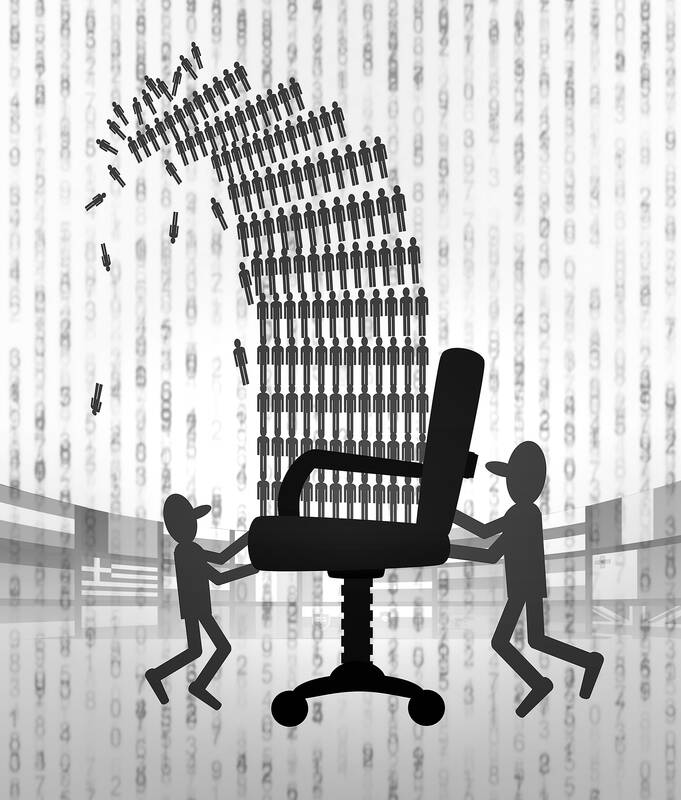
Illustration: Yusha
What did the chant mean this week?
Orban was not a Russian puppet. He was a freely elected leader who, over time, chose to align his country with Vladimir Putin’s Kremlin for reasons of ideology, personal affinity and, above all, financial interest. The Russia that haunted this election did not arrive in tanks. It crept in through gas contracts, oligarchic networks and the steady corrosion of public life by private enrichment.
In reviving the chant, Hungarians were rejecting a system of plunder that had made Orban’s inner circle fabulously wealthy while hollowing out the state. The enemy was not unfreedom in its classic form, but kleptocracy.
That distinction matters for what comes next. Occupations end when armies leave, whereas kleptocracies do not end with elections. Because such systems become entrenched in courts, media, procurement mechanisms and local administrations, they can survive even radical changes at the top.
As decisive as Orban’s defeat might be, it does not dismantle the machinery he spent 16 years building. Peter Magyar’s victory marks only the beginning of a prolonged institutional and economic struggle, whose outcome would remain uncertain even if his Tisza government secures a constitutional majority in parliament.
Still, the electoral result is extraordinary. A leader who made himself synonymous with “illiberal democracy” — a model admired, studied and imitated well beyond Hungary — was removed peacefully at the ballot box. In a decade when illiberalism has presented itself as the wave of the future, Hungarians voted overwhelmingly to reverse course.
The irony is stark. Orban’s project depended on preserving the outward forms of democracy even as he hollowed them out. Elections could not be abolished outright, because EU membership — and the EU subsidies that sustained his patronage network — required at least nominal adherence to democratic procedures. To keep the money flowing, elections had to continue, and now Orban has been ousted from power as a result.
That result is being rightly celebrated as proof that even entrenched illiberal regimes can be defeated electorally, but it also raises a more difficult question: Under what conditions can such victories endure?
In 1989, Hungarians were not leaping into the unknown. They were moving toward a clearly defined destination: The Cold War West. “Rejoining Europe” meant entering a political and security order anchored by US power and ideological confidence. The US was present not only as a military guarantor, but also as a model and a promise.
That context has radically changed.
This year, the US aligned itself not with the forces of democratic restoration in Hungary, but with Orban. US President Donald Trump and his MAGA movement see Orban’s system as a model to be emulated rather than resisted. They regard Hungary as a site of ideological contestation rather than democratic solidarity.
This broader shift — from an external environment that reinforced liberal transformation to one that threatens to frustrate it — alters the meaning of Hungary’s political breakthrough.
The question facing Central and Eastern Europe is no longer how quickly it can join the West. It is whether liberal democracy can be rebuilt and sustained within Europe at all now that its powerful US patron has grown indifferent to the point of colluding with liberal democracy’s enemies. Simply put, can Europe shoulder the burden alone?
The EU is an economic colossus and a regulatory superpower, but it was constructed for a different geopolitical era. If Hungary’s democratic renewal is to take hold, “choosing Europe” must translate into tangible improvements in everyday life — functioning institutions, economic stability and visible gains that can compete with and overcome the Orban regime’s legacy of patronage and control. After all, while Orban might have lost office, he retains a political base, a loyal media ecosystem and a network of allies at home and abroad. The system he built would adapt to opposition. Its capacity to disrupt, obstruct and reconstitute itself should not be underestimated.
In 1989, Ruszkik haza named an external occupier and demanded its departure. This year, it aims to expel something less visible and more resilient: A form of governance that operates through networks of dependency, influence and extraction that cannot simply be driven out. The contest it announces is therefore different in kind. The chant is the same, but its meaning is new. In 1989, it freed a captive nation. Now, it keeps the future open, and not for Hungarians alone.
Stephen Holmes, professor of law at New York University School of Law and the Richard Holbrooke fellow at the American Academy in Berlin, is the co-author (with Ivan Krastev) of The Light that Failed: A Reckoning (Penguin Books, 2019).
Copyright: Project Syndicate
In recent weeks, Taiwan has witnessed a surge of public anxiety over the possible introduction of Indian migrant workers. What began as a policy signal from the Ministry of Labor quickly escalated into a broader controversy. Petitions gathered thousands of signatures within days, political figures issued strong warnings, and social media became saturated with concerns about public safety and social stability. At first glance, this appears to be a straightforward policy question: Should Taiwan introduce Indian migrant workers or not? However, this framing is misleading. The current debate is not fundamentally about India. It is about Taiwan’s labor system, its
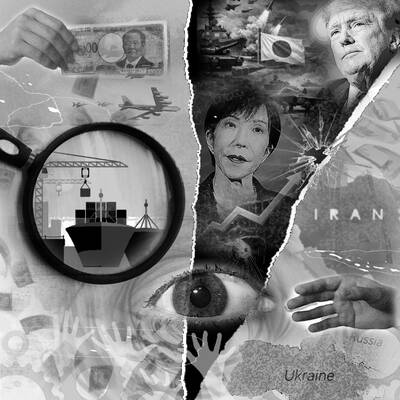
Japan’s imminent easing of arms export rules has sparked strong interest from Warsaw to Manila, Reuters reporting found, as US President Donald Trump wavers on security commitments to allies, and the wars in Iran and Ukraine strain US weapons supplies. Japanese Prime Minister Sanae Takaichi’s ruling party approved the changes this week as she tries to invigorate the pacifist country’s military industrial base. Her government would formally adopt the new rules as soon as this month, three Japanese government officials told Reuters. Despite largely isolating itself from global arms markets since World War II, Japan spends enough on its own
On March 31, the South Korean Ministry of Foreign Affairs released declassified diplomatic records from 1995 that drew wide domestic media attention. One revelation stood out: North Korea had once raised the possibility of diplomatic relations with Taiwan. In a meeting with visiting Chinese officials in May 1995, as then-Chinese president Jiang Zemin (江澤民) prepared for a visit to South Korea, North Korean officials objected to Beijing’s growing ties with Seoul and raised Taiwan directly. According to the newly released records, North Korean officials asked why Pyongyang should refrain from developing relations with Taiwan while China and South Korea were expanding high-level
Swiftly following the conclusion of Chinese Nationalist Party (KMT) Chairwoman Cheng Li-wun’s (鄭麗文) China trip, China’s Taiwan Affairs Office unveiled 10 new policy measures for Taiwan. The measures, covering youth exchanges, agricultural and fishery imports, resumption of certain flights and cultural and media cooperation, appear to offer “incentives” for cross-strait engagement. However, viewed within the political context, their significance lies not in promoting exchanges but in redefining who is qualified to represent Taiwan in dialogue with China. First, the policy statement proposes a “normalized communication mechanism” between the KMT and the Chinese Communist Party (CCP). This would shift cross-strait interaction from


 RSS
RSS