


New research has a simple message for older women: Muscle matters for living a longer, healthier life.
The study, published in JAMA Network Open, followed thousands of women older than 62 and makes clear that even small changes can have a meaningful impact.
Getting the benefits does not require an army of hulked-out grandmas. Rather, older women need to expand their workouts beyond aerobic exercise to include some basic strength training.
That finding was made possible by the Women’s Health Initiative, a landmark research effort that has closely followed tens of thousands of women since the 1990s. As one part of the program, researchers visited women in their homes, measuring their grip strength, blood markers of inflammation and activity levels, among other things.
When researchers years later looked at a group of about 5,500 participants in their 60s to their 90s, what they found was unambiguous: More muscle strength translates into a longer life. It did not matter whether a woman spent 150 minutes each week doing aerobic exercise, as the government recommends. Instead, researchers found one surprising factor — grip strength — was linked to longevity.
Epidemiologist Michael LaMonte, who led the study, has a theory about why the grip test was a particularly sensitive measure of overall health: Even as we age, most of us cannot avoid using our quads, hamstrings and glutes — they power everyday activities like getting up out of bed. Yet the upper body can more easily fall into disuse. The subsequent decline can present itself in small, but meaningful, ways.
“I call it the pickle jar test,” LaMonte said.
When the jar gets harder to open, it could be a sign that something is changing — maybe it is an underlying disease, maybe it is a decline in muscle mass.
“Either way, it should be a yellow caution sign,” LaMonte said.
It is especially important for a generation that came up at a time when physical activity guidelines only emphasized aerobic exercise. Researchers have increasingly recognized the importance of muscle mass — not just for living longer, but for maintaining mobility and independence later in life.
The new findings should help refine federal fitness guidelines.
Many women would reach a point in life when meeting those aerobic exercise standards is no longer possible, LaMonte said. They experience an illness or injury, and they simply cannot make it out for their walk around the neighborhood or to their water aerobics class.
The study suggests that even those women can potentially live longer with some focus on maintaining their strength.
What does that look like? For starters, do not confuse the study’s focus on grip strength as an order to “train your grip,” McMaster University kinesiology professor Stuart Phillips said in an e-mail.
“Grip strength is a useful marker. It is not the training prescription. The broader message is that overall strength matters, and general strength training is a big deal for healthy ageing,” he said.
It also does not mean older women need personal-training sessions or to join a gym. They can use resistance bands or their own body weight, and for women in their late 70s and beyond, something as basic as lifting soup cans could be enough, LaMonte said. The overarching goal is simply to stimulate those muscles.
That stimulation does matter — for individuals, of course, but also for society. Older adults are the fastest-growing demographic in the US, a population that skews heavily female. Getting that group to make small changes that could lead to longer lives would be an incredible feat of public health.
Of course, younger women might wonder what the findings mean for them. Phillips cautions about drawing too many conclusions about longevity and muscle mass in other stages of life. Still, women of all ages would be wise to work weight training into their exercise routines. It does not need to be complicated — no matter what “fitfluencers” want you to believe.
Last month, the American College of Sports Medicine updated its resistance-training recommendation for healthy adults, and the advice is simple: Just do some sort of full-body resistance training, twice a week. Lots of different kinds of workouts are effective, so tune out the noise suggesting you are doing something wrong if you are not “lifting heavy” or “lifting to failure.”
The evidence keeps mounting that women cannot just jazzercise or power walk their way into graceful old age — they need to think about small, consistent ways to ensure their muscles get a workout, too. Older women could use more help — from their doctors and caregivers, and from the federal government, which sets guidance around exercise — putting that into practice. Meanwhile, younger ones should know that building a lifelong practice of strength training would pay dividends.
Lisa Jarvis is a Bloomberg Opinion columnist covering biotech, healthcare and the pharmaceutical industry. Previously, she was executive editor of Chemical & Engineering News. This column reflects the personal views of the author and does not necessarily reflect the opinion of the editorial board or Bloomberg LP and its owners.
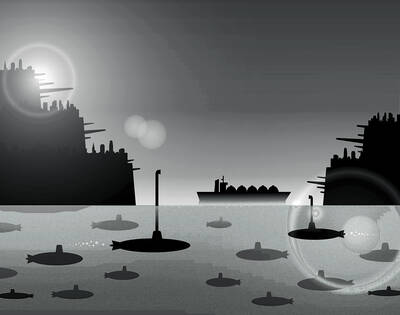
In the event of a war with China, Taiwan has some surprisingly tough defenses that could make it as difficult to tackle as a porcupine: A shoreline dotted with swamps, rocks and concrete barriers; conscription for all adult men; highways and airports that are built to double as hardened combat facilities. This porcupine has a soft underbelly, though, and the war in Iran is exposing it: energy. About 39,000 ships dock at Taiwan’s ports each year, more than the 30,000 that transit the Strait of Hormuz. About one-fifth of their inbound tonnage is coal, oil, refined fuels and liquefied natural gas (LNG),
On Monday, the day before Chinese Nationalist Party (KMT) Chairwoman Cheng Li-wun (鄭麗文) departed on her visit to China, the party released a promotional video titled “Only with peace can we ‘lie flat’” to highlight its desire to have peace across the Taiwan Strait. However, its use of the expression “lie flat” (tang ping, 躺平) drew sarcastic comments, with critics saying it sounded as if the party was “bowing down” to the Chinese Communist Party (CCP). Amid the controversy over the opposition parties blocking proposed defense budgets, Cheng departed for China after receiving an invitation from the CCP, with a meeting with
Chinese Nationalist Party (KMT) Chairwoman Cheng Li-wun (鄭麗文) is leading a delegation to China through Sunday. She is expected to meet with Chinese President Xi Jinping (習近平) in Beijing tomorrow. That date coincides with the anniversary of the signing of the Taiwan Relations Act (TRA), which marked a cornerstone of Taiwan-US relations. Staging their meeting on this date makes it clear that the Chinese Communist Party (CCP) intends to challenge the US and demonstrate its “authority” over Taiwan. Since the US severed official diplomatic relations with Taiwan in 1979, it has relied on the TRA as a legal basis for all
The two major opposition parties, the Chinese Nationalist Party (KMT) and the Taiwan People’s Party (TPP), jointly announced on Tuesday last week that former TPP lawmaker Chang Chi-kai (張啟楷) would be their joint candidate for Chiayi mayor, following polling conducted earlier this month. It is the first case of blue-white (KMT-TPP) cooperation in selecting a joint candidate under an agreement signed by their chairpersons last month. KMT and TPP supporters have blamed their 2024 presidential election loss on failing to decide on a joint candidate, which ended in a dramatic breakdown with participants pointing fingers, calling polls unfair, sobbing and walking


 RSS
RSS