


On April 2, Taipei Times contributing reporter David Frazier published his review of my recent book Echoes from the Sino-Burmese Borderlands: Untold Stories of Overland Chinese Migrants During the Cold War (“Echoes from a fractured frontier,” April 2, page 11).
The primary part of his review is a summary of the life stories told in the book. His criticisms appear in two short paragraphs at the end.
First, he summarily dismisses the accounts in the book as “rambling” and “disorganized” and considers the analysis “naive” and “overgeneral,” without providing any arguments to substantiate his views. It is rather unfortunate that he seems to have no appreciation for the genre of personal narrative based on extensive fieldwork and textual research that is the essence of my work. I have an obligation to respond, as his comments could cause a misperception of the book among readers.
Second, Frazier contends that the book, with its Han Chinese bias, “fails to distinguish between Hui Muslim caravan traders, who historically dominated regional trade routes, and regular Yunnanese.” Undoubtedly, Yunnanese Muslims, or Yunnanese Hui, played a significant role in the engagement. To maintain that this group dominated all routes throughout history is incorrect and constitutes a stereotypical perception. I have discussed the issue in a chapter on Yunnanese Muslims’ transnationalism in my previous book, Beyond Borders: Stories of Yunnanese Migrants of Burma. Several scholars have also challenged the view of Hui predominance in long-distance trade between Yunnan and its neighboring areas. For examples, see C. Patterson Giersch’s Asian Borderlands: The Transformation of Qing China’s Yunnan Frontier; Ann Maxwell Hill’s Merchants and Migrants: Ethnicity and Trade among Yunnanese Chinese in Southeast Asia; and Sun Laichen’s doctoral dissertation, “Ming–Southeast Asian Overland Interactions, 1368–1644.”
Grounded in my fieldwork in Burma, Thailand and Yunnan, I maintain that in the period related to my study there were far more Yunnanese Han who participated in the mule caravan trade — both as traders and muleteers — or mule transport commissioned by the Burmese authorities than Yunnanese Hui. Furthermore, I do not fail to distinguish between Hui and Han. Both groups are allochthonous in Yunnan vis-a-vis other autochthonous groups. When addressed together, Han and Hui are normally referred to as Yunnanese Chinese in academia. In this book, I refer to Yunnanese Muslims in Chapter 3 when I examine the impact of Hui identity on the life and work of a covert intelligence agent. I also discuss a Hui family’s trading activities in the Wa Hills in Chapter 9.
Third, I would like to respond to his comment about my failure to address the opium trade. I have quoted many academic works that have examined the issue in my book. Moreover, in Chapters 7 and 8, I covered aspects of the opium trade that have been understudied — how and why people grew opium, opium fairs organized in periodic markets and deals made through middlemen.
My interest as an anthropologist is in the lives of ordinary people affected by the volatile situation on the frontiers. Their reactions and the ways in which survivors have sought to remember and tell their stories are crucially important to me. This differs from conventional Cold War history, which focuses on geopolitics, central states’ foreign policies, regional security and ideological confrontation.
Chang Wen-chin is a research fellow at the Center for Asia-Pacific Area Studies in the Academia Sinica Research Center for Humanities and Social Sciences (RCHSS).
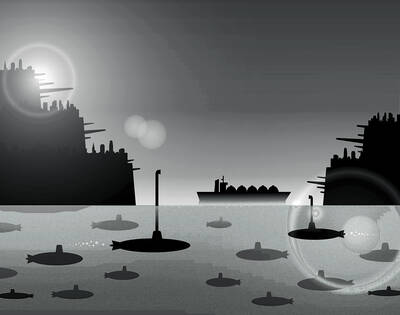
In the event of a war with China, Taiwan has some surprisingly tough defenses that could make it as difficult to tackle as a porcupine: A shoreline dotted with swamps, rocks and concrete barriers; conscription for all adult men; highways and airports that are built to double as hardened combat facilities. This porcupine has a soft underbelly, though, and the war in Iran is exposing it: energy. About 39,000 ships dock at Taiwan’s ports each year, more than the 30,000 that transit the Strait of Hormuz. About one-fifth of their inbound tonnage is coal, oil, refined fuels and liquefied natural gas (LNG),
On Monday, the day before Chinese Nationalist Party (KMT) Chairwoman Cheng Li-wun (鄭麗文) departed on her visit to China, the party released a promotional video titled “Only with peace can we ‘lie flat’” to highlight its desire to have peace across the Taiwan Strait. However, its use of the expression “lie flat” (tang ping, 躺平) drew sarcastic comments, with critics saying it sounded as if the party was “bowing down” to the Chinese Communist Party (CCP). Amid the controversy over the opposition parties blocking proposed defense budgets, Cheng departed for China after receiving an invitation from the CCP, with a meeting with
Chinese Nationalist Party (KMT) Chairwoman Cheng Li-wun (鄭麗文) is leading a delegation to China through Sunday. She is expected to meet with Chinese President Xi Jinping (習近平) in Beijing tomorrow. That date coincides with the anniversary of the signing of the Taiwan Relations Act (TRA), which marked a cornerstone of Taiwan-US relations. Staging their meeting on this date makes it clear that the Chinese Communist Party (CCP) intends to challenge the US and demonstrate its “authority” over Taiwan. Since the US severed official diplomatic relations with Taiwan in 1979, it has relied on the TRA as a legal basis for all
The two major opposition parties, the Chinese Nationalist Party (KMT) and the Taiwan People’s Party (TPP), jointly announced on Tuesday last week that former TPP lawmaker Chang Chi-kai (張啟楷) would be their joint candidate for Chiayi mayor, following polling conducted earlier this month. It is the first case of blue-white (KMT-TPP) cooperation in selecting a joint candidate under an agreement signed by their chairpersons last month. KMT and TPP supporters have blamed their 2024 presidential election loss on failing to decide on a joint candidate, which ended in a dramatic breakdown with participants pointing fingers, calling polls unfair, sobbing and walking


 RSS
RSS