


South Asia has had three youth-led revolts and three changes of government — and still has three countries with problems that have not changed a bit.
In February, Bangladesh’s electorate gave Tarique Rahman, exiled in London for seventeen years, a sweeping mandate; and in early March, Nepalese citizens voted overwhelmingly for Balen Shah, previously a rapper and mayor of Kathmandu. Meanwhile, in Sri Lanka, the former Marxist-Leninist Anura Dissanayake is just 18 months into his tenure and is already facing multiple crises, including a crippling shortage of fuel that has forced his government to institute a four-day work week.
All took power after mass protests forced out their predecessors, promising a clean break from the old elite’s sloth, incompetence and corruption. Yet, as Sri Lanka is discovering — and the others might, too — rupture is not replacement. Regime change is easier than transforming states, and in the subcontinent, the ancient regime never really leaves. The same is true here.
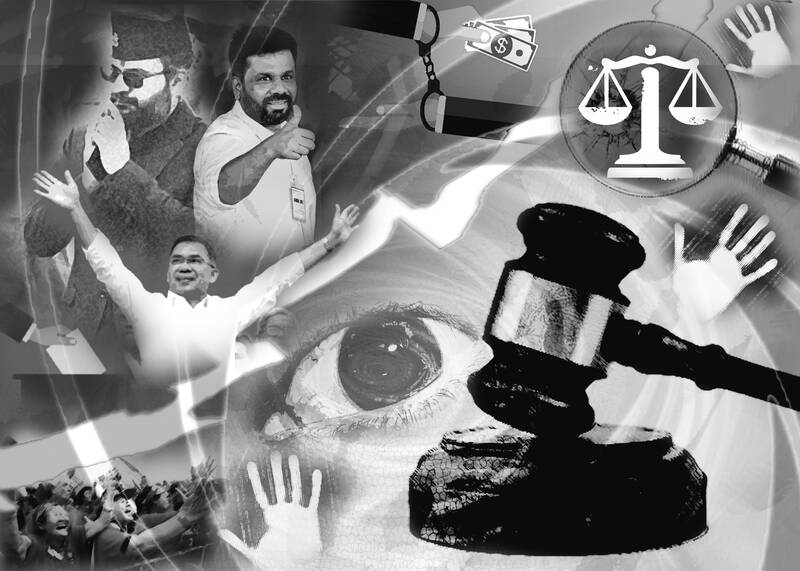
Illustration: Kevin Sheu
Dissanayake’s appeal lay as a clean break from the traditional politicians Sri Lankans had targeted in what they call the Aragalaya — Sinhalese for “struggle” — in 2022. In Bangladesh, the 15-year rule of Sheikh Hasina came to an end when student protesters took over the streets of Dhaka in the summer of 2024, in what came to be known as the July Uprising. In Nepal, large-scale Gen Z protests six months ago were sparked by a ban on social media and coordinated on Discord.
SLASHING SLEAZE
However, this part of the world too often confuses toppling leaders with transforming states. Protests promise an exciting new moral order, but actual governance requires boring competence: regulatory reform, judicial independence and checks on the executive.
In Bangladesh, Rahman’s return is not even that much of a rupture with the past: His father was a military dictator and his mother a prime minister. We are already seeing the consequences of that. Legislators from his Bangladesh Nationalist Party are refusing to participate in a process to amend the constitution and constrain executive power, as was agreed last year.
Dissanayake, separately, has found that cutting sleaze is not as easy once in government, especially if you have made the mistake of blaming structural economic problems — such as Sri Lanka’s chronic balance-of-payments problems — on corruption. The country’s anti-bribery commission received just over 8,400 complaints last year; it made eighty-four arrests. A conversion rate of one in one hundred is not great.
Institutional reform, independent regulators and depoliticized decision-making are the best antidotes to corruption. However, that is not on the agenda in Sri Lanka. The anti-corruption investigators are supposed to be independent, but government ministers regularly proclaim on their activities, and the commission’s head has complained that the finance ministry wants to control its funding. Consequently, Dissanayake has had to take headline-grabbing but fundamentally unjustifiable steps, like arresting a former president, Ranil Wickremesinghe, on what one Indian politician described as “petty charges.”
The new government in Nepal seems to be speed-running the same script. Barely a day after it took office, a former prime minister, K.P. Sharma Oli, was arrested and detained. The new cabinet — presided over by Shah in black sunglasses — has produced a 100-point agenda for its first weeks, but the chances are that it would focus on vengeance and public relations first and postpone the hard graft of institutional change.
REAL CHANGE
This is an error. The longer the gap between revolt on the city’s streets and revolution in the corridors of power, the harder it is for real change to take hold. Insurgent governments have a narrow window in which they have genuine legitimacy; they need to use that to transform hidebound or sclerotic bureaucracies. If they waste that on tempting headlines and political scores instead, they might be reelected — but they would never achieve what they have promised.
This has happened in South Asia before. In India, Prime Minister Narendra Modi rose to power claiming to be an outsider, after years of protest against a supposedly corrupt government in New Delhi.
If he wanted to transform the country, as he pledged, he could have used that energy to reinvent how government works — for example, by replacing the coddled bureaucracy that independent India inherited from the British to make it more accountable.
However, administrative reform was way down his list of priorities and, consequently, his government has never quite lived up to its initial promise. Too little has changed in how the Indian state operates. The subcontinent’s insurgents might realize that winning power is easy. What is hard is wielding it without becoming what they replaced.
Mihir Sharma is a Bloomberg Opinion columnist. A senior fellow at the Observer Research Foundation in New Delhi, he is the author of Restart: The Last Chance for the Indian Economy.This column reflects the personal views of the author and does not necessarily reflect the opinion of the editorial board or Bloomberg LP and its owners.
KMT Chairwoman Cheng Li-wun’s (鄭麗文) recent visit to Beijing and her upcoming visit to Washington will serve as a high-level test of her diplomatic mettle. In Beijing, Cheng was received with symbolic gestures, a warm reception, and high-level access. In Washington, she will receive far less pomp and far sharper questions about the KMT’s vision for the future of Taiwan. Her challenge will be to persuade Washington that the KMT’s engagement with China can coexist with strong deterrence. Cheng’s April 7-12 visit to mainland China coincided with an intense period of conflict in Iran. Despite the strategic significance of Cheng’s trip,

The closure of the Strait of Hormuz has sent the vast Asian chemicals industry into a tailspin. Deprived of the likes of Qatari natural gas and Saudi Arabian oil, the region’s fertilizer and plastics plants are slowing production or even shutting down. Everywhere except China, that is. In petrochemicals, China is unique. As well as a traditional industry that uses oil and gas as feedstock, it has parallel output that relies on its abundant domestic coal. Unsurprisingly, India and other regional powers want to copy and paste the Chinese method. This would not be easy — or climate friendly. The
Indonesian President Prabowo Subianto says he knows how to fix the problems facing Indonesia. Yet his economic mismanagement and authoritarian tendencies are steering the nation toward a familiar mix of currency instability and political chaos. The world’s fourth-most populous nation risks reversing the hard-won democratic and business reforms that came after the Asian Financial Crisis in 1997. At that time, the rupiah collapsed and the political upheaval that followed forced former president Haji Mohamed Suharto from power. Prabowo’s administration is ignoring similar warning signs. That disconnect was apparent in a national address on Wednesday, when Prabowo projected the swagger that has
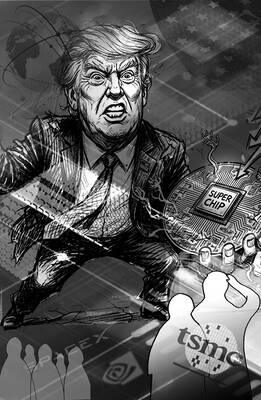
The White House’s decision to take a 9.9 percent stake in Intel Corp is looking like very shrewd business indeed. Since the government bought in at US$20.47 a share last August, the US chipmaker’s surging stock price has delivered the US a US$43 billion return. One of the reasons the investment has so far proved so sound is that the White House has made sure of it. According to The Wall Street Journal, Howard personally pushed deals on Intel’s behalf with some of the most lucrative clients imaginable. They include Nvidia Corp, the company at the heart of the AI


 RSS
RSS