


Taiwan would increase its total computing power threefold to 114.31 petaflops when its fastest supercomputer, Nano 4 (晶創26), launches in the third quarter, the National Center for High-Performance Computing (NCHC) said.
Nano 4 would operate at about 86.05 petaflops and is being tested at a new cloud computing center in the Southern Taiwan Science Park in Tainan. The supercomputer features 220 Nvidia H200 nodes, each equipped with eight H200 GPUs and 2 terabytes of memory, and is the first in Taiwan to deploy Nvidia’s flagship artificial intelligence (AI) computing platform introduced last year — two GB200 NVL72 systems, each configured with 72 Blackwell GPUs and 13.5 terabytes of memory.
Taiwan has been slightly behind in building advanced computing capacity due to a limited budget, NCHC director-general Chang Chau-lyan (張朝亮) said, adding that Nano 4 would provide the strong support Taiwan needs to accelerate AI development.
Nano 4’s computing power would be shared by the government, industry and academic researchers, as well as projects funded by the National Science and Technology Council, he said. The supercomputer would be deployed to create large language models in finance, law, national defense and other sectors.
Although China no longer publishes statistics on its computing capacity, it reportedly has at least twice the computing power that Nano 4 would provide, while the US is estimated to hold about half of the world’s total supercomputing capacity.
However, Taiwan holds a strategic position in the AI supply chain and has the potential to become a global leader in certain aspects of supercomputing. The nation produces most of the chips that modern supercomputers rely on, such as the Nvidia H100 and B200. It also has strong research infrastructure through the NCHC and leading engineering programs at National Taiwan University, National Tsing Hua University and National Yang Ming Chiao Tung University.
The areas in which Taiwan is at a disadvantage are limited land, tight power supply and less private investment in computing capacity compared with the US, where companies such as Google, Microsoft, Amazon and Meta Platforms are spending tens of billions of dollars on AI infrastructure. Taiwan must also compete for top global talent, which is often drawn to the US or Europe by higher salaries, larger research budgets and more extensive AI ecosystems.
The power supply issue might soon improve, as there is cross-party consensus on restarting shuttered nuclear power plants. There have also been reports that government officials have held discussions with Paraguay about converting the South American ally’s surplus renewable energy into computing power.
AI and supercomputing are beneficial to Taiwan. Supercomputers aid semiconductor design by running advanced chip simulations before fabrication, optimizing lithography and transistor layouts, and modeling heat, power consumption and signal interference in chips. They also bolster earthquake and natural disaster prediction by analyzing large data models, allow researchers to simulate molecular interactions and accelerate drug development, and improve infrastructure planning and traffic flow optimization in cities such as Taipei through the processing of massive datasets.
Most crucially for Taiwan, supercomputing could enhance national defense. Supercomputers could run military simulations and wargaming, conduct cybersecurity analysis, process satellite and radar data, and assist with missile defense modeling.
Some of these applications could be handled offshore, meaning Taiwan would not necessarily need to compete with China or other countries in terms of domestic computing capacity. Weather and disaster modeling, urban infrastructure planning and drug design could all be handled by data centers in Paraguay, for example, through a data embassy agreement. This would allow Taiwan to process data where it is more economically feasible while retaining sovereignty over its models and datasets.
National defense planning and modeling, advanced chip design simulations and cybersecurity analysis — areas with clear national security implications — could instead be handled by supercomputers on Taiwanese soil. The NCHC, together with Taiwanese industry giants such as Taiwan Semiconductor Manufacturing Co, could form partnerships with companies such as Nvidia and AMD to jointly develop custom AI hardware and software systems tailored to Taiwan’s defense needs, further ensuring the security of those systems.
Taiwan can maximize the benefits of advances in supercomputing by balancing domestic capabilities with offshore processing of nonsensitive datasets. Increasingly powerful supercomputers can also accelerate the development of more sophisticated semiconductors, helping ensure that Taiwan maintains its dominant position in the global AI and supercomputing supply chain.
Minister of Labor Hung Sun-han (洪申翰) on April 9 said that the first group of Indian workers could arrive as early as this year as part of a memorandum of understanding (MOU) between the Taipei Economic and Cultural Center in India and the India Taipei Association. Signed in February 2024, the MOU stipulates that Taipei would decide the number of migrant workers and which industries would employ them, while New Delhi would manage recruitment and training. Employment would be governed by the laws of both countries. Months after its signing, the two sides agreed that 1,000 migrant workers from India would
On March 31, the South Korean Ministry of Foreign Affairs released declassified diplomatic records from 1995 that drew wide domestic media attention. One revelation stood out: North Korea had once raised the possibility of diplomatic relations with Taiwan. In a meeting with visiting Chinese officials in May 1995, as then-Chinese president Jiang Zemin (江澤民) prepared for a visit to South Korea, North Korean officials objected to Beijing’s growing ties with Seoul and raised Taiwan directly. According to the newly released records, North Korean officials asked why Pyongyang should refrain from developing relations with Taiwan while China and South Korea were expanding high-level
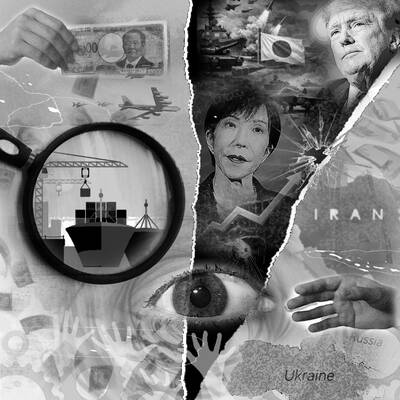
Japan’s imminent easing of arms export rules has sparked strong interest from Warsaw to Manila, Reuters reporting found, as US President Donald Trump wavers on security commitments to allies, and the wars in Iran and Ukraine strain US weapons supplies. Japanese Prime Minister Sanae Takaichi’s ruling party approved the changes this week as she tries to invigorate the pacifist country’s military industrial base. Her government would formally adopt the new rules as soon as this month, three Japanese government officials told Reuters. Despite largely isolating itself from global arms markets since World War II, Japan spends enough on its own
When 17,000 troops from the US, the Philippines, Australia, Japan, Canada, France and New Zealand spread across the Philippine archipelago for the Balikatan military exercise, running from tomorrow through May 8, the official language would be about interoperability, readiness and regional peace. However, the strategic subtext is becoming harder to ignore: The exercises are increasingly about the military geography around Taiwan. Balikatan has always carried political weight. This year, however, the exercise looks different in ways that matter not only to Manila and Washington, but also to Taipei. What began in 2023 as a shift toward a more serious deterrence posture


 RSS
RSS