


A group of Chinese Nationalist Party (KMT) legislators and supporters of former Taipei mayor Ko Wen-je (柯文哲) on Sunday gathered on Taipei’s Ketagalan Boulevard to show support for Ko, who was last week sentenced to 17 years in prison on corruption charges. Their choice to rally for the founder of the Taiwan People’s Party on March 29 was particularly laughable.
The date holds special significance for the KMT, which designated it as Youth Day to commemorate the “72 martyrs” of the Second Guangzhou Uprising in 1911. The March 29 date is a misinterpretation of what was originally a lunar calendar date, when more than 72 people died in the failed uprising against the Qing Dynasty.
It was one of many battles in the broader context of the Hsinhai Revolution, which ended imperial rule. The fundamental spirit of that revolution — from the First Guangzhou Uprising of 1895 to the Wuchang Uprising of October 1911 — was not only a rejection of Manchu rule, but of the deep political corruption within the Qing Dynasty.
Pan-blue camp supporters might think that someone who identifies as Taiwanese dislikes or is unaware of the early revolutionaries of the Republic of China (ROC).
They are wrong.
Many Chinese revolutionaries of the era, such as Lu Hao-tung (陸皓東), Lin Jue-min (林覺民), Fang Sheng-tung (方聲洞), Chiu Chin (秋瑾), Huang Hsing (黃興) and Sung Chiao-jen (宋教仁) are worthy of respect, as is anyone who stands up against injustice and tyranny.
Lai Ho (賴和), a political activist regarded by many as the father of Taiwanese literature, once wrote that “a warrior fights for justice”; Lin Chiu-wu (林秋梧), a Taiwanese Buddhist monk and social activist, wrote of the importance standing with the weak to fight against the powerful. Such qualities are worth aspiring to.
Lu was beheaded after the first Guangzhou uprising. During his interrogation, the 29 year old said he was standing up to the “corruption and despotism of the Manchu government and the incompetence and cowardice of its officials.”
Lin Jue-min, a philosophy student who returned from Japan to stand up to Manchu corruption, was arrested and beheaded at the age of 24 following the Second Guangzhou Uprising.
In a farewell letter to his wife, he wrote: “The land is drenched in blood and the streets are thick with wolves and dogs... You understand my heart. After your tears, think of the people and be glad to sacrifice my life and your happiness for the eternal welfare of all people.”
Their indignation is worlds apart from the autocratic KMT regime that seized national assets, allowed rampant corruption and was responsible for countless deaths in Taiwan.
While the Tongmenghui (同盟會, “united league””) had patriots, the KMT that emerged from it was corrupt, such as former Executive Yuan secretary general Lin Yi-shih (林益世), who was convicted of accepting bribes while in office, and caucus whip Fu Kun-chi (傅?萁), who has been accused of graft.
The list of KMT mayors, councilors and officials involved in corruption and bribery over the past two decades is too long to list.
Lin Jue-min did not tolerate the stench of inequality and wolves; Lu stood firm against corruption.
Today, the KMT mobilizes to support corrupt officials even on their self-designated Youth Day. The ROC revolutionaries would surely be turning in their graves.
Lee Hsiao-feng is an honorary professor at National Taipei University of Education.
Translated by Gilda Knox Streader
Minister of Labor Hung Sun-han (洪申翰) on April 9 said that the first group of Indian workers could arrive as early as this year as part of a memorandum of understanding (MOU) between the Taipei Economic and Cultural Center in India and the India Taipei Association. Signed in February 2024, the MOU stipulates that Taipei would decide the number of migrant workers and which industries would employ them, while New Delhi would manage recruitment and training. Employment would be governed by the laws of both countries. Months after its signing, the two sides agreed that 1,000 migrant workers from India would
In recent weeks, Taiwan has witnessed a surge of public anxiety over the possible introduction of Indian migrant workers. What began as a policy signal from the Ministry of Labor quickly escalated into a broader controversy. Petitions gathered thousands of signatures within days, political figures issued strong warnings, and social media became saturated with concerns about public safety and social stability. At first glance, this appears to be a straightforward policy question: Should Taiwan introduce Indian migrant workers or not? However, this framing is misleading. The current debate is not fundamentally about India. It is about Taiwan’s labor system, its
On March 31, the South Korean Ministry of Foreign Affairs released declassified diplomatic records from 1995 that drew wide domestic media attention. One revelation stood out: North Korea had once raised the possibility of diplomatic relations with Taiwan. In a meeting with visiting Chinese officials in May 1995, as then-Chinese president Jiang Zemin (江澤民) prepared for a visit to South Korea, North Korean officials objected to Beijing’s growing ties with Seoul and raised Taiwan directly. According to the newly released records, North Korean officials asked why Pyongyang should refrain from developing relations with Taiwan while China and South Korea were expanding high-level
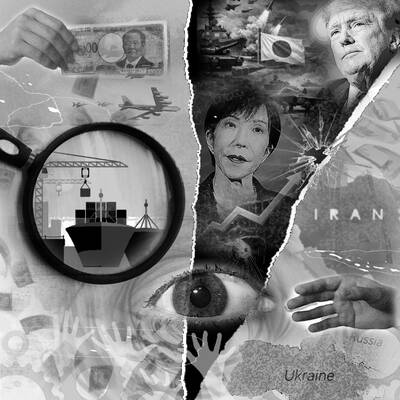
Japan’s imminent easing of arms export rules has sparked strong interest from Warsaw to Manila, Reuters reporting found, as US President Donald Trump wavers on security commitments to allies, and the wars in Iran and Ukraine strain US weapons supplies. Japanese Prime Minister Sanae Takaichi’s ruling party approved the changes this week as she tries to invigorate the pacifist country’s military industrial base. Her government would formally adopt the new rules as soon as this month, three Japanese government officials told Reuters. Despite largely isolating itself from global arms markets since World War II, Japan spends enough on its own


 RSS
RSS