


There is a photograph of former Taipei mayor Ko Wen-je (柯文哲) taken at a news conference on Thursday after the Taipei District Court sentenced him to 17 years in jail for corruption, embezzlement and mismanagement of political donations: Right arm raised, finger pointing for emphasis, his mouth locked in a snarl, he stares into the press pack before him. His expression is not one of contrition, but of defiance in the face of the verdict, which was the theme of the news conference. It has been the theme of his response to the charges ever since he was originally indicted on Dec. 26, 2024.
Ko sat between his lawyer Cheng Shen-yuan (鄭深元) and Taiwan People’s Party (TPP) Chairman Huang Kuo-chang (黃國昌). He opened with musings on how the judiciary was the last line of defense, how important it was to have the public’s trust and how its sole objective is to maintain fairness and justice in the country; he said that it should not be used as a political tool by leaders seeking to suppress opposition parties.
He talked about how biased the judiciary was, how public trust was at an all-time low, how the judiciary had been weaponized against him by an autocratic president bringing to bear the weight of the state machinery against him, how he was innocent of all charges and how, if he could be wronged in this way, then so could anyone. He told the public not to fear, as this case is so important and its implementation so egregiously corrupt that it would set a milestone for Taiwan, and that from this point on, real judicial reform can truly begin.
Ko closed his remarks with a message for President William Lai (賴清德), spoken softly at first: “I will absolutely not surrender!” Then louder and with defiance: “I will not yield!”
This picture of defiance is a deliberate strategy, and should be read as that, without the distractions of the protestations of bias, persecution and absence of due process Ko and Cheng levied during the news conference. It is a strategy of legal defense and political offense. It is transparent and predictable.
Just four days after Ko was originally indicted, the Liberty Times — the Taipei Times’ sister newspaper — published an editorial that appeared in translation under the headline “Ko Wen-je’s case a test for the TPP” (page 8, Jan. 1, 2025). The strategy playing out at the news conference was accurately predicted in that editorial.
The editorial said that, from the initiation of the case against Ko, Huang and other party members had insisted on pushing the line that the charges were nothing but political persecution, and had directly accused Lai of pursuing a witch hunt against Ko.
It says that, having protested against the presiding judge in the indictment hearing, Huang had led a group of supporters to protest, but when they heard that Ko would be released on bail, the crowd “changed their tune entirely, expressing their gratitude to the judge.” They were only interested in accepting the court’s decision if it were beneficial to Ko, even if the granting of bail had no bearing on the question of guilt. Huang, who has a doctorate in law, chose not to explain this to the supporters, and continued to encourage them to question the judiciary and foment social tensions.
The editorial then compared Ko’s autocratic style of leadership as mayor to that of Mao Zedong (毛澤東), who would “often initiate… social movements to consolidate his power, with little regard for the good of the nation or the populace.”
Huang’s approach was to insist on the idea of a “political witch hunt” orchestrated by the green camp, instead of “trying to produce some evidence or analysis to refute the allegations put forward by the prosecutors.”
Neither Ko nor Huang have diverted from this playbook established back in 2024. Consistency is important from the perspective of legal defense and political offense, but it is deleterious to social harmony and public trust in institutions, all for the benefit of one man and one party, with little regard for the public good.
If Ko and Huang continue to insist on levying these accusations, it is incumbent upon them to provide evidence for them.
Minister of Labor Hung Sun-han (洪申翰) on April 9 said that the first group of Indian workers could arrive as early as this year as part of a memorandum of understanding (MOU) between the Taipei Economic and Cultural Center in India and the India Taipei Association. Signed in February 2024, the MOU stipulates that Taipei would decide the number of migrant workers and which industries would employ them, while New Delhi would manage recruitment and training. Employment would be governed by the laws of both countries. Months after its signing, the two sides agreed that 1,000 migrant workers from India would
In recent weeks, Taiwan has witnessed a surge of public anxiety over the possible introduction of Indian migrant workers. What began as a policy signal from the Ministry of Labor quickly escalated into a broader controversy. Petitions gathered thousands of signatures within days, political figures issued strong warnings, and social media became saturated with concerns about public safety and social stability. At first glance, this appears to be a straightforward policy question: Should Taiwan introduce Indian migrant workers or not? However, this framing is misleading. The current debate is not fundamentally about India. It is about Taiwan’s labor system, its
On March 31, the South Korean Ministry of Foreign Affairs released declassified diplomatic records from 1995 that drew wide domestic media attention. One revelation stood out: North Korea had once raised the possibility of diplomatic relations with Taiwan. In a meeting with visiting Chinese officials in May 1995, as then-Chinese president Jiang Zemin (江澤民) prepared for a visit to South Korea, North Korean officials objected to Beijing’s growing ties with Seoul and raised Taiwan directly. According to the newly released records, North Korean officials asked why Pyongyang should refrain from developing relations with Taiwan while China and South Korea were expanding high-level
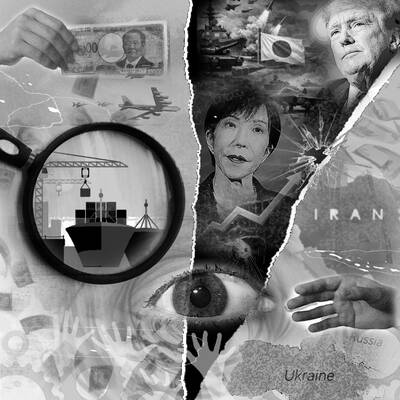
Japan’s imminent easing of arms export rules has sparked strong interest from Warsaw to Manila, Reuters reporting found, as US President Donald Trump wavers on security commitments to allies, and the wars in Iran and Ukraine strain US weapons supplies. Japanese Prime Minister Sanae Takaichi’s ruling party approved the changes this week as she tries to invigorate the pacifist country’s military industrial base. Her government would formally adopt the new rules as soon as this month, three Japanese government officials told Reuters. Despite largely isolating itself from global arms markets since World War II, Japan spends enough on its own


 RSS
RSS