


It has been 12 years since the Sunflower movement — a protest led by students and civil groups to oppose the ratification of the Cross-Strait Service Trade Agreement — not only thwarted the Chinese Nationalist Party (KMT) and Chinese Communist Party’s (CCP) “united front” strategy and brought about a change in the ruling party, but also reshaped Taiwan’s political trajectory.
The joint efforts of students, pro-Taiwan social activists and political figures successfully dismantled the CCP’s “united front” offensive, which sought to bind the nation with economic leverage, redefining Taiwan’s national identity.
This is precisely why pro-unification forces become visibly agitated whenever the Sunflower movement is mentioned. It must also be why 12 years later, they are still launching troll campaigns online, mocking the movement’s anthem, Island’s Sunrise (島嶼天光).
Several accounts, real and fake, have been disseminating parodies of the anthem — a song by Taiwanese indie band Fire Ex (滅火器) — across major online platforms, turning it into a copypasta filled with puns and other humorous expressions, the media reported.
As anti-CCP YouTuber Pa Chiung (八炯) said, this is a form of sophisticated stigmatization employed by pro-China forces, aimed at making people ashamed of the song and the democratic memory it represents.
“When we start to feel embarrassed by the song, they will have succeeded in dismantling the collective sense of honor among Taiwanese,” he said.
In other words, it is because pro-China forces fear the Sunflower movement that they resort to every possible tactic to distract from it.
Under the CCP’s rule in Hong Kong, the song Glory to Hong Kong (願榮光歸香港) — an anthem that emerged from the territory’s huge pro-democracy protests in 2019 — was banned outright, demonstrating how authoritarian regimes fear social movements.
It is because they dread people striving for freedom that they resort to violent suppression by police and invoke absurd charges such as “conspiracy to commit subversion” in an attempt to extinguish the flames of liberty. However, when facing democratic and free Taiwan, all they can do is collude with local proxies, infiltrate online spaces and launch troll attacks to undermine the nation.
Even as one of the victims of the police’s improper use of force during the March 24, 2014, crackdown on the Sunflower movement, I would give no second thought to participating once more. Had the movement failed and Taiwan become fully economically bound to China, subsequent events — such as the COVID-19 pandemic, the US-China trade war and the global shift of supply chains out of China — would have dealt major blows to Taiwan.
Even in the face of expanding authoritarian pressure from China, Taiwan has remained committed to safeguarding human rights and democratic values. For years, it has been classified by international organizations as a free and open country in Asia.
The many social movements that have worked to defend democracy and freedom while resisting CCP aggression have all played an indispensable role in this achievement. Therefore, we must not allow attacks from pro-CCP online trolls to blur the focus of such movements.
Pan Kuan was a participant in the 2014 Sunflower movement.
Translated by Kyra Gustavsen
In recent weeks, Taiwan has witnessed a surge of public anxiety over the possible introduction of Indian migrant workers. What began as a policy signal from the Ministry of Labor quickly escalated into a broader controversy. Petitions gathered thousands of signatures within days, political figures issued strong warnings, and social media became saturated with concerns about public safety and social stability. At first glance, this appears to be a straightforward policy question: Should Taiwan introduce Indian migrant workers or not? However, this framing is misleading. The current debate is not fundamentally about India. It is about Taiwan’s labor system, its
Minister of Labor Hung Sun-han (洪申翰) on April 9 said that the first group of Indian workers could arrive as early as this year as part of a memorandum of understanding (MOU) between the Taipei Economic and Cultural Center in India and the India Taipei Association. Signed in February 2024, the MOU stipulates that Taipei would decide the number of migrant workers and which industries would employ them, while New Delhi would manage recruitment and training. Employment would be governed by the laws of both countries. Months after its signing, the two sides agreed that 1,000 migrant workers from India would
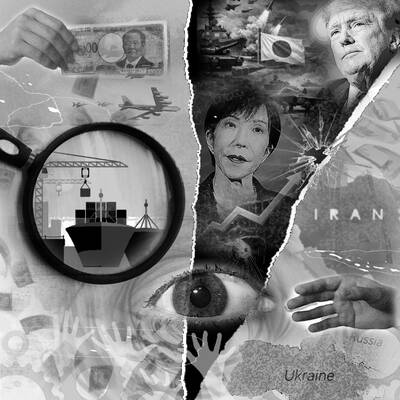
Japan’s imminent easing of arms export rules has sparked strong interest from Warsaw to Manila, Reuters reporting found, as US President Donald Trump wavers on security commitments to allies, and the wars in Iran and Ukraine strain US weapons supplies. Japanese Prime Minister Sanae Takaichi’s ruling party approved the changes this week as she tries to invigorate the pacifist country’s military industrial base. Her government would formally adopt the new rules as soon as this month, three Japanese government officials told Reuters. Despite largely isolating itself from global arms markets since World War II, Japan spends enough on its own
On March 31, the South Korean Ministry of Foreign Affairs released declassified diplomatic records from 1995 that drew wide domestic media attention. One revelation stood out: North Korea had once raised the possibility of diplomatic relations with Taiwan. In a meeting with visiting Chinese officials in May 1995, as then-Chinese president Jiang Zemin (江澤民) prepared for a visit to South Korea, North Korean officials objected to Beijing’s growing ties with Seoul and raised Taiwan directly. According to the newly released records, North Korean officials asked why Pyongyang should refrain from developing relations with Taiwan while China and South Korea were expanding high-level


 RSS
RSS