


If the recent escalation involving the US, Israel and Iran has demonstrated anything, it is that the international community must prepare for a period of heightened global uncertainty extending well beyond Europe and the Middle East. The Indo-Pacific region could well become the next focus. In many ways, it already is — marked by tensions in the South China Sea, China-Japan frictions and persistent coercion by China in the Taiwan Strait. Yet, as the US grapples with overstretched strategic attention and deeper entanglement in the Middle East, the Indo-Pacific region — Taiwan in particular — risks being overlooked. How Taiwan’s vulnerability is managed would materially shape regional stability, particularly as the authoritarian expansionist might seek to exploit global distractions.
A fundamental contradiction persists: Taiwan is a robust democracy with a vibrant civil society and strong protections for freedom of speech, but the persistent threat from China makes it a geopolitical flashpoint. Preserving the “status quo” amid these tensions is not Taiwan’s responsibility alone; it is a shared challenge for all who seek a stable Indo-Pacific region. Like-minded countries should consider coordinated ways to strengthen the regional order, and crucially, adopt a framework in which Taiwan is included.
Taiwan is pivotal to whether the region moves toward instability or restraint. Its democratic institutions, economic strength and social cohesion position it as an integral pillar of regional stability.
In recent years, Taiwan has taken several steps to assert a constructive regional role. From former president Tsai Ing-wen’s (蔡英文) launch of the New Southbound Policy (NSP) to President William Lai’s (賴清德) expansion of the initiative through the NSP+, Taiwan has articulated a clear Indo-Pacific strategy with strong commitment and concrete action. Given diplomatic constraints and China’s efforts to shrink its international space, Taiwan increasingly relies on pragmatic, network-based forms of engagement. Through trade partnerships, technological cooperation, public health initiatives and civil society exchanges, Taiwan has deepened connections across the region and demonstrated its capacity to contribute in times of crisis. High-level platforms such as the annual Yushan Forum showcase Taiwan’s commitment to dialogue and cooperation with regional partners. Even without formal diplomatic recognition, Taiwan has contributed — and would continue to contribute — meaningfully to regional stability.
Minister of Foreign Affairs Lin Chia-lung (林佳龍) said that “the most important thing is to embed Taiwan more fully into Indo-Pacific security frameworks.” If properly supported, Taiwan can function not merely as a point of risk, but as a stabilizing force beyond traditional security domains. It can serve as a democratic force multiplier, provided its capabilities are recognized. Over the past three decades, Taiwan’s national identity has evolved alongside its transformation into a robust and competitive democracy. Therefore, Taiwan should be viewed less through the prism of security risk, and more as a resilient, capable partner.
Taiwan’s governance record offers tangible evidence of this. During the COVID-19 pandemic, the country demonstrated administrative competence, transparency and social trust, reinforcing its credibility as a capable and responsible actor. Amid mounting geopolitical uncertainty, these attributes are strategic assets. Taiwan’s ability to govern effectively, maintain public confidence and contribute to global supply chains positions it to play a constructive role in regional stability. Beyond security, Taiwan can also strengthen democratic resilience, technological cooperation and crisis preparedness across the Indo-Pacific region.
Excluding Taiwan carries its own risks. As seen during the COVID-19 pandemic, sidelining Taiwan deprived the international community of valuable expertise and cooperation. Yet even under these constraints, Taiwan continued to provide assistance and share its experience. As wars and crises unfold across continents, Taiwan should be part of collective solutions, contributing its resilience, capabilities and lessons learned to regional and global challenges.
To realize this potential, Taiwan must be included in regional dialogue and the grouping. Even where formal diplomatic constraints exist, institutionalized exchanges through think tanks, civil society and forums can ensure meaningful engagement. Excluding Taiwan only benefits the aggressor. While Taiwan is bolstering its own resilience, collective efforts from regional partners are equally necessary. Sharing best practices and policy coordination can amplify these efforts.
A resilient Taiwan, embedded in regional networks and supported by like-minded partners, is not only in Taiwan’s interest, but also essential for a stable and secure Indo-Pacific region. Supporting Taiwan’s engagement through initiatives such as the NSP+, the Yushan Forum and broader regional cooperation through Taiwan’s shaping of the Indo-Pacific Strategy can help ensure that the region remains open, connected, prosperous and resilient in the face of global uncertainty. Taiwan is contributing, but lasting regional stability requires a shared and inclusive approach, one that begins with welcoming Taiwan to the table.
Alan H. Yang is executive director at the Taiwan-Asia Exchange Foundation (TAEF), and a professor at the Graduate Institute of East Asian Studies, National Chengchi University. Sana Hashmi is a fellow at the TAEF. Views are personal.
Minister of Labor Hung Sun-han (洪申翰) on April 9 said that the first group of Indian workers could arrive as early as this year as part of a memorandum of understanding (MOU) between the Taipei Economic and Cultural Center in India and the India Taipei Association. Signed in February 2024, the MOU stipulates that Taipei would decide the number of migrant workers and which industries would employ them, while New Delhi would manage recruitment and training. Employment would be governed by the laws of both countries. Months after its signing, the two sides agreed that 1,000 migrant workers from India would
In recent weeks, Taiwan has witnessed a surge of public anxiety over the possible introduction of Indian migrant workers. What began as a policy signal from the Ministry of Labor quickly escalated into a broader controversy. Petitions gathered thousands of signatures within days, political figures issued strong warnings, and social media became saturated with concerns about public safety and social stability. At first glance, this appears to be a straightforward policy question: Should Taiwan introduce Indian migrant workers or not? However, this framing is misleading. The current debate is not fundamentally about India. It is about Taiwan’s labor system, its
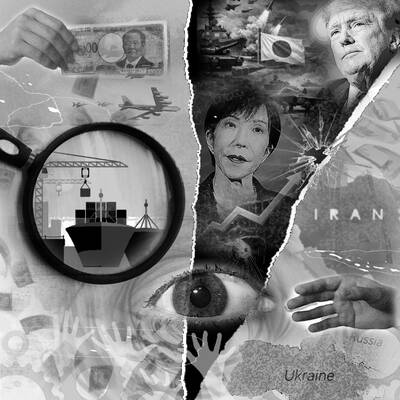
Japan’s imminent easing of arms export rules has sparked strong interest from Warsaw to Manila, Reuters reporting found, as US President Donald Trump wavers on security commitments to allies, and the wars in Iran and Ukraine strain US weapons supplies. Japanese Prime Minister Sanae Takaichi’s ruling party approved the changes this week as she tries to invigorate the pacifist country’s military industrial base. Her government would formally adopt the new rules as soon as this month, three Japanese government officials told Reuters. Despite largely isolating itself from global arms markets since World War II, Japan spends enough on its own
On March 31, the South Korean Ministry of Foreign Affairs released declassified diplomatic records from 1995 that drew wide domestic media attention. One revelation stood out: North Korea had once raised the possibility of diplomatic relations with Taiwan. In a meeting with visiting Chinese officials in May 1995, as then-Chinese president Jiang Zemin (江澤民) prepared for a visit to South Korea, North Korean officials objected to Beijing’s growing ties with Seoul and raised Taiwan directly. According to the newly released records, North Korean officials asked why Pyongyang should refrain from developing relations with Taiwan while China and South Korea were expanding high-level


 RSS
RSS