


As a Hong Konger who has called Taiwan home for four decades and a proud citizen of this nation, I watched Beijing tighten its grip on Hong Kong until my birth territory had nothing left to lose. Now, that same predator is circling Taiwan.
Chinese J-15 fighters are screaming across the Bashi Channel, armed with hypersonic teeth designed to sink Taiwan’s future. Meanwhile, Beijing’s “dark fleet” of more than 1,400 maritime militia vessels is probing our boundaries.
The Bashi Channel is not just a shipping lane. Block it and the undersea cables carrying nearly all of Taiwan’s Internet traffic go dead.
However, the foundations for a southern anchor exist. Semiconductor giant ASE Technology’s sprawl in the Philippines’ Cavite and Clark — strategic industrial hubs just south and north of Metro Manila respectively — is not just corporate offshoring; it is a high-stakes grafting of our industrial DNA into Philippine soil. The Philippines is no longer just a neighbor; it is our backup hard drive.
Our security is also tied to the 170,000 Filipino workers in Taiwan. Any Chinese aggression against Taiwan would trigger an immediate evacuation crisis for Manila, forcing Washington’s hand through sheer humanitarian pressure.
That bond is being formalized through the Global Cooperation and Training Framework, swapping digital handshakes on cybersecurity, but the real magic is subsurface: Taiwan’s southern radars now hum in sync with northern Luzon.
To truly deter Beijing’s “gray zone” war, Taipei must stop flirting with polite hand-wringing.
First, it should prioritize cofunding dual-use upgrades at Philippine sites under the Enhanced Defense Cooperation Agreement (EDCA) — a pact that grants the US access to strategic bases — specifically Lal-lo Airport and the Port of Irene. Those hubs would serve as semiconductor logistics spots during peace, while providing the critical capacity for humanitarian evacuation and allied reinforcement during a crisis.
Second, Taiwan and the Philippines should establish a joint cybersecurity and sovereign data hub in Batangas — a coastal gateway about 100km south of Metro Manila. Batangas serves as a primary landing point for the submarine cables keeping Taiwan’s Internet alive. By training Filipino specialists there to identify and neutralize Chinese state-sponsored malware, we would be building a digital firewall.
Third, Taipei should fast-track a defense industrial partnership to bankroll the Philippines’ Self-Reliant Defense Posture — Manila’s homegrown initiative to modernize its local military production — specifically through coproducing uncrewed aerial systems.
The timing is critical: with US Marines set for a strategic return to Subic Bay this summer to counter Chinese maritime militia harassment, Taipei must seize the moment to establish a joint ship repair facility in the same harbor. Subic Bay must become our industrial rear-guard — a secure alternative to distant hubs such as Sasebo, Japan and Guam.
The Bashi Channel, Subic Bay and fiber-optic cables running through Batangas are the physical architecture of Taiwan’s survival. Cofunding EDCA upgrades, building a joint cybersecurity hub and anchoring a ship repair facility at Subic are not acts of generosity toward Manila; they are acts of self-preservation for Taipei. As China’s shadow lengthens, a fortified southern pillar in the Philippines is the price of remaining a free nation.
Regan Chong Sik Yu is a Hong Konger advocating for Hong Kong’s independence from China and a contact person for the Hong Konger Front.
Minister of Labor Hung Sun-han (洪申翰) on April 9 said that the first group of Indian workers could arrive as early as this year as part of a memorandum of understanding (MOU) between the Taipei Economic and Cultural Center in India and the India Taipei Association. Signed in February 2024, the MOU stipulates that Taipei would decide the number of migrant workers and which industries would employ them, while New Delhi would manage recruitment and training. Employment would be governed by the laws of both countries. Months after its signing, the two sides agreed that 1,000 migrant workers from India would
In recent weeks, Taiwan has witnessed a surge of public anxiety over the possible introduction of Indian migrant workers. What began as a policy signal from the Ministry of Labor quickly escalated into a broader controversy. Petitions gathered thousands of signatures within days, political figures issued strong warnings, and social media became saturated with concerns about public safety and social stability. At first glance, this appears to be a straightforward policy question: Should Taiwan introduce Indian migrant workers or not? However, this framing is misleading. The current debate is not fundamentally about India. It is about Taiwan’s labor system, its
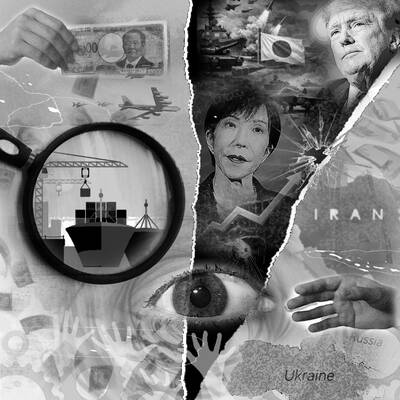
Japan’s imminent easing of arms export rules has sparked strong interest from Warsaw to Manila, Reuters reporting found, as US President Donald Trump wavers on security commitments to allies, and the wars in Iran and Ukraine strain US weapons supplies. Japanese Prime Minister Sanae Takaichi’s ruling party approved the changes this week as she tries to invigorate the pacifist country’s military industrial base. Her government would formally adopt the new rules as soon as this month, three Japanese government officials told Reuters. Despite largely isolating itself from global arms markets since World War II, Japan spends enough on its own
On March 31, the South Korean Ministry of Foreign Affairs released declassified diplomatic records from 1995 that drew wide domestic media attention. One revelation stood out: North Korea had once raised the possibility of diplomatic relations with Taiwan. In a meeting with visiting Chinese officials in May 1995, as then-Chinese president Jiang Zemin (江澤民) prepared for a visit to South Korea, North Korean officials objected to Beijing’s growing ties with Seoul and raised Taiwan directly. According to the newly released records, North Korean officials asked why Pyongyang should refrain from developing relations with Taiwan while China and South Korea were expanding high-level


 RSS
RSS