


For decades, autism was believed to overwhelmingly affect boys. Yet a big new study out of Sweden provides perhaps the best evidence yet that girls are not less likely to be autistic — they are just less likely to be diagnosed young.
Researchers looked across 35 years of health records for nearly 2.8 million people (an incredibly complete window into their lives thanks to Sweden’s universal healthcare system). They found that whether it was last year or 1995, boys under 10 were three to four times more likely to be diagnosed with autism than girls; by adulthood, the gap had nearly disappeared.
The study might have only looked at kids in Sweden, but it points to a global problem: Too many autistic girls are being missed during childhood. That is a critical time when social supports and interventions could help them learn to more easily navigate their world. On a more basic level, going unidentified means they are left until adolescence or even adulthood without a fundamental understanding of themselves.
Why do so many autistic girls fly under the radar? Child psychologists have a few theories. For starters, some of the traits of autism are expressed differently in girls than in boys. They often are milder — for example, girls with autism are more likely to hold eye contact and have an easier time with communication.
Although they might express strong interests, they tend to line up with things neurotypical girls are drawn to — say, Taylor Swift, makeup or animals, said Conner Black, associate director of the Child Mind Institute’s Autism Center.
The subtle differences make autistic traits easy to miss, even by pediatricians and therapists. That is in part because girls do not tend to display some of the big externalizing behaviors, like aggression or tantrums, that people tend to associate with autism in boys, Black said.
In the past few years, experts have particularly focused on girls’ ability to “mask” or “camouflage” their autism traits.
More so than boys, the desire to blend in is strong in young girls, and might be even more powerful in autistic girls, said Gina Rippon, a British neurobiologist whose book, The Lost Girls of Autism, chronicles the ways science has overlooked girls with autism.
That can be exhausting and impossible to keep up full-time. Girls might not display challenging behaviors at school, but still melt down the moment they get home, Black said.
That mismatch was illustrated in a 2024 study that found striking differences between teachers and parents’ perceptions of autism traits — things like having trouble interpreting body language or understanding social mores. Teachers viewed boys as having significantly more traits than girls — and consistently said girls had fewer traits than their parents identified.
Camouflaging might allow girls to navigate the early elementary school years, when there is a lot of predictability, but the tactic starts to fall apart around middle school.
“All of a sudden, the whole social environment becomes much more complex, much more unpredictable, much more pressurized, particularly for adolescents,” Rippon said. “The scaffolding that they’ve kind of built up to protect themselves is no longer fit for purpose.”
As social dynamics of middle school set in — surely every adult has vivid memories of those difficult years — autistic girls might start to struggle. That does not necessarily mean their autism suddenly becomes apparent to caregivers and clinicians; rather, they might start to be diagnosed with other conditions, like attention deficit hyperactivity disorder (ADHD), depression, anorexia or self-harm. The diagnoses could mean more years where their autism is missed — one study found an ADHD diagnosis can delay an autism diagnosis by nearly three years on average.
That delay can subject girls to treatments for other conditions that, although intended to help, could make life harder. For example, conventional eating disorder interventions might not be appropriate for someone with autism, Rippon said. That is because for some, the driver for an eating disorder has less to do with body image and more to do with sensory hypersensitivity or the need for rigid eating rituals.
Too many girls are missing out on early supports that could help them navigate life — not to mention missing out on the opportunity to have a deeper understanding of who they are and how their brain works. As robust research like the study out of Sweden makes it increasingly clear that autism is nearly as common in girls as in boys, there is so much work to do to better meet girls’ needs.
That starts with simply studying girls more. Despite growing recognition over the past decade or so that autistic girls deserve more time, attention and research dollars, there are still glaring knowledge gaps that need to be filled. A big one is developing better diagnostic tools to capture the subtle traits of autism in girls when they are young, especially when girls are camouflaging those traits.
Teachers could use more education, too, to recognize the less obvious traits that might be showing up in their classrooms. Meanwhile, parents are in the best position to advocate for their child, and pediatricians, therapists and educators should do a better job listening when parents are describing what they are seeing at home.
None of this is to suggest that boys do not deserve less; it is simply that girls should not be left to struggle. The goal should be to get to a place where every child has the support they need to live their happiest, healthiest life.
Lisa Jarvis is a Bloomberg Opinion columnist covering biotech, healthcare and the pharmaceutical industry. Previously, she was executive editor of Chemical & Engineering News. This column reflects the personal views of the author and does not necessarily reflect the opinion of the editorial board or Bloomberg LP and its owners.
Minister of Labor Hung Sun-han (洪申翰) on April 9 said that the first group of Indian workers could arrive as early as this year as part of a memorandum of understanding (MOU) between the Taipei Economic and Cultural Center in India and the India Taipei Association. Signed in February 2024, the MOU stipulates that Taipei would decide the number of migrant workers and which industries would employ them, while New Delhi would manage recruitment and training. Employment would be governed by the laws of both countries. Months after its signing, the two sides agreed that 1,000 migrant workers from India would
On March 31, the South Korean Ministry of Foreign Affairs released declassified diplomatic records from 1995 that drew wide domestic media attention. One revelation stood out: North Korea had once raised the possibility of diplomatic relations with Taiwan. In a meeting with visiting Chinese officials in May 1995, as then-Chinese president Jiang Zemin (江澤民) prepared for a visit to South Korea, North Korean officials objected to Beijing’s growing ties with Seoul and raised Taiwan directly. According to the newly released records, North Korean officials asked why Pyongyang should refrain from developing relations with Taiwan while China and South Korea were expanding high-level
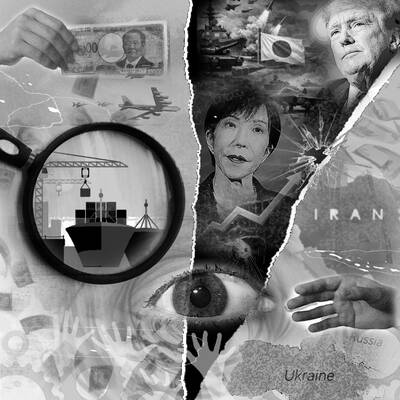
Japan’s imminent easing of arms export rules has sparked strong interest from Warsaw to Manila, Reuters reporting found, as US President Donald Trump wavers on security commitments to allies, and the wars in Iran and Ukraine strain US weapons supplies. Japanese Prime Minister Sanae Takaichi’s ruling party approved the changes this week as she tries to invigorate the pacifist country’s military industrial base. Her government would formally adopt the new rules as soon as this month, three Japanese government officials told Reuters. Despite largely isolating itself from global arms markets since World War II, Japan spends enough on its own
When 17,000 troops from the US, the Philippines, Australia, Japan, Canada, France and New Zealand spread across the Philippine archipelago for the Balikatan military exercise, running from tomorrow through May 8, the official language would be about interoperability, readiness and regional peace. However, the strategic subtext is becoming harder to ignore: The exercises are increasingly about the military geography around Taiwan. Balikatan has always carried political weight. This year, however, the exercise looks different in ways that matter not only to Manila and Washington, but also to Taipei. What began in 2023 as a shift toward a more serious deterrence posture


 RSS
RSS