


In an op-ed for the Taipei Times (“Foreign-run domestic politics,” Feb. 8, page 8), Howard Shen (沈正浩) — foreign press secretary for the Chinese Nationalist Party’s (KMT) 2024 presidential campaign — paints the KMT as a misunderstood steward of fiscal responsibility, unfairly maligned by “misinformed” US senators. He writes that the KMT’s opposition to the NT$1.25 trillion (US$39.61 billion) special defense budget is a principled stand for legislative oversight.
That argument collapses the moment one examines the legislative record.
Shen said that a defense plan must survive the “scrutiny of its own legislature,” but the KMT and Taiwan People’s Party have blocked that budget from even entering the agenda 10 times. They cannot claim to be “scrutinizing” a document they refuse to let into the room.
Shen leans heavily on one statistic: The legislature last year passed a record-high defense budget of NT$471 billion. That number sounds impressive when divorced from the fact that China’s defense budget has risen every single year for decades and dwarfs Taiwan’s many times over. “Record high” in nominal terms means little when the threat environment has transformed so radically.
Shen calls the special budget an “administrative blank check.” If that were true, the logical legislative response would be to bring the bill to committee, demand specifics and amend the terms.
Instead, the KMT has held the entire budget hostage, demanding that President William Lai (賴清德) appear for an unprecedented, potentially unconstitutional question-and-answer session as ransom.
Shen points to the US$21 billion backlog of US arms as a reason to stop spending. “The docks remain empty,” he writes. This is a sleight of hand.
The new NT$1.25 trillion “T-Dome” budget is specifically designed for asymmetric warfare — with drones, loitering munitions and artificial intelligence-integrated systems. These are precisely the types of low-cost, high-impact technologies that can be delivered and deployed much faster than traditional platforms such as F-16s.
Second, defense procurement operates on decade-long cycles. Halting funding now because of current delivery delays is like a farmer refusing to plant a tree today because the one he ordered last year has not grown fruit yet.
Finally, there is the deterrence deficit: When US senators Roger Wicker and Dan Sullivan express disappointment, they are not victims of “disinformation.” They are looking at the math. If Taiwan signals it is unwilling to fund its own defense, it undercuts the primary argument for US support and intervention.
Stop pretending the KMT is “naive” or “confused.” They are seasoned political operators who know exactly how their arguments sound in Washington and how their actions look in Beijing.
Why is the KMT really blocking the budget? Shen mentions “peace through strength,” but the party’s leadership seems far more interested in “peace through proximity.” As the KMT blocks defense spending at home, KMT Chairwoman Cheng Li-wun (鄭麗文) is signaling a desire for a high-level meeting with Chinese President Xi Jinping (習近平). Beijing does not need to issue “orders” to the KMT; the alignment of interests is clear.
If the KMT can present itself as the only party capable of “cooling” tensions — by weakening Taiwan’s military posture — they hope to win back power as the “party of stability.” However, stability bought by unilateral disarmament is merely a stay of execution.
Shen concludes by asking the US to help Taiwan maintain a “democracy worth defending.” On this, we agree — but a democracy is only worth defending if its leaders prioritize the survival of the state.
By blocking the means for Taiwan to defend itself, the KMT is not protecting the “power of the purse”; they are emptying the armory while the enemy is at the gates.
If the KMT truly believes in a “reasonable” defense, they should stop the blockade, put the bill on the floor and let Taiwanese see what can actually be done to defend the nation.
John Cheng is a retired businessman from Hong Kong now living in Taiwan.
KMT Chairwoman Cheng Li-wun’s (鄭麗文) recent visit to Beijing and her upcoming visit to Washington will serve as a high-level test of her diplomatic mettle. In Beijing, Cheng was received with symbolic gestures, a warm reception, and high-level access. In Washington, she will receive far less pomp and far sharper questions about the KMT’s vision for the future of Taiwan. Her challenge will be to persuade Washington that the KMT’s engagement with China can coexist with strong deterrence. Cheng’s April 7-12 visit to mainland China coincided with an intense period of conflict in Iran. Despite the strategic significance of Cheng’s trip,
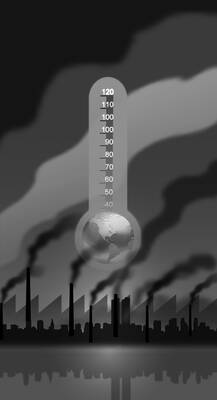
The closure of the Strait of Hormuz has sent the vast Asian chemicals industry into a tailspin. Deprived of the likes of Qatari natural gas and Saudi Arabian oil, the region’s fertilizer and plastics plants are slowing production or even shutting down. Everywhere except China, that is. In petrochemicals, China is unique. As well as a traditional industry that uses oil and gas as feedstock, it has parallel output that relies on its abundant domestic coal. Unsurprisingly, India and other regional powers want to copy and paste the Chinese method. This would not be easy — or climate friendly. The
US President Donald Trump recently repeated his claim that “Taiwan stole America’s chip industry,” reigniting public debate on the issue. As a former Taiwanese minister of economic affairs and an entrepreneur deeply involved in semiconductor supply chain development, I feel a responsibility to clarify this misunderstanding. From the perspective of global industrial evolution and the economic principle of comparative advantage, such a statement appears overly simplistic and risks obscuring the essence of the issue. The rise of Taiwan’s semiconductor industry was not built on “replacing America,” but rather emerged as a result of countries pursuing different development paths within the
Indonesian President Prabowo Subianto says he knows how to fix the problems facing Indonesia. Yet his economic mismanagement and authoritarian tendencies are steering the nation toward a familiar mix of currency instability and political chaos. The world’s fourth-most populous nation risks reversing the hard-won democratic and business reforms that came after the Asian Financial Crisis in 1997. At that time, the rupiah collapsed and the political upheaval that followed forced former president Haji Mohamed Suharto from power. Prabowo’s administration is ignoring similar warning signs. That disconnect was apparent in a national address on Wednesday, when Prabowo projected the swagger that has


 RSS
RSS