


Chinese Nationalist Party (KMT) Chairwoman Cheng Li-wun (鄭麗文) referred to the US as a “benefactor” and to China as “family,” arguing that as long as Taiwan engages in good-faith discussions with China, relations between the two sides would begin to thaw. However, Cheng should first revisit the KMT’s own history and review how it was repeatedly deceived and dismantled by the Chinese Communist Party (CCP) until it was forced to flee to Taiwan in disgrace. Each time the KMT chose to “talk things through” with the CCP, no such “thaw” occurred. Instead, the CCP was only provided with more opportunities to prepare for war, eventually resulting in the annihilation of the KMT’s army.
The victims are not limited to the KMT — those closest to the CCP perhaps fared even worse. Among them were former Chinese minister of national defense Peng Dehuai (彭德懷), who could not escape brutal political persecution, and military leader Lin Biao (林彪), who — despite constantly flattering CCP leader Mao Zedong (毛澤東) — died in a plane crash while attempting to flee. It would be expected that those closest to Mao — such as his wife, Jiang Qing (江青), and his chosen successor, Hua Guofeng (華國鋒), whom Mao famously reassured by saying that, “with you in charge, I am at ease” — would be spared. Yet barely one month after Mao’s death, Hua moved swiftly to oust the leftist political group known as the Gang of Four and arrest Jiang, who ultimately took her own life in prison.
Chinese President Xi Jinping (習近平) openly reveres Mao and has undoubtedly inherited his ruthlessness. Former Chinese president Hu Jintao (胡錦濤), in a gesture of profound trust and favor, once made a complete and early withdrawal from power to free Xi from the constraints of former Chinese president Jiang Zemin’s (江澤民) political faction. However, the outcome was Hu being escorted out of the closing session of the 20th National Congress of the CCP in public view under Xi’s watch.
When Xi first took office, the Chinese Central Military Commission (CMC) was still in effect controlled by figures from Jiang Zemin’s faction — former CMC vice chairmen Xu Caihou (徐才厚) and Guo Boxiong (郭伯雄). At that time, Xi relied on General Liu Yuan (劉源) — son of late People’s Republic of China (PRC) president Liu Shaoqi (劉少奇) — and then-Chinese People’s Liberation Army (PLA) General Logistics Department director Zhao Keshi (趙克石), who was commander of the PLA’s 31st Group Army at the time, to build a base of influence within the military centered around officers from the 31st Group Army. Xu and Guo were purged through a joint “anti-corruption” campaign led by Liu Yuan and Zhao, thereby enabling Xi to fully consolidate control over the armed forces. Yet, once this objective was achieved, Liu Yuan was promptly sidelined and politically frozen out.
Among Xi’s trusted inner circle from the 31st Group Army, the two figures entrusted with the most critical roles — Miao Hua (苗華), former director of the CMC Political Work Department, and General He Weidong (何衛東), who formerly served as CMC vice chairman and commander of the Eastern Theater Command — could be described as Xi’s closest confidants. However, even they were ultimately arrested and imprisoned all the same.
Former CMC vice chairman Zhang Youxia (張又俠), who is second-in-command under Xi, is under investigation. Zhang Youxia’s father, Zhang Zongxun (張宗遜), was a founding-era PLA general who once served together with Xi Jinping’s father, Xi Zhongxun (習仲勳), in the PLA’s Northwest Field Army. Since Xi Jinping came to power, Zhang Youxia has repeatedly assisted him in eliminating rivals within the military, and later even helped purge Xi Jinping’s allies. He should have been even closer than all others in Xi Jinping’s inner circle — yet even he has been branded with the accusation of “serious violations of discipline and law.”
Thus, we have every reason to question whether Cheng is simply ignorant of China and naively unrealistic, or whether she is deliberately deceiving KMT members and Taiwanese. Could she be attempting to mislead Taiwanese into embracing a pro-China stance to curry favor with Xi Jinping, hoping to secure a “thaw” for the KMT in return? However, that first requires us to ask — in terms of gratitude and loyalty, is Cheng greater than Hu? In terms of achievements and contributions, does she surpass Liu Yuan? In terms of trust and proximity, is she closer than Miao, He and Zhang Youxia?
The CCP does not even spare its own people, so outsiders should not delude themselves into claiming they are “family” in a pointless attempt to use empty rhetoric to bridge such vast distances. Pressing a warm face against another’s cold shoulder can only lead to one’s own downfall.
Tommy Lin is chairman of the Formosa Republican Association and director of the Taiwan United Nations Alliance.
Translated by Kyra Gustavsen
KMT Chairwoman Cheng Li-wun’s (鄭麗文) recent visit to Beijing and her upcoming visit to Washington will serve as a high-level test of her diplomatic mettle. In Beijing, Cheng was received with symbolic gestures, a warm reception, and high-level access. In Washington, she will receive far less pomp and far sharper questions about the KMT’s vision for the future of Taiwan. Her challenge will be to persuade Washington that the KMT’s engagement with China can coexist with strong deterrence. Cheng’s April 7-12 visit to mainland China coincided with an intense period of conflict in Iran. Despite the strategic significance of Cheng’s trip,
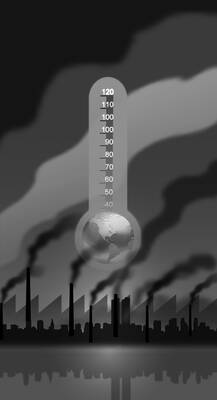
The closure of the Strait of Hormuz has sent the vast Asian chemicals industry into a tailspin. Deprived of the likes of Qatari natural gas and Saudi Arabian oil, the region’s fertilizer and plastics plants are slowing production or even shutting down. Everywhere except China, that is. In petrochemicals, China is unique. As well as a traditional industry that uses oil and gas as feedstock, it has parallel output that relies on its abundant domestic coal. Unsurprisingly, India and other regional powers want to copy and paste the Chinese method. This would not be easy — or climate friendly. The
Indonesian President Prabowo Subianto says he knows how to fix the problems facing Indonesia. Yet his economic mismanagement and authoritarian tendencies are steering the nation toward a familiar mix of currency instability and political chaos. The world’s fourth-most populous nation risks reversing the hard-won democratic and business reforms that came after the Asian Financial Crisis in 1997. At that time, the rupiah collapsed and the political upheaval that followed forced former president Haji Mohamed Suharto from power. Prabowo’s administration is ignoring similar warning signs. That disconnect was apparent in a national address on Wednesday, when Prabowo projected the swagger that has
“Of course you can choose not to be Taiwanese, just do not stay here,” chairwoman of Taipei 101 operator Taipei Financial Center Corp Janet Chia (賈永婕) said in an online interview with local entertainer Tai Chih-yuan (邰智源), triggering intense discussion on social media, with politicians across party lines weighing in. In the interview, which was aired on May 14, Chia and Tai’s discussion over a meal in Taipei 101 covered Chia’s career change from entertainer to chairwoman and US climber Alex Honnold’s free solo climb up the Taipei 101 building. During the interview, Chia said, “Being on this land, we


 RSS
RSS