


When tensions flare between US President Donald Trump and the UN, reactions in Taiwan are often marked by frustration, even indifference. After decades of exclusion and obstruction, some argue that a weakened UN is hardly worth defending. If the organization no longer functions, perhaps nothing of value is lost. This instinct is understandable. It is also profoundly mistaken.
If a world in which the UN no longer meaningfully functions becomes normal, Taiwan would not be insulated from the fallout. It would be among the first casualties.
The consequences of UN failure would not be a reduction in global problems, but their acceleration and hardening. The most immediate effect would be the normalization of force as a legitimate political tool. When multilateral institutions lose their restraining power, the message is simple: Military strength determines outcomes.
In such a world, aggression no longer requires serious justification. States with sufficient power can annex territory, manufacture historical narratives to legitimize coercion and treat international law as ceremonial language rather than binding constraint. Principles such as sovereignty, territorial integrity and the prohibition of aggression remain on paper, but lose their force in practice.
For Taiwan, this would not be an exception — it would be a precedent.
As norms erode, the security of smaller and non-nuclear states collapses. This vulnerability extends far beyond the Taiwan Strait, affecting the Baltic states, parts of eastern Europe, Central Asia, Southeast Asia and regions of Africa where borders are already fragile. The lesson becomes brutally clear: Without overwhelming power, survival is contingent, not guaranteed.
In this environment, nuclear proliferation becomes a rational response. If international institutions cannot protect states that forgo nuclear weapons, restraint begins to look like strategic negligence. Were Taiwan to be absorbed under conditions of international paralysis, the ripple effects would be immediate. Ukraine’s nuclear disarmament would be reassessed with regret; debates in Japan and South Korea would intensify; pressures in the Middle East would grow. The non-proliferation regime would not collapse overnight, but its logic would quietly die.
The damage would not stop at security. The UN’s human rights mechanisms, often dismissed as ineffective, nonetheless impose costs on repression through investigation and exposure. When these mechanisms cease to function, atrocities no longer need to be concealed. Mass detention, ethnic cleansing and collective punishment become transferable templates rather than international scandals. Human rights organizations are reduced to issuing reports without consequence, while authoritarian regimes learn that global condemnation carries little price.
Economic stability would erode as well. Without credible multilateral authority, global trade rules lose coherence. Tariffs become political weapons, blockades become routine tools and forced technology transfer is normalized. Investment decisions shift from economic logic to geopolitical survival. Energy and food security become politicized, shipping lanes lose shared norms and price volatility becomes a permanent condition — hitting poorer societies hardest.
Finally, the psychological cost might be the most corrosive. When people observe that rule-following leads to vulnerability while rule-breaking is rewarded, faith in democratic restraint erodes. Cynicism spreads, populism thrives and authoritarian narratives gain appeal not because they are just, but because they appear effective.
A world without a functioning UN would not descend into anarchy. It would reorganize around hierarchy — where power, not legitimacy, governs outcomes.
Taiwan would not be the only victim of such a transformation, but it would be among the first, the clearest and the most consequential. This is why treating the erosion of multilateral institutions with indifference is strategic misjudgement.
The UN might be flawed. It might have failed Taiwan in important ways. However, a world in which it no longer restrains anyone at all would be far more dangerous for us than the imperfect system we know.
Bonnie Yushih Liao is an assistant professor in Tamkang University’s Department of Diplomacy and International Relations.
KMT Chairwoman Cheng Li-wun’s (鄭麗文) recent visit to Beijing and her upcoming visit to Washington will serve as a high-level test of her diplomatic mettle. In Beijing, Cheng was received with symbolic gestures, a warm reception, and high-level access. In Washington, she will receive far less pomp and far sharper questions about the KMT’s vision for the future of Taiwan. Her challenge will be to persuade Washington that the KMT’s engagement with China can coexist with strong deterrence. Cheng’s April 7-12 visit to mainland China coincided with an intense period of conflict in Iran. Despite the strategic significance of Cheng’s trip,
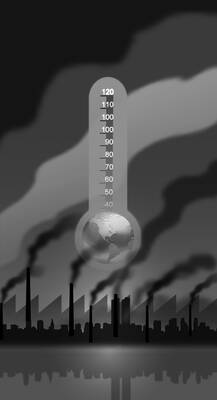
The closure of the Strait of Hormuz has sent the vast Asian chemicals industry into a tailspin. Deprived of the likes of Qatari natural gas and Saudi Arabian oil, the region’s fertilizer and plastics plants are slowing production or even shutting down. Everywhere except China, that is. In petrochemicals, China is unique. As well as a traditional industry that uses oil and gas as feedstock, it has parallel output that relies on its abundant domestic coal. Unsurprisingly, India and other regional powers want to copy and paste the Chinese method. This would not be easy — or climate friendly. The
Indonesian President Prabowo Subianto says he knows how to fix the problems facing Indonesia. Yet his economic mismanagement and authoritarian tendencies are steering the nation toward a familiar mix of currency instability and political chaos. The world’s fourth-most populous nation risks reversing the hard-won democratic and business reforms that came after the Asian Financial Crisis in 1997. At that time, the rupiah collapsed and the political upheaval that followed forced former president Haji Mohamed Suharto from power. Prabowo’s administration is ignoring similar warning signs. That disconnect was apparent in a national address on Wednesday, when Prabowo projected the swagger that has
“Of course you can choose not to be Taiwanese, just do not stay here,” chairwoman of Taipei 101 operator Taipei Financial Center Corp Janet Chia (賈永婕) said in an online interview with local entertainer Tai Chih-yuan (邰智源), triggering intense discussion on social media, with politicians across party lines weighing in. In the interview, which was aired on May 14, Chia and Tai’s discussion over a meal in Taipei 101 covered Chia’s career change from entertainer to chairwoman and US climber Alex Honnold’s free solo climb up the Taipei 101 building. During the interview, Chia said, “Being on this land, we


 RSS
RSS