


An oil-rich country is starting to emerge from years of economic devastation. It sits atop of one of the world’s largest petroleum reserves. And Big Oil is ready to take on the investment risk. Sound familiar? It is not Venezuela, but Libya.
For the first time in almost two decades, the North African nation is reopening its oil industry to foreign investors. It is not alone in the region: Algeria awarded its first oil licenses in a decade last year, and plans to hold another bidding round this year; Egypt and Tunisia are also wooing foreign companies.
These developments signal the return of North Africa to the international energy map. The timing is exquisite: The major oil companies are on the lookout for opportunities to replenish their reserves, aiming for projects that might come on stream in the 2030s. All else being equal, more oil means lower prices — another headache-in-the-making for Saudi Arabia and the OPEC+ cartel.
With more than 50 percent of Africa’s oil reserves, the region’s geology offers high-quality crude that is cheap to produce, plus significant gas fields. The financial equation, particularly in Libya, looks attractive enough, encouraging companies to overlook challenging politics and legal uncertainty. The list of oil companies that have pre-qualified for the Libyan bidding round, which is scheduled to be awarded next month, features all of the major players: Exxon Mobil Corp, Chevron Corp, Shell PLC, TotalEnergies SE, BP PLC, and a long etcetera that adds another 30 names.
“There’s good reason to be excited,” says Tom Richards, at energy consultant Enverus. “There’s plenty of low-cost barrels, the fiscal terms have improved, and there’s a hell of a lot of oil and gas still in the ground.”
For now, North Africa is a shadow of its former self in the energy industry. Back in 2007, before the start of the Arab Spring, the region reached a record output of almost 4.7 million barrels a day; last year, it pumped an average of 3.3 million barrels a day. The decline is down to two factors — an on-and-off civil war in Libya since the 2011 uprising that killed former leader Muammar Qaddafi, and a decade of underinvestment in Algeria as the country effectively closed its industry to foreign capital.
If the region is to reverse its decline, the key is Libya. One number symbolizes the opportunity: Its oilfields may breakeven even with oil prices as low as US$27 a barrel, says Enverus.
Libya holds the largest hydrocarbon reserves in Africa, significantly more than much better-known names on the continent such as Nigeria and Angola. The country has long attracted foreign companies, and today several still operate there, including Repsol SA of Spain, ENI SpA of Italy, ConocoPhillips of the US and TotalEnergies of France. However, activity has been minimal for the past decade. After the 2011 civil war, the country split into eastern and western regions, with competing governments backed by warlords and militias. The chaos that followed deterred investment; last year, only 30 new wells were drilled, down from pre-war levels of between 100 and 200 wells per year.
This year’s bidding round is the clearest sign that the sector is starting to turn around, but there are additional indications: Foreign operators are also in talks with the national oil company to revive wells that have been idle for years. Here and there, projects to repair existing oilfields are emerging.
Libya needs all the help it can get to boost production. Last year, it pumped about 1.3 million barrels a day, well above its post-civil war low point but still below the most recent peak of 1.8 million barrels a day set in 2008. Even if the North African country meets its ambitious target of increasing daily output to 2 million barrels by 2030, that would still leave the country well below its all-time record of 3.5 million barrels set in 1970, when Libya pumped nearly as much as Saudi Arabia.
For now, all is opportunity. Only time will confirm whether oil companies can find new reserves and manage to develop them into commercial oil and gas fields. On top of the bidding rounds, both Libya and Algeria are negotiating directly with foreign investors, including Exxon, Chevron and Total, for additional deals. BP and Shell have also signed preliminary deals in Libya to help the country expand output in three of its largest oilfields currently in operation.
The opportunity has an additional twist: Until now, much of the oil and gas exploration in Libya has focused on conventional onshore reservoirs, but foreign investors believe it has two additional attractions. First, going offshore into the Mediterranean, where energy companies have already found significant hydrocarbons in the waters of Egypt, Israel, Lebanon, Turkey and Greece. Second, drill the shale-like geological formations straddling the border between Libya and Algeria, a basin known as Ghadames-Berkine.
Few in the oil market are pricing the untapped potential of North Africa, having written off the region since 2011. As with Venezuela, the obstacles for production recovery, and perhaps even a boom, are all aboveground in Libya and Algeria — political uncertainty, the risk of violent disruptions and the aftermath of years of economic neglect. Below, there is a sea of oil and gas waiting to be tapped.
Javier Blas is a Bloomberg Opinion columnist covering energy and commodities. He is coauthor of The World for Sale: Money, Power and the Traders Who Barter the Earth’s Resources. This column reflects the personal views of the author and does not necessarily reflect the opinion of the editorial board or Bloomberg LP and its owners.
Minister of Labor Hung Sun-han (洪申翰) on April 9 said that the first group of Indian workers could arrive as early as this year as part of a memorandum of understanding (MOU) between the Taipei Economic and Cultural Center in India and the India Taipei Association. Signed in February 2024, the MOU stipulates that Taipei would decide the number of migrant workers and which industries would employ them, while New Delhi would manage recruitment and training. Employment would be governed by the laws of both countries. Months after its signing, the two sides agreed that 1,000 migrant workers from India would
On March 31, the South Korean Ministry of Foreign Affairs released declassified diplomatic records from 1995 that drew wide domestic media attention. One revelation stood out: North Korea had once raised the possibility of diplomatic relations with Taiwan. In a meeting with visiting Chinese officials in May 1995, as then-Chinese president Jiang Zemin (江澤民) prepared for a visit to South Korea, North Korean officials objected to Beijing’s growing ties with Seoul and raised Taiwan directly. According to the newly released records, North Korean officials asked why Pyongyang should refrain from developing relations with Taiwan while China and South Korea were expanding high-level
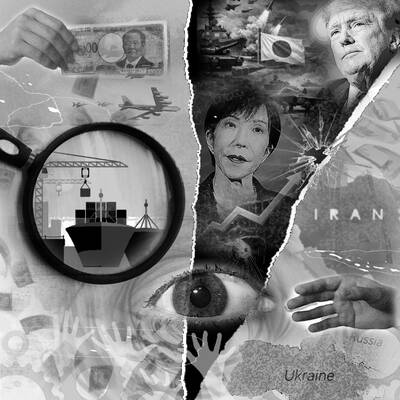
Japan’s imminent easing of arms export rules has sparked strong interest from Warsaw to Manila, Reuters reporting found, as US President Donald Trump wavers on security commitments to allies, and the wars in Iran and Ukraine strain US weapons supplies. Japanese Prime Minister Sanae Takaichi’s ruling party approved the changes this week as she tries to invigorate the pacifist country’s military industrial base. Her government would formally adopt the new rules as soon as this month, three Japanese government officials told Reuters. Despite largely isolating itself from global arms markets since World War II, Japan spends enough on its own
When 17,000 troops from the US, the Philippines, Australia, Japan, Canada, France and New Zealand spread across the Philippine archipelago for the Balikatan military exercise, running from tomorrow through May 8, the official language would be about interoperability, readiness and regional peace. However, the strategic subtext is becoming harder to ignore: The exercises are increasingly about the military geography around Taiwan. Balikatan has always carried political weight. This year, however, the exercise looks different in ways that matter not only to Manila and Washington, but also to Taipei. What began in 2023 as a shift toward a more serious deterrence posture


 RSS
RSS