


Canadian Prime Minister Mark Carney’s recent speech at Davos was widely praised. It was articulate, historically informed and rhetorically assured. Many in the audience rose to their feet. Taken purely as an exercise in political oratory, the response was understandable. Twenty years ago, such a speech — invoking the decline of the postwar order, the anxieties of middle powers and the need to “live the truth” — would have been greeted as a serious contribution to global debate.
However, in international politics, speeches do not stand alone. They acquire meaning only when measured against actions. When Carney’s words are placed alongside his government’s decisions, the moral coherence of the speech begins to unravel.
Carney framed the present moment as a rupture: the fading of a rules-based order and the return of raw power politics. He warned against accommodation, against “going along to get along,” and invoked former Czech president Vaclav Havel’s warning about “living within a lie.”
These references point to a moral claim: that states, especially middle powers, must choose integrity over convenience even when the costs are real.
Yet almost simultaneously, Carney deepened Canada’s strategic and economic engagement with China. He met with Chinese President Xi Jinping (習近平), signed new trade and strategic cooperation agreements, eased tariffs, expanded access to critical resources, and signaled convergence on sensitive geopolitical issues ranging from the arctic to global governance.
China is not merely another great power. It is an authoritarian state that has used trade coercion, hostage diplomacy, territorial intimidation and legal repression as routine tools of policy. Canada itself was a direct victim: Beijing imposed trade punishments and detained two Canadian citizens in retaliation for the arrest of Huawei Technologies Co chief financial officer Meng Wanzhou (孟晚舟). Beyond Canada, China continues to threaten Taiwan, militarize the South China Sea and imprison figures such as Hong Kong pro-democracy tycoon Jimmy Lai (黎智英) — precisely the kind of case Carney’s speech implicitly gestured toward when speaking of human rights and moral courage.
To acknowledge these facts is not to deny that the US has flaws. Carney is right that US power has often been exercised inconsistently, sometimes coercively, and sometimes hypocritically.
However, moral judgement in international politics is not a relative scale in which all imperfections cancel each other out. From the standpoint of universal values, the distinction between liberal democracies and authoritarian systems remains fundamental.
Carney argued that middle powers must act together or risk being “on the menu.” What does not follow is the conclusion that partnering with an authoritarian power is a principled response to frustration with a democratic ally. Choosing convenience over values replaces dependence on one imperfect partner with vulnerability to another that rejects the very norms Carney claims to defend.
Elegant rhetoric can obscure this reality, especially for audiences predisposed to admire sophistication over substance.
However, history suggests that middle powers that blur moral distinctions in the name of realism often discover too late that they have preserved neither influence nor integrity.
Havel’s lesson was not that truth should be spoken eloquently, but that it must be lived — even when doing so is uncomfortable.
Taiwan’s security and international standing rest not only on power balances, but on moral clarity. When democratic leaders elsewhere treat authoritarian partnership as merely another option, they normalize a world in which values become decorative rather than decisive. That world is not safer for middle powers. It is more dangerous.
Carney’s speech was flawed because of the choice it concealed. In responding to American unpredictability, he chose to deepen ties with China, while risking estrangement from Canada’s closest democratic ally. US President Donald Trump might be disruptive, even damaging, but he is transient. The US is not. It remains a democracy with which Canada shares enduring institutions, values and strategic interests. Confusing a momentary political irritation with a civilizational realignment is a misjudgment whose consequences would outlast any single presidency.
John Cheng is a retired businessman from Hong Kong now living in Taiwan.
KMT Chairwoman Cheng Li-wun’s (鄭麗文) recent visit to Beijing and her upcoming visit to Washington will serve as a high-level test of her diplomatic mettle. In Beijing, Cheng was received with symbolic gestures, a warm reception, and high-level access. In Washington, she will receive far less pomp and far sharper questions about the KMT’s vision for the future of Taiwan. Her challenge will be to persuade Washington that the KMT’s engagement with China can coexist with strong deterrence. Cheng’s April 7-12 visit to mainland China coincided with an intense period of conflict in Iran. Despite the strategic significance of Cheng’s trip,
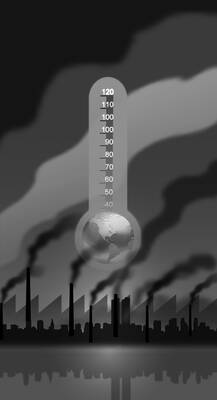
The closure of the Strait of Hormuz has sent the vast Asian chemicals industry into a tailspin. Deprived of the likes of Qatari natural gas and Saudi Arabian oil, the region’s fertilizer and plastics plants are slowing production or even shutting down. Everywhere except China, that is. In petrochemicals, China is unique. As well as a traditional industry that uses oil and gas as feedstock, it has parallel output that relies on its abundant domestic coal. Unsurprisingly, India and other regional powers want to copy and paste the Chinese method. This would not be easy — or climate friendly. The
Indonesian President Prabowo Subianto says he knows how to fix the problems facing Indonesia. Yet his economic mismanagement and authoritarian tendencies are steering the nation toward a familiar mix of currency instability and political chaos. The world’s fourth-most populous nation risks reversing the hard-won democratic and business reforms that came after the Asian Financial Crisis in 1997. At that time, the rupiah collapsed and the political upheaval that followed forced former president Haji Mohamed Suharto from power. Prabowo’s administration is ignoring similar warning signs. That disconnect was apparent in a national address on Wednesday, when Prabowo projected the swagger that has
“Of course you can choose not to be Taiwanese, just do not stay here,” chairwoman of Taipei 101 operator Taipei Financial Center Corp Janet Chia (賈永婕) said in an online interview with local entertainer Tai Chih-yuan (邰智源), triggering intense discussion on social media, with politicians across party lines weighing in. In the interview, which was aired on May 14, Chia and Tai’s discussion over a meal in Taipei 101 covered Chia’s career change from entertainer to chairwoman and US climber Alex Honnold’s free solo climb up the Taipei 101 building. During the interview, Chia said, “Being on this land, we


 RSS
RSS