


The staffing situation for nurses in acute care wards in Taiwan has long been stretched thin. In the absence of any resolution to Taiwan’s deeply entrenched family caregiving culture, the burdens and expectations on patients’ families remains heavy.
The Ministry of Health and Welfare has proposed a plan to the Ministry of Labor to allow foreign care workers who have worked in Taiwan for at least six years to work in general acute care wards, where they would be responsible for nonclinical tasks such as feeding, daily living assistance and provision of bedside companionship. The aim is to allow nurses to return their focus to professional care.
In theory, this could help restore clinical capacity, improve quality of care and reduce burnout among nursing staff. The policy is a response to the very real needs on the ground, but also highlights the importance of system-wide design and careful coordination across agencies.
In terms of the policy’s objectives, introducing care assistants could reduce the nonprofessional workload burden on nurses, and help meet acute care demands arising from declining birthrates and an aging population. However, acute wards rely on communication and accurate reporting, which means care risks could increase if language proficiency, health literacy or supervisory mechanisms are inadequate. Moreover, the stability that hospital-based roles offer could draw foreign workers away from in-home care roles, with the consequence of further exacerbating labor shortages in the long-term care sector.
The core of the healthcare workforce crisis lies with wages, working hours and workplace conditions. Ultimately, using foreign labor to plug gaps without materially improving the working conditions of domestic nurses would only be addressing the symptoms of the issue, not the root cause.
Opening up pathways for foreign care workers to work in acute care wards must be accompanied by clear and controllable supporting measures and safeguards.
First, the proportion of foreign care workers must remain lower than that of domestic staff, and their duties must be strictly limited to nonprofessional support tasks.
Second, comprehensive systems for preliminary and on-the-job training, language proficiency requirements and supervision must be established to ensure accurate reporting of patient conditions and safety.
Third, the government must simultaneously improve domestic nursing wages, working hours and workplace support, as well as introducing smart technologies to reduce clinical burdens. Fourth, the Labor Standards Act (勞動基準法) and foreign labor regulations must be followed to clarify hospitals’ responsibilities for employment and management.
Allowing foreign care workers into acute care wards is no silver bullet, but a reform that demands meticulous design. Only when staffing ratios are controlled, responsibilities are clearly defined, training is fully implemented and the domestic nursing system itself is strengthened could the policy truly enhance care quality, ease the burden on families and sustain the long-term stability of the healthcare system.
Yeh Yu-cheng is a secretary at the Pingtung County Public Health Bureau.
Translated by Gilda Knox Streader
Minister of Labor Hung Sun-han (洪申翰) on April 9 said that the first group of Indian workers could arrive as early as this year as part of a memorandum of understanding (MOU) between the Taipei Economic and Cultural Center in India and the India Taipei Association. Signed in February 2024, the MOU stipulates that Taipei would decide the number of migrant workers and which industries would employ them, while New Delhi would manage recruitment and training. Employment would be governed by the laws of both countries. Months after its signing, the two sides agreed that 1,000 migrant workers from India would
In recent weeks, Taiwan has witnessed a surge of public anxiety over the possible introduction of Indian migrant workers. What began as a policy signal from the Ministry of Labor quickly escalated into a broader controversy. Petitions gathered thousands of signatures within days, political figures issued strong warnings, and social media became saturated with concerns about public safety and social stability. At first glance, this appears to be a straightforward policy question: Should Taiwan introduce Indian migrant workers or not? However, this framing is misleading. The current debate is not fundamentally about India. It is about Taiwan’s labor system, its
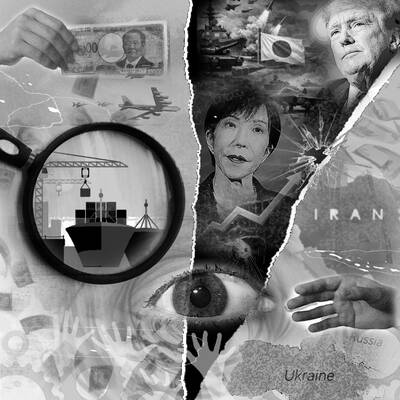
Japan’s imminent easing of arms export rules has sparked strong interest from Warsaw to Manila, Reuters reporting found, as US President Donald Trump wavers on security commitments to allies, and the wars in Iran and Ukraine strain US weapons supplies. Japanese Prime Minister Sanae Takaichi’s ruling party approved the changes this week as she tries to invigorate the pacifist country’s military industrial base. Her government would formally adopt the new rules as soon as this month, three Japanese government officials told Reuters. Despite largely isolating itself from global arms markets since World War II, Japan spends enough on its own
On March 31, the South Korean Ministry of Foreign Affairs released declassified diplomatic records from 1995 that drew wide domestic media attention. One revelation stood out: North Korea had once raised the possibility of diplomatic relations with Taiwan. In a meeting with visiting Chinese officials in May 1995, as then-Chinese president Jiang Zemin (江澤民) prepared for a visit to South Korea, North Korean officials objected to Beijing’s growing ties with Seoul and raised Taiwan directly. According to the newly released records, North Korean officials asked why Pyongyang should refrain from developing relations with Taiwan while China and South Korea were expanding high-level


 RSS
RSS