


The turbulence reshaping global politics today can no longer be explained by traditional notions of power balancing or geopolitical rivalry. The tensions among the US, China and Russia are not fundamentally ideological, but deeper: a clash among three distinct civilizational understandings of order.
Institutions can be copied and rules can be learned, but the value structures beneath them resist imitation. British historian Arnold Toynbee said civilizations rise or fall according to how they respond to challenges. The current disorder is the result of three such responses colliding under the pressures of globalization.
The US represents an institutional civilization. Its strength lies not in the specific architecture of its political system but in the values that sustain it — individual agency, the supremacy of law and the belief that universal norms can be transplanted. The Marshall Plan embodied this civilizational confidence, rebuilding former enemies rather than punishing them. This approach helped stabilize the postwar order and made institutional civilization a defining feature of modernity.
China’s civilizational logic is rooted in ethnic orthodoxy, historical narrative and centralized authority. In this worldview, rules are not universal principles but instruments crafted by the powerful. China’s approach to globalization has been one of selective absorption: importing technology and institutional form while preserving a pre-modern civilizational core.
This allows Beijing to benefit from the global system without embracing its normative foundations, turning globalization from a cooperative mechanism into an arbitrage mechanism that erodes institutional legitimacy.
Russia’s response is shaped by historical trauma and geopolitical insecurity. Its instinct is not to build order but to disrupt it. Power is asserted through destruction rather than construction, making Russia a chronic source of instability in the international system.
In this three-way contest, Taiwan is not a bystander. It is a society compelled to choose a direction. US political theorist Samuel Huntington predicted that post-Cold War conflict would increasingly take the form of civilizational clashes. Taiwan is an example of that thesis. Yet domestic debate has long been consumed by partisanship, identity politics and the binary of unification versus independence — obscuring the more consequential question of which civilizational level Taiwan intends to stand upon.
The notion of a “Chinese nationalism” (Zhonghua minzu, 中華民族) is not a modern civic identity but an extension of imperial logic. It defines political loyalty through bloodline and cultural orthodoxy, reducing individuals to members of an ethnic collective rather than rights-bearing citizens. Beijing’s claims over Taiwan rest on this civilizational frame, seeking to replace institutional choice with an ethnic narrative. This is not merely a sovereignty dispute; it is an attempt by one civilization to subsume another.
Once politics is reduced to ethnic belonging, institutions and rights lose their primacy. An ethnicity-based civilization cannot sustain a modern economy. Semiconductors, supply chains and global finance depend on institutional credibility, legal predictability and individual dignity. Taiwan’s real challenge is not a matter of political labels but of civilizational alignment: whether to uphold institutional civilization or retreat into a system defined by ethnicity and power.
That choice is going to determine Taiwan’s place — and its prospects — in the world that is emerging.
Joshua Tin is an economist.
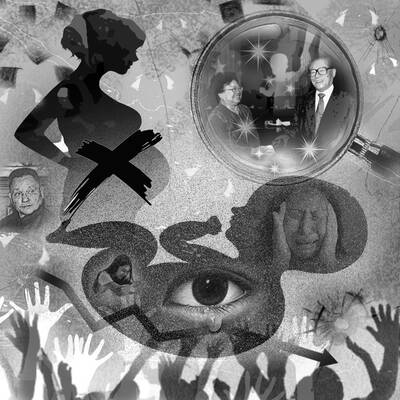
Jan. 1 marks a decade since China repealed its one-child policy. Just 10 days before, Peng Peiyun (彭珮雲), who long oversaw the often-brutal enforcement of China’s family-planning rules, died at the age of 96, having never been held accountable for her actions. Obituaries praised Peng for being “reform-minded,” even though, in practice, she only perpetuated an utterly inhumane policy, whose consequences have barely begun to materialize. It was Vice Premier Chen Muhua (陳慕華) who first proposed the one-child policy in 1979, with the endorsement of China’s then-top leaders, Chen Yun (陳雲) and Deng Xiaoping (鄧小平), as a means of avoiding the
As the Chinese People’s Liberation Army (PLA) races toward its 2027 modernization goals, most analysts fixate on ship counts, missile ranges and artificial intelligence. Those metrics matter — but they obscure a deeper vulnerability. The true future of the PLA, and by extension Taiwan’s security, might hinge less on hardware than on whether the Chinese Communist Party (CCP) can preserve ideological loyalty inside its own armed forces. Iran’s 1979 revolution demonstrated how even a technologically advanced military can collapse when the social environment surrounding it shifts. That lesson has renewed relevance as fresh unrest shakes Iran today — and it should

The last foreign delegation Nicolas Maduro met before he went to bed Friday night (January 2) was led by China’s top Latin America diplomat. “I had a pleasant meeting with Qiu Xiaoqi (邱小琪), Special Envoy of President Xi Jinping (習近平),” Venezuela’s soon-to-be ex-president tweeted on Telegram, “and we reaffirmed our commitment to the strategic relationship that is progressing and strengthening in various areas for building a multipolar world of development and peace.” Judging by how minutely the Central Intelligence Agency was monitoring Maduro’s every move on Friday, President Trump himself was certainly aware of Maduro’s felicitations to his Chinese guest. Just
In the US’ National Security Strategy (NSS) report released last month, US President Donald Trump offered his interpretation of the Monroe Doctrine. The “Trump Corollary,” presented on page 15, is a distinctly aggressive rebranding of the more than 200-year-old foreign policy position. Beyond reasserting the sovereignty of the western hemisphere against foreign intervention, the document centers on energy and strategic assets, and attempts to redraw the map of the geopolitical landscape more broadly. It is clear that Trump no longer sees the western hemisphere as a peaceful backyard, but rather as the frontier of a new Cold War. In particular,


 RSS
RSS