


At the Democratic Progressive Party’s (DPP) New Generation National Strategic Talent Empowerment Workshop in Taipei from Thursday to Sunday last week, DPP Secretary-General Hsu Kuo-yung (徐國勇) said that Taiwanese society often uses terms originating from China in everyday life.
“Although this might seem trivial, it has the potential to become a starting point for cultural infiltration, demonstrating that strategic thinking does not exist solely at the policy level. It should also be practiced in daily behavior, and individuals should make judgements and respond at all times based on their respective roles,” he said.
While Hsu’s statement sounds principled, how is it meant to be applied to everyday life? It is unclear whether the ruling party actually has any concrete, feasible policies to address this issue.
Taiwan and China use the same language. For China, waging cognitive warfare and carrying out infiltration operations require virtually no effort. It only needs to convert the disinformation it aims to spread from simplified to traditional Chinese characters, then use artificial intelligence (AI) to replace China-specific terms and phrases with Taiwanese ones.
Under such circumstances, how are people in Taiwan supposed to tell between what is real and fake? The grammar used in China is identical, with only the vocabulary differing. Thus, this kind of substitution is extremely simple in the era of AI-driven cognitive warfare — it is something that could be done without any specialization or expertise.
Suppose that after the outbreak of war, China manufactures false messages instructing frontline commanders and soldiers to surrender immediately, claiming that Taiwan’s commander-in-chief — that is, the president — has ordered them to lay down their arms at once. If we completely trust military communications written in Chinese, how are officers and soldiers supposed to determine whether such information is real or fake? Is every message written in traditional characters to be believed without question?
Regardless of the degree of our military preparedness, if the enemy succeeds in winning the cognitive war, it would effectively fracture and destroy our nation’s defensive morale. That, in effect, would amount to surrendering without a fight.
Hsu is right to call for greater awareness of Chinese word usage — otherwise, we risk losing the cognitive war. However, relying on this approach alone is clearly impractical. It is common knowledge that disinformation has interfered with the outcomes of major elections in Taiwan. My question is this — if Taiwan continues to rely solely on the same language used in China, are we not effectively sitting by and waiting for defeat? After all, using AI to convert Chinese terminology into Taiwanese, or vice versa, for the purpose of spreading disinformation is simply too easy.
It is surprising that the government has consistently failed to recognize the cognitive warfare advantages of Taiwan’s multilingual, multiethnic population. Much like other multilingual countries like Canada, Taiwan should — in addition to using a commonly shared language — also release accurate information in Hoklo (also known as Taiwanese, or Tai-gi) or other local mother tongues as tools for verification and clarification. In other words, mother tongues are not merely a matter of culture, nor solely an issue of revitalization.
In the face of a hostile China, whose native language is also Mandarin, the government and military should regard mother tongues as the most effective defensive language for winning the cognitive war. If they cannot be used universally, then Hoklo — still understood by roughly 70 percent of the population — should be adopted as a secondary common language for cognitive defense, enabling Taiwan to make the most precise preparations necessary for winning the cognitive war.
This would significantly raise the cost for China to disseminate disinformation, and mother tongues that were previously suppressed would serve as the vanguard in Taiwan’s modern cognitive defense.
It has been said that “a sufferer has no right to pessimism because he suffers.” Taiwanese society has endured the suffering of relentless disinformation spread by China and the pressure of being forced into a cognitive war by a foreign hostile force. Under such circumstances, do we really have a right to pessimism?
Liou Uie-liang is a medical worker and author based in Germany.
Translated by Kyra Gustavsen
In recent weeks, Taiwan has witnessed a surge of public anxiety over the possible introduction of Indian migrant workers. What began as a policy signal from the Ministry of Labor quickly escalated into a broader controversy. Petitions gathered thousands of signatures within days, political figures issued strong warnings, and social media became saturated with concerns about public safety and social stability. At first glance, this appears to be a straightforward policy question: Should Taiwan introduce Indian migrant workers or not? However, this framing is misleading. The current debate is not fundamentally about India. It is about Taiwan’s labor system, its
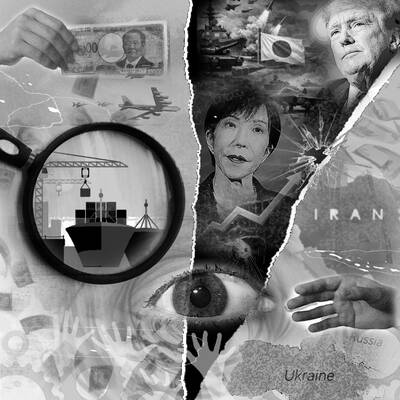
Japan’s imminent easing of arms export rules has sparked strong interest from Warsaw to Manila, Reuters reporting found, as US President Donald Trump wavers on security commitments to allies, and the wars in Iran and Ukraine strain US weapons supplies. Japanese Prime Minister Sanae Takaichi’s ruling party approved the changes this week as she tries to invigorate the pacifist country’s military industrial base. Her government would formally adopt the new rules as soon as this month, three Japanese government officials told Reuters. Despite largely isolating itself from global arms markets since World War II, Japan spends enough on its own
On March 31, the South Korean Ministry of Foreign Affairs released declassified diplomatic records from 1995 that drew wide domestic media attention. One revelation stood out: North Korea had once raised the possibility of diplomatic relations with Taiwan. In a meeting with visiting Chinese officials in May 1995, as then-Chinese president Jiang Zemin (江澤民) prepared for a visit to South Korea, North Korean officials objected to Beijing’s growing ties with Seoul and raised Taiwan directly. According to the newly released records, North Korean officials asked why Pyongyang should refrain from developing relations with Taiwan while China and South Korea were expanding high-level
Swiftly following the conclusion of Chinese Nationalist Party (KMT) Chairwoman Cheng Li-wun’s (鄭麗文) China trip, China’s Taiwan Affairs Office unveiled 10 new policy measures for Taiwan. The measures, covering youth exchanges, agricultural and fishery imports, resumption of certain flights and cultural and media cooperation, appear to offer “incentives” for cross-strait engagement. However, viewed within the political context, their significance lies not in promoting exchanges but in redefining who is qualified to represent Taiwan in dialogue with China. First, the policy statement proposes a “normalized communication mechanism” between the KMT and the Chinese Communist Party (CCP). This would shift cross-strait interaction from


 RSS
RSS