


Occasionally, history generates smooth changes from one era to another. More commonly, such shifts occur only gradually and untidily. Sometimes, as former Downing Street foreign policy adviser John Bew puts it in The New Statesman, history unfolds “in a series of flashes and bangs.”
In Caracas earlier this month, US President Donald Trump’s forces did this in spectacular style. In the process, the US brushed aside more of what remains of the so-called rules-based order, with which it tried to shape the West after 1945.
The capture of former Venezuelan president Nicolas Maduro has precedents in US policy. However, discerning a wider new pattern from the kidnapping is not easy, especially at this early stage. As our columnist Aditya Chakrabortty has argued last week, the abduction can be seen as an assertion of US power, but also as little more than a chaotic asset grab.
HARD POWER
The US’ historic allies are still struggling to understand these changes. Even more important, they are struggling to respond to them. Events such as those in Caracas raise stark questions of power. They embody the exact same reality that Trump delights in celebrating. The US is a superpower. Allies, including the UK, are not. These questions are not going to disappear. The British government should not be condemned for each hesitation. However, the hesitations cannot continue indefinitely. Britain needs a grown-up debate and a clear new course of international direction.
In The Spectator last week, former British ambassador to the US Peter Mandelson rubbed Europe’s noses in it.
“Trump has the means and the will ... and they [Europe and the UK] do not,” he said.
In Caracas, Trump did more in a day than diplomacy has achieved in 10 years, he said.
The issue is “Europe’s growing political impotence in the world,” he said.
The way to reclaim a seat at the table is not through “histrionics” or “fine words,” but by the collective deployment of “hard power and hard cash,” he added.
Many would disagree with this sweeping dismissal of international rules and its insistence on transatlantic realpolitik, perhaps because of its author. However, Mandelson is not alone. Officials, advisers, academics and commentators of every stripe are also trying to make larger sense of the US’ transformation from necessary power to rogue state.
DEBATE NEEDED
The arguments of Bew, adviser to four British prime ministers from Boris Johnson to Keir Starmer, are important. In his view, Caracas marks three things:
First, an increased US willingness to use executive power for swift military action.
Second, a further assertion of a US mercantilism that insists on US control of oil, gas and minerals.
Third, at least as promoted by the US Department of State, a turn to a hemispheric approach, implying perhaps that China and Russia would be given freer rein in other regions.
We can, should and do regret these emerging shifts. However, as Bew said, while we mourn the disintegration of the rules-based order and decry the mercantilism dominating the West’s most dynamic economy, the old world and its assumptions are not coming back any time soon. Countries such as Britain have to decide what economic and technological adaptations they should make in this new world to protect their interests and people. No one can pretend that is easy, but it is a debate that involves us all, with implications that would affect us all, and therefore one in which all must have a voice.
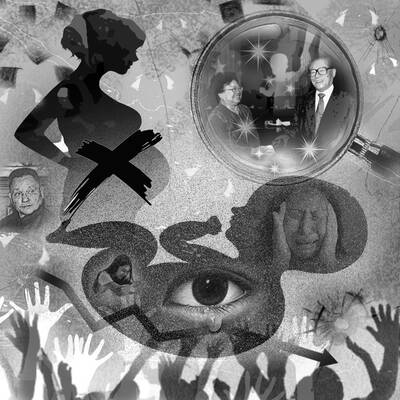
Jan. 1 marks a decade since China repealed its one-child policy. Just 10 days before, Peng Peiyun (彭珮雲), who long oversaw the often-brutal enforcement of China’s family-planning rules, died at the age of 96, having never been held accountable for her actions. Obituaries praised Peng for being “reform-minded,” even though, in practice, she only perpetuated an utterly inhumane policy, whose consequences have barely begun to materialize. It was Vice Premier Chen Muhua (陳慕華) who first proposed the one-child policy in 1979, with the endorsement of China’s then-top leaders, Chen Yun (陳雲) and Deng Xiaoping (鄧小平), as a means of avoiding the
The immediate response in Taiwan to the extraction of Venezuelan President Nicolas Maduro by the US over the weekend was to say that it was an example of violence by a major power against a smaller nation and that, as such, it gave Chinese President Xi Jinping (習近平) carte blanche to invade Taiwan. That assessment is vastly oversimplistic and, on more sober reflection, likely incorrect. Generally speaking, there are three basic interpretations from commentators in Taiwan. The first is that the US is no longer interested in what is happening beyond its own backyard, and no longer preoccupied with regions in other
A recent piece of international news has drawn surprisingly little attention, yet it deserves far closer scrutiny. German industrial heavyweight Siemens Mobility has reportedly outmaneuvered long-entrenched Chinese competitors in Southeast Asian infrastructure to secure a strategic partnership with Vietnam’s largest private conglomerate, Vingroup. The agreement positions Siemens to participate in the construction of a high-speed rail link between Hanoi and Ha Long Bay. German media were blunt in their assessment: This was not merely a commercial win, but has symbolic significance in “reshaping geopolitical influence.” At first glance, this might look like a routine outcome of corporate bidding. However, placed in

The last foreign delegation Nicolas Maduro met before he went to bed Friday night (January 2) was led by China’s top Latin America diplomat. “I had a pleasant meeting with Qiu Xiaoqi (邱小琪), Special Envoy of President Xi Jinping (習近平),” Venezuela’s soon-to-be ex-president tweeted on Telegram, “and we reaffirmed our commitment to the strategic relationship that is progressing and strengthening in various areas for building a multipolar world of development and peace.” Judging by how minutely the Central Intelligence Agency was monitoring Maduro’s every move on Friday, President Trump himself was certainly aware of Maduro’s felicitations to his Chinese guest. Just


 RSS
RSS