


A TikTok deal has finally been reached. Almost. Pending agreement from Beijing, the app’s owner, ByteDance Ltd, has agreed to a joint venture that would produce a US version of TikTok that is majority owned by US investors.
The deal has been described as an end a long-running saga over the app’s future. In reality, it is merely sweeping it under the rug, conveniently taking it off the agenda now that the political will to tackle the issue has subsided.
That ByteDance would retain the maximum permitted 19.9 percent ownership is the merest of lip service to the law passed by the US Congress and affirmed by the US Supreme Court. It does little to address the core concern and the reason any of this started in the first place, which was the worry over China’s stewardship of a recommendation algorithm that influences more than 170 million users in the US. According to Pew, one in five Americans turn to TikTok for their news.
The new arrangement, which closely resembles the proposed security measures that were met with skepticism by both Republicans and Democrats in 2023, will be accepted now thanks largely to US President Donald Trump’s change of heart: He believes he is popular on the platform and that it helped him win the election.
At the same time, Democrats are facing a tidal wave of other issues and their available energy to push back on TikTok appears to have ebbed.
Perhaps the concerns were overblown. The TikTok “ban” certainly came in a hurry, shoehorned into a broader national security bill and motivated in part by the concern — not backed up with data — that the algorithm was intentionally pushing anti-Israeli or pro-Palestinian content after the Oct. 7, 2023, terror attack.
The inability to know whether that was true is perhaps cause enough: When everyone’s TikTok “for you” page can be vastly different, it is nearly impossible to take a data-driven approach to understanding what is being funneled to eyes and ears, and how. Instead, we often learn through tragic circumstances.
Other critics of the ban argue that homegrown US social media companies are not much better. The past couple of years have shown a troubling regression in outsiders’ abilities to monitor what is going on. Meta Platforms Inc shut a program used by researchers to monitor the most shared posts. Elon Musk imposed prohibitively expensive restrictions on X’s API, locking out researchers who used to monitor the ebb and flow of information across the network, which these days is an even more active engine room for bigotry and hate.
However, the difference — and it is not an unimportant one — is that when those companies do wrong, their bosses are answerable to US law and often find themselves in front of the US Congress to be held accountable (in theory).
When wrongdoing is kept secret, American employees, such as Frances Haugen, often turn to the media to blow the whistle.
By contrast, we know little about the inner workings of ByteDance — other than it makes an extraordinary amount of money and has huge ambition. For matters of TikTok, a middleman is dispatched to the West in the form of Shou Zi Chew (周受資), the app’s Singaporean chief executive officer.
“There’s more work to be done” on the new ownership deal, Shou told his employees last week, Bloomberg reported. In other words, the real decisionmakers at ByteDance are still figuring things out. The deadline for the deal is said to be Jan. 22. The can-kicking might not be quite over yet.
Giving up control of the algorithm was a red line that ByteDance and China were not willing to cross, even as it looked as though TikTok might be shut off from the US entirely.
The new joint venture, as anticipated, would license the algorithm’s use from ByteDance. There would be additional oversight, it is claimed, and the algorithm would be “retrained” on US data. All of this is to be overseen by Larry Ellison’s Oracle Corp, whose shares were up 7.5 percent by lunchtime on Friday last week, countering a bruising run over doubts surrounding its own artificial intelligence strategy.
What expertise Oracle offers in social media algorithms is not clear. Nor is what power it would have to forensically alter ByteDance’s code and how it is applied to users in the US. It has been suggested that Oracle’s involvement means it can monitor and detect manipulation, but doing this at great scale is notoriously difficult.
For this reason, it is questionable whether the TikTok threat has been “materially altered” or “just managed,” said professor Sarah Kreps, director of the Tech Policy Institute at Cornell University.
“While the new framework may limit direct access to US user data and introduce additional oversight, it remains unclear how effectively it constrains subtler forms of influence or ensures sustained accountability,” Kreps said.
What will actually change if this arrangement goes ahead?
From a product perspective, in the short term, likely not much. On a broader horizon, the more complicated ownership structure might slow progress on developing the US version of TikTok, putting it at greater risk of being overtaken by Instagram’s Reels. TikTok US might not reap the benefits from ByteDance’s investments in artificial intelligence. Its new owners might not be so willing to plow money into getting TikTok Shop, its burgeoning new e-commerce platform, off the ground.
A more drastic shift might come from the perception of the app and its algorithm now that it has Trump-allied owners.
The average TikTok user is savvier than many outsiders think. They would have seen the Trump administration wield its power over the media and academia, and rightly worry that the government might come for TikTok next.
Users will wonder: Will the app still be a free venue for protest against the actions of US Immigration and Customs Enforcement? For anger about the war in Gaza? For discussion of the Epstein files?
Content moderation, which would be in US hands after the deal, was clearly on the mind of the president when he discussed the deal in the Oval Office in January. The US could “police” the moderation on the platform, he said, “a little bit, or a lot.” Not only does this proposed deal fail to answer the TikTok question on influence and manipulation, it introduces a wealth of new ones.
Dave Lee is Bloomberg Opinion’s US technology columnist. He was previously a correspondent for the Financial Times and BBC News. This column reflects the personal views of the author and does not necessarily reflect the opinion of the editorial board or Bloomberg LP and its owners.
Minister of Labor Hung Sun-han (洪申翰) on April 9 said that the first group of Indian workers could arrive as early as this year as part of a memorandum of understanding (MOU) between the Taipei Economic and Cultural Center in India and the India Taipei Association. Signed in February 2024, the MOU stipulates that Taipei would decide the number of migrant workers and which industries would employ them, while New Delhi would manage recruitment and training. Employment would be governed by the laws of both countries. Months after its signing, the two sides agreed that 1,000 migrant workers from India would
In recent weeks, Taiwan has witnessed a surge of public anxiety over the possible introduction of Indian migrant workers. What began as a policy signal from the Ministry of Labor quickly escalated into a broader controversy. Petitions gathered thousands of signatures within days, political figures issued strong warnings, and social media became saturated with concerns about public safety and social stability. At first glance, this appears to be a straightforward policy question: Should Taiwan introduce Indian migrant workers or not? However, this framing is misleading. The current debate is not fundamentally about India. It is about Taiwan’s labor system, its
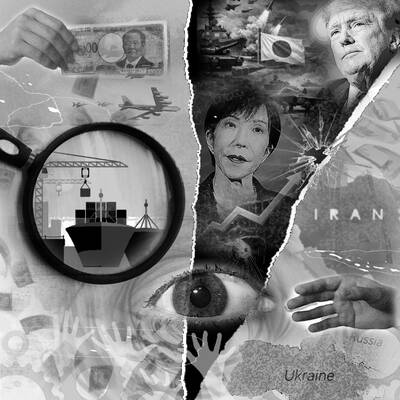
Japan’s imminent easing of arms export rules has sparked strong interest from Warsaw to Manila, Reuters reporting found, as US President Donald Trump wavers on security commitments to allies, and the wars in Iran and Ukraine strain US weapons supplies. Japanese Prime Minister Sanae Takaichi’s ruling party approved the changes this week as she tries to invigorate the pacifist country’s military industrial base. Her government would formally adopt the new rules as soon as this month, three Japanese government officials told Reuters. Despite largely isolating itself from global arms markets since World War II, Japan spends enough on its own
On March 31, the South Korean Ministry of Foreign Affairs released declassified diplomatic records from 1995 that drew wide domestic media attention. One revelation stood out: North Korea had once raised the possibility of diplomatic relations with Taiwan. In a meeting with visiting Chinese officials in May 1995, as then-Chinese president Jiang Zemin (江澤民) prepared for a visit to South Korea, North Korean officials objected to Beijing’s growing ties with Seoul and raised Taiwan directly. According to the newly released records, North Korean officials asked why Pyongyang should refrain from developing relations with Taiwan while China and South Korea were expanding high-level


 RSS
RSS