


During his trip to China, French President Emmanuel Macron discussed with Chinese President Xi Jinping (習近平) issues of crucial importance for the future of the international community.
The first issue — felt most acutely across Europe — relates to Russia’s invasion of Ukraine and the identification of a diplomatic avenue through which to contain a conflict ongoing since 2022. The European position is unequivocal: As the principal partner of the Russian aggressor, Beijing possesses negotiating leverage unmatched by any other actor in today’s international community.
Consequently, the EU as an institution and its member states deem it necessary to encourage China to play a decisive role in steering the Kremlin toward a peace decision, following the extensive devastation and loss of life caused by its military campaign in Ukraine.
The support that Beijing provides to Russia’s military apparatus — via dual-use materials such as microchips, drone technologies, optical systems — has proved essential in sustaining the fighting on Ukrainian territory.
It is therefore not accidental that Macron raised the issue of peace in Ukraine with such urgency during his meeting with Xi, given the crucial role Beijing is capable of playing in the continuation and in the potential resolution of the conflict.
China holds a “decisive capacity” to influence a ceasefire in Ukraine, Macron emphasized during his meeting with his Chinese counterpart in the Great Hall of the People in Beijing.
The Russian-Ukrainian conflict, he said, falls within those “divergences that sometimes exist in relations between France and China,” but which — according to Macron — “must be overcome for the common good,” as this constitutes a “responsibility” of both nations.
It is clear that the French president seeks to represent not only his own nation, but also the EU in its engagement with Beijing. Referring to divergences that must be overcome for the “common good” signals an intention to exercise leadership within the European framework, articulating to the Chinese leader the concerns of European countries regarding the continuation of the war in Ukraine — and other matters as well.
As for the latter matters, another major topic of discussion is the trade deficit that defines relations between the EU and China. Here too, the French president assumed the role of a European leader, conveying to his Chinese counterpart the desire — shared across EU member states — to rebalance the trade relationship with Beijing.
In this context, Macron compared the present situation to that of the last century, albeit with the roles reversed. “The Chinese have to do in Europe what the Europeans did 25 years ago by investing in China,” he said in an interview with the financial newspaper Les Echos upon returning from his state visit to China.
The message is clear: The trade deficit with Beijing, amounting to 306 billion euros (US$359 billion) last year, is no longer sustainable for an EU that seeks to move beyond the passivity and inertia in which it has long been mired, and to lay the foundations for greater competitiveness — economically and on the global geopolitical stage.
“We recognize that they are very good in some areas. But we can’t be constantly importing,” Macron stated clearly, before turning to an issue of major relevance for the EU’s future — one that its member states increasingly perceive with urgency: the risk of Chinese economic hegemony driven by investment flows.
“Chinese investments in Europe must not be predatory, by which I mean in pursuit of hegemony and creating dependencies,” Macron said, once again spelling out the EU’s position on how commercial relations with Beijing must evolve, in line with the derisking approach that has become a cornerstone of the European Commission’s policy framework.
Macron’s approach aligns with the expectations of those who fear the consequences of failing to reduce Europe’s economic and technological dependence on Beijing.
Yet the need for a basic unity among EU member states makes the realization of this goal far more complex — particularly given Hungary’s opposition to adopting a firmer, less accommodating foreign-policy line toward China.
Budapest has effectively chosen to “bet” on China, operating under the assumption that Beijing will emerge as the winner in any escalation of strategic competition with the EU. Many hope that a change in the country’s leadership — should Hungarian Prime Minister Viktor Orban be defeated at the polls next year — could open the door to a genuine shift.
However, for the time being, this remains only a supposition, pending confirmation in the event of a genuine electoral reversal.
Michele Maresca is an analyst at Il Caffe Geopolitico, an online international law journal, and the Geopol21 think tank.
KMT Chairwoman Cheng Li-wun’s (鄭麗文) recent visit to Beijing and her upcoming visit to Washington will serve as a high-level test of her diplomatic mettle. In Beijing, Cheng was received with symbolic gestures, a warm reception, and high-level access. In Washington, she will receive far less pomp and far sharper questions about the KMT’s vision for the future of Taiwan. Her challenge will be to persuade Washington that the KMT’s engagement with China can coexist with strong deterrence. Cheng’s April 7-12 visit to mainland China coincided with an intense period of conflict in Iran. Despite the strategic significance of Cheng’s trip,
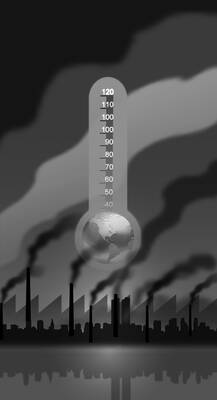
The closure of the Strait of Hormuz has sent the vast Asian chemicals industry into a tailspin. Deprived of the likes of Qatari natural gas and Saudi Arabian oil, the region’s fertilizer and plastics plants are slowing production or even shutting down. Everywhere except China, that is. In petrochemicals, China is unique. As well as a traditional industry that uses oil and gas as feedstock, it has parallel output that relies on its abundant domestic coal. Unsurprisingly, India and other regional powers want to copy and paste the Chinese method. This would not be easy — or climate friendly. The
Indonesian President Prabowo Subianto says he knows how to fix the problems facing Indonesia. Yet his economic mismanagement and authoritarian tendencies are steering the nation toward a familiar mix of currency instability and political chaos. The world’s fourth-most populous nation risks reversing the hard-won democratic and business reforms that came after the Asian Financial Crisis in 1997. At that time, the rupiah collapsed and the political upheaval that followed forced former president Haji Mohamed Suharto from power. Prabowo’s administration is ignoring similar warning signs. That disconnect was apparent in a national address on Wednesday, when Prabowo projected the swagger that has
“Of course you can choose not to be Taiwanese, just do not stay here,” chairwoman of Taipei 101 operator Taipei Financial Center Corp Janet Chia (賈永婕) said in an online interview with local entertainer Tai Chih-yuan (邰智源), triggering intense discussion on social media, with politicians across party lines weighing in. In the interview, which was aired on May 14, Chia and Tai’s discussion over a meal in Taipei 101 covered Chia’s career change from entertainer to chairwoman and US climber Alex Honnold’s free solo climb up the Taipei 101 building. During the interview, Chia said, “Being on this land, we


 RSS
RSS