


In the realm of horror, it was hard to beat the headlines in February that people were carrying around the equivalent of a plastic spoon’s worth of microplastics in their brains. The findings, reported in Nature Medicine, generated lots of outrage on morning talk shows and were even repeated as fact by would-be US surgeon general Casey Means.
A number of chemists were initially skeptical of the study, which was based on analyzing brains from a small sample of cadavers. In a rebuttal published last month in Nature, a group of chemists argued that the technique used could not accurately distinguish fat particles that are a normal part of the brain from microplastics, and that the study did not include the necessary validation steps to ensure they were not simply seeing postmortem contamination or otherwise misleading themselves.
Chemist Fazel Monikh of the University of Padua in Italy, an author of the rebuttal, said that the initial claim was extraordinary because, “such particle loads would cause catastrophic occlusion, inflammation and tissue destruction incompatible with life.”

He added that the analysis did not constitute extraordinary evidence — or even reasonably good evidence.
That is not to say the proliferation of tiny plastic particles is not a serious problem. A review paper published last month lists ways microplastic particles might damage your brain and increase the risk of Alzheimer’s and Parkinson’s diseases. However, it also lost credibility by citing the plastic-spoon claim without caveats.
This raises an important ethical question: Is it all right for scientists, science journals and journalists to be less rigorous or critical of extraordinary results if they raise awareness of serious problems or otherwise contribute to the greater good?
Mark Jones, a retired chemist who has independently studied microplastics, drew attention to the Nature follow-up, which the journal did not publicize as heavily as it had promoted the initial findings with a splashy news release.
Jones said he was deeply concerned about scientists and journals failing to maintain high standards of evidence. He is worried about eroding public trust, as evidenced by the rising resistance to essential vaccines.
Before the plastic spoon image, there was another alarming statistic: The average person ingests enough plastic each week to make up a credit card. That claim was based on a 2019 study that used several models to estimate that the average person consumes either 0.1g, 0.3g or 5g (the credit card amount) per week.
Jones said that other scientists questioned the assumptions in that model, and a couple of studies found that the 5g figure was about a factor of 1 million too high, meaning it would take about 23,000 years to consume the amount of plastic in a credit card. Nevertheless, the credit card estimate continues to be propagated in popular media, policy circles and other studies.
In the “plastic spoon” study, the initial intentions were good. Researchers from the University of New Mexico designed the study to solve a significant problem. There is longstanding evidence that food and water are contaminated with microplastics, but scientists do not know where they go in the body, whether they are excreted or get lodged in our organs, and how they affect our health.
The questions have been difficult to answer because plastic inside the body is tough to measure. The team approached the problem by dissolving samples of organs from cadavers, removing presumably normal tissue and leaving behind a residue of what might be plastic. They analyzed the residue with a technique called pyrolysis-gas chromatography-mass spectrometry — a way to identify what is there by the masses of broken-up fragments.
The end result was a wide range of plastic concentrations in the different bodies. It was surprising that the brain appeared to take up much more plastic than the other organs, as if it were preferentially absorbing it. Almost all the plastic was one type — polyethylene — with a notable absence of other common forms, such as polyethylene terephthalate, which makes up plastic water and soda bottles.
The analysis could have been described as a good start — a first attempt at answering a difficult question. Some skeptical chemists were quoted in the media, but most of the public just saw clickable headlines or TV outrage, taking the preliminary findings as fact.
“Who bears responsibility when extraordinary claims enter science and policy without solid evidence?” Monikh wrote in a LinkedIn post.
The journals Nature and Nature Medicine deserve some blame for the way they publicized the paper on the plastic spoon, but not for the follow-up. Journalists also deserve blame for uncritically promoting a single study as fact.
In the end, there is no ethical justification for selective hype by journals or for the lack of skepticism among journalists and researchers. There is no need to exaggerate claims to generate concern over microplastics and their potential harm. Promoting studies lacking rigor could backfire and breed cynicism or a sense of doom, rather than care or action.
No one is in a position to judge which falsehoods might benefit people. Stick to the truth as best it is understood, and still do what can be done to fight the pollution of the environment by plastic.
F.D. Flam is a Bloomberg Opinion columnist covering science. She is host of the Follow the Science podcast. This column reflects the personal views of the author and does not necessarily reflect the opinion of the editorial board or Bloomberg LP and its owners.
Minister of Labor Hung Sun-han (洪申翰) on April 9 said that the first group of Indian workers could arrive as early as this year as part of a memorandum of understanding (MOU) between the Taipei Economic and Cultural Center in India and the India Taipei Association. Signed in February 2024, the MOU stipulates that Taipei would decide the number of migrant workers and which industries would employ them, while New Delhi would manage recruitment and training. Employment would be governed by the laws of both countries. Months after its signing, the two sides agreed that 1,000 migrant workers from India would
In recent weeks, Taiwan has witnessed a surge of public anxiety over the possible introduction of Indian migrant workers. What began as a policy signal from the Ministry of Labor quickly escalated into a broader controversy. Petitions gathered thousands of signatures within days, political figures issued strong warnings, and social media became saturated with concerns about public safety and social stability. At first glance, this appears to be a straightforward policy question: Should Taiwan introduce Indian migrant workers or not? However, this framing is misleading. The current debate is not fundamentally about India. It is about Taiwan’s labor system, its
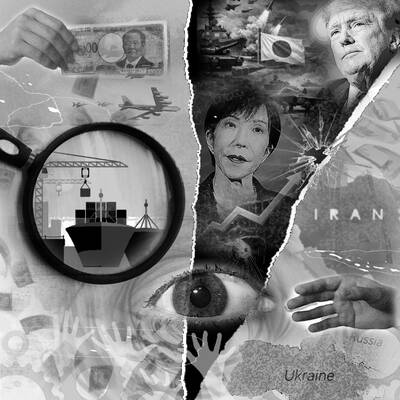
Japan’s imminent easing of arms export rules has sparked strong interest from Warsaw to Manila, Reuters reporting found, as US President Donald Trump wavers on security commitments to allies, and the wars in Iran and Ukraine strain US weapons supplies. Japanese Prime Minister Sanae Takaichi’s ruling party approved the changes this week as she tries to invigorate the pacifist country’s military industrial base. Her government would formally adopt the new rules as soon as this month, three Japanese government officials told Reuters. Despite largely isolating itself from global arms markets since World War II, Japan spends enough on its own
On March 31, the South Korean Ministry of Foreign Affairs released declassified diplomatic records from 1995 that drew wide domestic media attention. One revelation stood out: North Korea had once raised the possibility of diplomatic relations with Taiwan. In a meeting with visiting Chinese officials in May 1995, as then-Chinese president Jiang Zemin (江澤民) prepared for a visit to South Korea, North Korean officials objected to Beijing’s growing ties with Seoul and raised Taiwan directly. According to the newly released records, North Korean officials asked why Pyongyang should refrain from developing relations with Taiwan while China and South Korea were expanding high-level


 RSS
RSS