


I always dispute the assertion that we are living through a new Cold War.
I suggest looking at Italy’s Years of Lead for inspiration instead.
The Years of Lead occurred during the 1970s, which saw a huge rise in politically motivated violence across democracies. Kidnappings, bombings, assassinations, and other crimes almost unheard of before then, such as plane hijackings and hostage crises, became rampant, and on a massive scale.
Most were committed by terrorist groups with far-left ideas, but many were the work of far-right extremists who were opposing them. Some would perform “false flag” operations to pin the blame on their enemies, increasing the tension. Law enforcement agencies and governments often played ambiguous roles, sometimes attempting to manipulate or hide facts rather than outright protecting citizens.
In 1980, a bomb exploded in Bologna train station, killing 85, the deadliest terrorist attack in Italy’s history to date. For decades it was thought to be caused by far-left terrorists, until it was revealed to be the work of neo-fascists. Italy’s own intelligence services were later shown to have concealed information and tried to suppress the investigation, feeding suspicion that state actors were entangled in the violence they claimed to fight. This is a typical Years of Lead story.
The result of such events was a depressing, heavy mood falling over the public. This was the point: a “strategy of tension” in which people would lose hope and confidence in their democratic institutions and societies.
Radio Free Europe reported that Russian sabotage operations in Europe have quadrupled since 2023, with cases of arson some of the most difficult to track down to their state backers. A couple of months ago, a fire at an Ikea store in Lithuania last year was finally linked to Russian military intelligence. The only point in burning down a furniture store is to scare the public. Similar attacks have been conducted in Poland, Germany, France, and beyond, by Russian or Belarusian actors, always on targets with zero military or political value, such as department stores and retailers. Alongside that, there is jamming of GPS signals for civilian airliners: What purpose does it serve beyond undermining the feeling of safety among European citizens?
The Years of Lead was mostly the work of domestic terrorists with little to no input from foreign powers. Although the Stasi or KGB or even NATO organizations (look up Operation Gladio for some fascinating reading about the CIA’s involvement) occasionally had their hand in, the Years of Lead was mostly about domestic criminal organizations such as the Baader-Meinhof Gang in Germany, the Red Brigades in Italy or the Weathermen in the US, rather than foreign agents.
Although many perpetrators, particularly in the US, are still radicalized homegrown actors, foreign powers such as Russia and China are replicating these methods, with direct engagement far greater than the Soviet Union’s involvement.
Political violence and shootings on famous figures, perpetrated by gunmen with weird and blurry ideological backgrounds, are typical of a Years of Lead scenario: You are not even sure what these shooters stand for, but you can feel it is extreme and scary. They choose targets that seem incongruous with their beliefs, and the more you read about it the less you understand what is going on. It is confusing, it is violent, it is chaotic, but that is the point: You are not supposed to understand, you are just supposed to feel alienated and, if not terrified, at least despondent or even outright desperate. Bonus points if you fight with your family about it over a holiday dinner.
For the most part, that tension is created by state actors replicating the means and goals of the Years of Lead with terrifying efficiency. The lead is slowly shot into the bones of society, weighing it down.
Disinformation and smart use of social media play a role, including in radicalizing more violent actors. The endgame is the same: an essentially psychological warfare in which violence is the cynical tool used to rot collective minds, but not an end in itself.
“Gray zone” warfare is not new. We faced it once before, and we should remember. If you really need to look into the past for clues, do not focus on the Cold War. What you are going through are the new Years of Lead.
Julien Oeuillet hosts the weekly program Taiwan vs The World on Radio Taiwan International and is a co-producer of TaiwanTalks on TaiwanPlus.
KMT Chairwoman Cheng Li-wun’s (鄭麗文) recent visit to Beijing and her upcoming visit to Washington will serve as a high-level test of her diplomatic mettle. In Beijing, Cheng was received with symbolic gestures, a warm reception, and high-level access. In Washington, she will receive far less pomp and far sharper questions about the KMT’s vision for the future of Taiwan. Her challenge will be to persuade Washington that the KMT’s engagement with China can coexist with strong deterrence. Cheng’s April 7-12 visit to mainland China coincided with an intense period of conflict in Iran. Despite the strategic significance of Cheng’s trip,
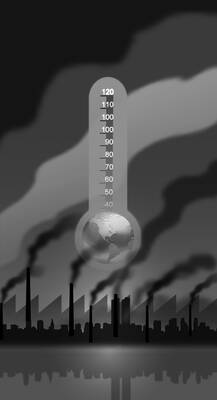
The closure of the Strait of Hormuz has sent the vast Asian chemicals industry into a tailspin. Deprived of the likes of Qatari natural gas and Saudi Arabian oil, the region’s fertilizer and plastics plants are slowing production or even shutting down. Everywhere except China, that is. In petrochemicals, China is unique. As well as a traditional industry that uses oil and gas as feedstock, it has parallel output that relies on its abundant domestic coal. Unsurprisingly, India and other regional powers want to copy and paste the Chinese method. This would not be easy — or climate friendly. The
Indonesian President Prabowo Subianto says he knows how to fix the problems facing Indonesia. Yet his economic mismanagement and authoritarian tendencies are steering the nation toward a familiar mix of currency instability and political chaos. The world’s fourth-most populous nation risks reversing the hard-won democratic and business reforms that came after the Asian Financial Crisis in 1997. At that time, the rupiah collapsed and the political upheaval that followed forced former president Haji Mohamed Suharto from power. Prabowo’s administration is ignoring similar warning signs. That disconnect was apparent in a national address on Wednesday, when Prabowo projected the swagger that has
“Of course you can choose not to be Taiwanese, just do not stay here,” chairwoman of Taipei 101 operator Taipei Financial Center Corp Janet Chia (賈永婕) said in an online interview with local entertainer Tai Chih-yuan (邰智源), triggering intense discussion on social media, with politicians across party lines weighing in. In the interview, which was aired on May 14, Chia and Tai’s discussion over a meal in Taipei 101 covered Chia’s career change from entertainer to chairwoman and US climber Alex Honnold’s free solo climb up the Taipei 101 building. During the interview, Chia said, “Being on this land, we


 RSS
RSS