


When Taiwan announced it would increase its defense budget, the international security community’s reaction was far greater than the public had anticipated.
In an op-ed published in the Washington Post on Monday, Randall Schriver and Ely Ratner — who formerly served as US assistant secretary of defense for Indo-Pacific security affairs from 2018 to 2019 and 2021 to this year respectively — describe Taiwan’s new defense policy as “acting with greater seriousness and focus than ever before,” even suggesting that the nation was moving toward an entirely new strategic baseline.
The article said that Taiwan’s push to increase military spending to a target of about 5 percent of GDP is no longer a symbolic arms procurement, but the beginning of building a long-term, autonomous and sustainable defense system.
For years, Taiwan has carried the burden of external doubts over a perceived lack of resolve for self-defense. Think tanks, the US Congress and military experts in Washington warned that Taiwan’s military preparedness was disproportionate to the threat it faces. The changes proposed to the structure of the defense budget are being viewed by the US as a step toward breaking the stereotype. If Taiwan could stay on course, it would redefine its role in the security architecture of the Indo-Pacific region, and provide regional allies with greater confidence in its capability and resolve to safeguard its own security.
The proposed increase is not limited to the procurement of conventional large-scale platforms — instead, it focuses on dispersion, resilience and technological integration. The budget includes items such as anti-ship missiles, drones, air-defense systems, battlefield information integration systems, resilient communications and improvements to the domestic defense industrial chain — all of which fall under asymmetric capabilities, effectively raising the cost of aggression by making the risks associated with military action against Taiwan prohibitively high.
The concept for Taiwan to focus on asymmetric defense — long advocated by the US — has finally been met with a concrete policy response.
What US observers particularly value is Taiwan’s willingness to institutionalize its defense investments. While individual special budgets are undoubtedly important, true deterrence capabilities come from long-term accumulation. When Taiwan establishes a clear ratio of defense spending to GDP and implements foundational projects to develop supply chains, command and control systems, logistics support and maintenance capacity, the international community would see that the nation no longer relies on symbolic policies — rather, it is confronting the threat head-on.
Taiwan will continue to face challenges. Finding a balance between military spending and public finances, securing long-term legislative support, and ensuring that industries and talent pools can keep pace with transformations in defense technology are all issues that require time, consensus and effective governance. Building national defense is not merely a military matter — it is one that involves industrial development, investment in education, scientific research and civic participation. Only through comprehensive mobilization could Taiwan transform increased military spending into genuine national security capabilities.
The international community understands that what Taiwan seeks is not an arms race, but rather to use the most rational means to ensure the survival of its democratic society amid a rapidly deteriorating security environment. Taiwan is showing the world that it is determined to close its defense gaps. The international community, in turn, would be more willing to provide assistance.
For the US, this means that Taiwan is no longer merely a vulnerable front line requiring protection, but an important partner that is willing to shoulder its own responsibilities, bolster deterrence and work with allies to maintain regional stability.
Increasing defense spending would not solve all of the problems, but Taiwan has already taken an important step — one that allows the international community to see a more mature, resolute and self-reliant nation. When Taiwan demonstrates the will to defend its own way of life, external support is legitimized.
This marks an important turning point in Taiwan’s security policy and the beginning of reshaping the security order in the Indo-Pacific region.
Edwin Yang is an associate professor at National Taiwan Normal University and chairman of the Central Taiwan Association of University Professors.
Translated by Kyra Gustavsen
KMT Chairwoman Cheng Li-wun’s (鄭麗文) recent visit to Beijing and her upcoming visit to Washington will serve as a high-level test of her diplomatic mettle. In Beijing, Cheng was received with symbolic gestures, a warm reception, and high-level access. In Washington, she will receive far less pomp and far sharper questions about the KMT’s vision for the future of Taiwan. Her challenge will be to persuade Washington that the KMT’s engagement with China can coexist with strong deterrence. Cheng’s April 7-12 visit to mainland China coincided with an intense period of conflict in Iran. Despite the strategic significance of Cheng’s trip,
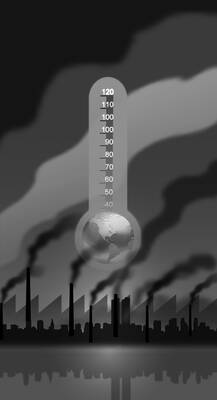
The closure of the Strait of Hormuz has sent the vast Asian chemicals industry into a tailspin. Deprived of the likes of Qatari natural gas and Saudi Arabian oil, the region’s fertilizer and plastics plants are slowing production or even shutting down. Everywhere except China, that is. In petrochemicals, China is unique. As well as a traditional industry that uses oil and gas as feedstock, it has parallel output that relies on its abundant domestic coal. Unsurprisingly, India and other regional powers want to copy and paste the Chinese method. This would not be easy — or climate friendly. The
Indonesian President Prabowo Subianto says he knows how to fix the problems facing Indonesia. Yet his economic mismanagement and authoritarian tendencies are steering the nation toward a familiar mix of currency instability and political chaos. The world’s fourth-most populous nation risks reversing the hard-won democratic and business reforms that came after the Asian Financial Crisis in 1997. At that time, the rupiah collapsed and the political upheaval that followed forced former president Haji Mohamed Suharto from power. Prabowo’s administration is ignoring similar warning signs. That disconnect was apparent in a national address on Wednesday, when Prabowo projected the swagger that has
“Of course you can choose not to be Taiwanese, just do not stay here,” chairwoman of Taipei 101 operator Taipei Financial Center Corp Janet Chia (賈永婕) said in an online interview with local entertainer Tai Chih-yuan (邰智源), triggering intense discussion on social media, with politicians across party lines weighing in. In the interview, which was aired on May 14, Chia and Tai’s discussion over a meal in Taipei 101 covered Chia’s career change from entertainer to chairwoman and US climber Alex Honnold’s free solo climb up the Taipei 101 building. During the interview, Chia said, “Being on this land, we


 RSS
RSS