


Chinese Nationalist Party (KMT) legislators have proposed caning as a punishment for online scammers. As many as 92 percent of respondents in a poll said fraud in Taiwan is severe, and more than 70 percent said they support following Singapore’s example by using caning as a deterrent.
The Ministry of Justice and the Judicial Yuan said that caning contravenes the personal freedoms outlined in the Constitution, and is inconsistent with the International Covenant on Civil and Political Rights and the International Covenant on Economic, Social and Cultural Rights.
Promulgated in 653, the Tang Code with commentary defined five types of punishments — beating with a light bamboo cane, beating with a heavy stick, penal servitude, exile and execution — which were inherited by successive dynasties.
Following the example of European and US criminal law, the code viewed corporal punishment as a violation of human rights, and thus abolished the five traditional punishments. That laid the foundation for what would become Article 33 of the Criminal Code, which defines the five main punishments — the death penalty, life imprisonment, imprisonment of more than two months but less than 15 years, short-term imprisonment and fines.
In the early years of the Republic of China, insufficient judicial funding made it impossible to establish nationwide prisons, and the abolition of corporal punishment led to a rapid increase in offenders. Many believed that Western-style prisons treated inmates too leniently and failed as an effective deterrent. In 1914, then-president Yuan Shikai (袁世凱) reinstated caning and exile as punishments.
While the KMT’s proposal is well-intentioned, the Criminal Code outlines several serious crimes, and applying caning solely to online scammers would result in many gaps. In a populist atmosphere, the public might demand that caning be applied to crimes such as drunk driving, drug offenses, sexual assault, child abuse and child pornography. In that scenario, caning would inevitably become the sixth principal punishment under the Criminal Code.
If the focus is only on responding to individual offenses rather than solving the root of the problem, such a measure could cause more harm than good.
In 1935, a special chapter on “rehabilitative measures” was added to the Criminal Code. The judicial resolution justifying the addition stated that the Criminal Code would mandate educational compulsory labor to toughen prisoners’ bodies and minds, instill good life habits and equip them with skills to earn a living, thereby eliminating criminal thinking. Academics at the time widely regarded this to be the most valuable improvement to the Criminal Code.
Unexpectedly, the then-Council of Grand Justices (now known as the Constitutional Court) in 2021 issued Interpretation No. 812, which said that educational compulsory labor “infringes upon the due process of law and the principle of proportionality as outlined in Article 8 and Article 23 of the Constitution respectively” and abolished the system entirely. The reasoning was baffling, and legislators were given no opportunity to make corrections — it could likely be the reason behind today’s rampant expansion of fraud rings.
The opposition parties’ proposal to reintroduce caning undermines the overall structure of the Criminal Code. The Constitutional Court should take responsibility for this outcome.
The law should promptly be amended to reinstate educational compulsory labor as a rehabilitative measure. That would safeguard the nation and ensure public security.
Chao Hsuey-wen is an assistant professor and holds a doctorate in law from Fu Jen Catholic University.
Translated by Kyra Gustavsen
KMT Chairwoman Cheng Li-wun’s (鄭麗文) recent visit to Beijing and her upcoming visit to Washington will serve as a high-level test of her diplomatic mettle. In Beijing, Cheng was received with symbolic gestures, a warm reception, and high-level access. In Washington, she will receive far less pomp and far sharper questions about the KMT’s vision for the future of Taiwan. Her challenge will be to persuade Washington that the KMT’s engagement with China can coexist with strong deterrence. Cheng’s April 7-12 visit to mainland China coincided with an intense period of conflict in Iran. Despite the strategic significance of Cheng’s trip,
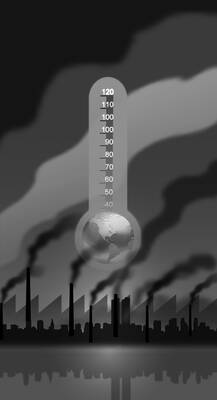
The closure of the Strait of Hormuz has sent the vast Asian chemicals industry into a tailspin. Deprived of the likes of Qatari natural gas and Saudi Arabian oil, the region’s fertilizer and plastics plants are slowing production or even shutting down. Everywhere except China, that is. In petrochemicals, China is unique. As well as a traditional industry that uses oil and gas as feedstock, it has parallel output that relies on its abundant domestic coal. Unsurprisingly, India and other regional powers want to copy and paste the Chinese method. This would not be easy — or climate friendly. The
Indonesian President Prabowo Subianto says he knows how to fix the problems facing Indonesia. Yet his economic mismanagement and authoritarian tendencies are steering the nation toward a familiar mix of currency instability and political chaos. The world’s fourth-most populous nation risks reversing the hard-won democratic and business reforms that came after the Asian Financial Crisis in 1997. At that time, the rupiah collapsed and the political upheaval that followed forced former president Haji Mohamed Suharto from power. Prabowo’s administration is ignoring similar warning signs. That disconnect was apparent in a national address on Wednesday, when Prabowo projected the swagger that has
“Of course you can choose not to be Taiwanese, just do not stay here,” chairwoman of Taipei 101 operator Taipei Financial Center Corp Janet Chia (賈永婕) said in an online interview with local entertainer Tai Chih-yuan (邰智源), triggering intense discussion on social media, with politicians across party lines weighing in. In the interview, which was aired on May 14, Chia and Tai’s discussion over a meal in Taipei 101 covered Chia’s career change from entertainer to chairwoman and US climber Alex Honnold’s free solo climb up the Taipei 101 building. During the interview, Chia said, “Being on this land, we


 RSS
RSS