


Taiwan’s cosmetic medicine market has developed rapidly in recent years, but behind the glamorous packaging and commercial rhetoric lies a critical risk that is little known to the public — large numbers of “direct-entry” physicians, doctors who lack clinical training and emergency care experience, are entering the field.
This is not a normal flow of medical personnel, but the result of a major loophole that formed within Taiwan’s physician training system as a result of previous reforms to medical education. If the law is not amended in time to correct this, it would continue to endanger patient safety, erode medical professionalism and leave society to bear the costs.
In 2013, Taiwan’s seven-year undergraduate medical education program was shortened to six years, with the original seventh year clinical internship being replaced by the two-year post-graduate clinical training program, which had previously lasted for one year. However, because regulations at the time did not explicitly prohibit physicians who had not yet completed post-graduate training from performing medical procedures, anyone who obtained a medical license could be directly hired by medical institutions. Among the first cohort of six-year medical school graduates in 2019, some physicians who had never undergone post-graduate clinical training went straight into cosmetic medicine. This created the phenomenon of “direct entry” cosmetic surgeons.
The issue with these direct-entry cosmetic surgeons is that, up until graduation, they have never actually worked on the front lines of clinical care — they have not learned to identify danger signs in the emergency room, nor have they gained experience managing bleeding or infection, using anesthesia or responding to sudden complications. They have never trained in obstetrics or gynecology, pediatrics, surgery or internal medicine. They lack practical experience in the complexities of medical practice, yet they are nevertheless permitted to perform invasive medical procedures such as injections, liposuction and phototherapy — all of which could lead to shock or serious injury. This poses a significant risk to medical safety and quality.
An additional side effect of this is that these physicians are drawn to the high salaries offered by cosmetic clinics, which contributes to severe shortages in obstetrics and gynecology, pediatrics, internal medicine and rural healthcare. This creates an abnormal siphoning of medical personnel and undermines the overall medical ecosystem.
The direct-entry phenomenon is an abnormality in the medical system caused by an incomplete regulatory framework. In this context, the Ministry of Health and Welfare this month announced draft amendments to the Regulations for Using Specialized Equipment for Medical Examinations (特定醫療技術檢查檢驗醫療儀器施行或使用管理辦法). The revisions include different qualification criteria for physicians performing cosmetic surgery depending on risk, and would require new physicians to finish two years of post-graduate training to qualify as cosmetic surgeons. This is not some sort of punishment, but rather a correction of the loophole left over from earlier reforms to medical education.
Cosmetic medicine is a medical practice, and the gap between a doctor being able to perform a procedure and being able to take responsibility for it lies in the clinical competencies built through post-graduate training. Only by ensuring that every new physician entering the field of cosmetic medicine has completed full clinical training could Taiwan’s cosmetic medicine industry return to its medical foundations, rather than continuing to slide into a chaotic state characterized by high risks and commercialization. We support amending the law to seal this institutional loophole, as it is an essential step to protect patients, uphold medical professionalism and restore fairness in the medical system.
Huang Sue-ying is the founder of Taiwan Women’s Link.
Translated by Kyra Gustavsen
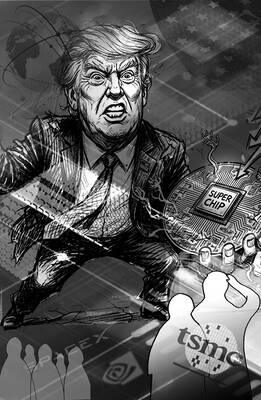
The White House’s decision to take a 9.9 percent stake in Intel Corp is looking like very shrewd business indeed. Since the government bought in at US$20.47 a share last August, the US chipmaker’s surging stock price has delivered the US a US$43 billion return. One of the reasons the investment has so far proved so sound is that the White House has made sure of it. According to The Wall Street Journal, Howard personally pushed deals on Intel’s behalf with some of the most lucrative clients imaginable. They include Nvidia Corp, the company at the heart of the AI
KMT Chairwoman Cheng Li-wun’s (鄭麗文) recent visit to Beijing and her upcoming visit to Washington will serve as a high-level test of her diplomatic mettle. In Beijing, Cheng was received with symbolic gestures, a warm reception, and high-level access. In Washington, she will receive far less pomp and far sharper questions about the KMT’s vision for the future of Taiwan. Her challenge will be to persuade Washington that the KMT’s engagement with China can coexist with strong deterrence. Cheng’s April 7-12 visit to mainland China coincided with an intense period of conflict in Iran. Despite the strategic significance of Cheng’s trip,
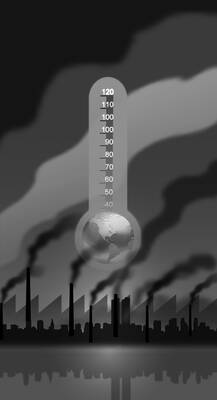
The closure of the Strait of Hormuz has sent the vast Asian chemicals industry into a tailspin. Deprived of the likes of Qatari natural gas and Saudi Arabian oil, the region’s fertilizer and plastics plants are slowing production or even shutting down. Everywhere except China, that is. In petrochemicals, China is unique. As well as a traditional industry that uses oil and gas as feedstock, it has parallel output that relies on its abundant domestic coal. Unsurprisingly, India and other regional powers want to copy and paste the Chinese method. This would not be easy — or climate friendly. The
Indonesian President Prabowo Subianto says he knows how to fix the problems facing Indonesia. Yet his economic mismanagement and authoritarian tendencies are steering the nation toward a familiar mix of currency instability and political chaos. The world’s fourth-most populous nation risks reversing the hard-won democratic and business reforms that came after the Asian Financial Crisis in 1997. At that time, the rupiah collapsed and the political upheaval that followed forced former president Haji Mohamed Suharto from power. Prabowo’s administration is ignoring similar warning signs. That disconnect was apparent in a national address on Wednesday, when Prabowo projected the swagger that has


 RSS
RSS