


Urologist and former Fu Jen Catholic University president Chiang Han-sun (江漢聲) was stabbed by a 30-year-old man at the university’s hospital in New Taipei City on Tuesday. The suspect, surnamed Tseng (曾), reportedly entered Chiang’s office and attacked him with a utility knife before being restrained by hospital security.
Since 2009, acts of violence against medical personnel have been on the rise, prompting the Legislative Yuan to pass amendments to the Medical Care Act (醫療法) in 2014, establishing new penalties for acts of violence committed in medical facilities to “ensure the safety of medical personnel when they practice medicine.”
However, the clumsy and outdated drafting techniques employed by legislators — in addition to their adherence to the traditional belief that medical professionals should be of noble moral character and not quarrel with patients — the amendments ended up creating more problems than they solved, with some provisions having become all but useless.
Article 106 of the act states that “persons who damage the life saving equipment in medical care institutions or other similar places and consequently endanger the life, body or health of others are subject to imprisonment for no more than three years, detention or a fine of no more than NT$300,000.”
However, Article 352 of the Criminal Code stipulates that same penalty for destroying or damaging another person’s document and causing injury to the public or another. Setting the same statutory penalty for damaging life-supporting medical equipment and merely damaging a document clearly contravenes the principle of proportionality.
Furthermore, Article 106 of the Medical Care Act also stipulates that “persons who hinder medical personnel or emergency medical services personnel from carrying out medical practices or emergency medical services by means of violence, coercion, intimidation or other illegal methods are subject to imprisonment for no more than three years, or in addition thereto, a fine of no more than NT$300,000.”
If the offense causes the death of medical personnel or emergency medical services personnel, then the offender is subject to “imprisonment for life or no less than seven years.” If it results in serious injury to medical personnel or emergency medical services personnel, then the punishment is imprisonment for no less than three years, but no more than 10 years.
However, this provision is identical to that outlined by Article 277 of the Criminal Code, which concerns the offense of causing injury to another — it does not impose any additional statutory penalties. If legal protections for medical personnel and emergency medical services personnel are not designed from the perspective of safeguarding their professional practice and occupational safety, they risk diminishing healthcare workers’ motivation to remain in the field.
More importantly, Taiwan has over the past few years faced a mass exodus of medical professionals. If the law fails to promptly respond, frontline healthcare workers would be pushed into even deeper hardship, which would ultimately undermine the public’s right to health.
The provisions in Article 106 of the Medical Care Act that allow for detention and fines in lieu of imprisonment for damaging life-saving equipment in medical care institutions should be removed to prevent excessively light penalties that would weaken the law’s deterrent effect. For the provision that addresses the use of violence, coercion, intimidation or other illegal methods to hinder medical personnel or emergency medical services personnel from carrying out medical practices or emergency medical services, the maximum statutory penalty should be raised from three years to either five or seven years of imprisonment.
This would create a clear distinction between Article 304 of the Criminal Code — which stipulates three years of imprisonment for ordinary violence or threats — and provide healthcare workers with special legal protections. Likewise, the penalties for the same offense resulting in death should also be increased.
Cultivating a positive medical environment depends not only on amending regulations, but also on establishing mutual respect and joint effort between medical personnel and their patients.
Chao Hsuey-wen is an assistant professor and holds a doctorate in law from Fu Jen Catholic University.
Translated by Kyra Gustavsen
KMT Chairwoman Cheng Li-wun’s (鄭麗文) recent visit to Beijing and her upcoming visit to Washington will serve as a high-level test of her diplomatic mettle. In Beijing, Cheng was received with symbolic gestures, a warm reception, and high-level access. In Washington, she will receive far less pomp and far sharper questions about the KMT’s vision for the future of Taiwan. Her challenge will be to persuade Washington that the KMT’s engagement with China can coexist with strong deterrence. Cheng’s April 7-12 visit to mainland China coincided with an intense period of conflict in Iran. Despite the strategic significance of Cheng’s trip,
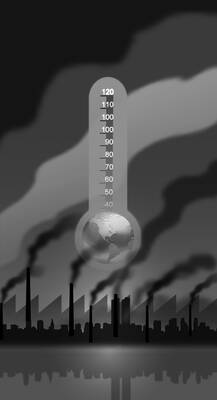
The closure of the Strait of Hormuz has sent the vast Asian chemicals industry into a tailspin. Deprived of the likes of Qatari natural gas and Saudi Arabian oil, the region’s fertilizer and plastics plants are slowing production or even shutting down. Everywhere except China, that is. In petrochemicals, China is unique. As well as a traditional industry that uses oil and gas as feedstock, it has parallel output that relies on its abundant domestic coal. Unsurprisingly, India and other regional powers want to copy and paste the Chinese method. This would not be easy — or climate friendly. The
Indonesian President Prabowo Subianto says he knows how to fix the problems facing Indonesia. Yet his economic mismanagement and authoritarian tendencies are steering the nation toward a familiar mix of currency instability and political chaos. The world’s fourth-most populous nation risks reversing the hard-won democratic and business reforms that came after the Asian Financial Crisis in 1997. At that time, the rupiah collapsed and the political upheaval that followed forced former president Haji Mohamed Suharto from power. Prabowo’s administration is ignoring similar warning signs. That disconnect was apparent in a national address on Wednesday, when Prabowo projected the swagger that has
“Of course you can choose not to be Taiwanese, just do not stay here,” chairwoman of Taipei 101 operator Taipei Financial Center Corp Janet Chia (賈永婕) said in an online interview with local entertainer Tai Chih-yuan (邰智源), triggering intense discussion on social media, with politicians across party lines weighing in. In the interview, which was aired on May 14, Chia and Tai’s discussion over a meal in Taipei 101 covered Chia’s career change from entertainer to chairwoman and US climber Alex Honnold’s free solo climb up the Taipei 101 building. During the interview, Chia said, “Being on this land, we


 RSS
RSS