


The latest episodes in Taiwan-South Africa relations have unfolded into an unusual chapter in Taipei’s bilateral outreach to a country that is closely allied with China. On Tuesday last week Taiwan announced that it would impose export controls on 47 products, including semiconductors, shipped to South Africa, but suspended the restrictions two days later. The designated products were supposed to be required for preapprovals.
The export measures were originally instituted as a countermeasure to South Africa’s continuous downgrading and renaming of Taiwan’s representative offices from the “Taipei Commercial Office in Johannesburg” to the “Taipei Commercial Office in Cape Town” and relocating the office from the country’s capital of Pretoria to Johannesburg, a shift seen as weakening Taiwan’s sovereignty. To this, Taiwan’s International Trade Administration responded: “The South African government’s actions have undermined our national and public security. We are adopting measures to restrict trade to maintain our sovereignty.”
Though short-lived, the action and its response should be understood within a broader geopolitical context.
The export controls introduced as a countermeasure have to be read in the context of Taiwan’s US$4 million of semiconductor-related goods shipped to South Africa last year. However, the restrictions were suspended after two days, as Pretoria requested diplomatic discussions, symbolizing the leverage Taiwan holds through its semiconductors.
Taiwan’s centrality in cutting-edge chips has been described as a “silicon shield,” a deterrent against Chinese aggression. Taiwan is home to 90 percent of the world’s advanced semiconductors, and Taiwan Semiconductor Manufacturing Co is a critical link in the global chip supply chain.
This recent episode highlights a larger question: Can Taiwan deploy its semiconductor dominance as a strategic lever against China on the world stage? Yes, but it is bounded by practical limits. The potential to use the chip card against a country could have more implications. The South Africa case signifies Taiwan’s ability to frame semiconductors as a diplomatic shield in disputes with smaller countries. That Pretoria requested negotiation is already a win
This is significant as Taiwan is home to the vast majority of advanced semiconductor production in the world.
Similarly, such a measure could also destabilize the semiconductor supply chain ecosystem. The China factor and the possible forms of retaliation could be another factor that might impinge on Taiwan’s chip diplomacy on the global stage.
However, with limited diplomatic options, Taiwan was able to bring South Africa to the negotiating table through calibrated export controls. It is therefore imperative that Taiwan use its chip dominance judiciously, pursuing diplomatic goals with caution and pragmatism. A thorough analysis of the future of chip-access-induced negotiations should be a priority for policymakers.
Amina Reem VP is a Ministry of Foreign Affairs Taiwan fellow and visiting scholar at National Chengchi University.
Minister of Labor Hung Sun-han (洪申翰) on April 9 said that the first group of Indian workers could arrive as early as this year as part of a memorandum of understanding (MOU) between the Taipei Economic and Cultural Center in India and the India Taipei Association. Signed in February 2024, the MOU stipulates that Taipei would decide the number of migrant workers and which industries would employ them, while New Delhi would manage recruitment and training. Employment would be governed by the laws of both countries. Months after its signing, the two sides agreed that 1,000 migrant workers from India would
In recent weeks, Taiwan has witnessed a surge of public anxiety over the possible introduction of Indian migrant workers. What began as a policy signal from the Ministry of Labor quickly escalated into a broader controversy. Petitions gathered thousands of signatures within days, political figures issued strong warnings, and social media became saturated with concerns about public safety and social stability. At first glance, this appears to be a straightforward policy question: Should Taiwan introduce Indian migrant workers or not? However, this framing is misleading. The current debate is not fundamentally about India. It is about Taiwan’s labor system, its
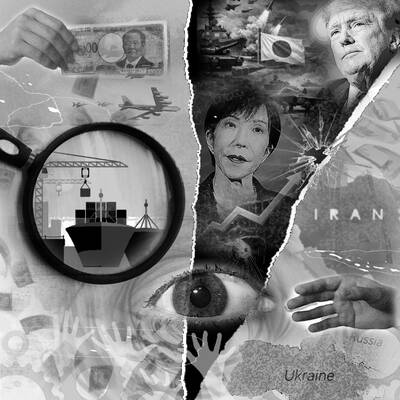
Japan’s imminent easing of arms export rules has sparked strong interest from Warsaw to Manila, Reuters reporting found, as US President Donald Trump wavers on security commitments to allies, and the wars in Iran and Ukraine strain US weapons supplies. Japanese Prime Minister Sanae Takaichi’s ruling party approved the changes this week as she tries to invigorate the pacifist country’s military industrial base. Her government would formally adopt the new rules as soon as this month, three Japanese government officials told Reuters. Despite largely isolating itself from global arms markets since World War II, Japan spends enough on its own
On March 31, the South Korean Ministry of Foreign Affairs released declassified diplomatic records from 1995 that drew wide domestic media attention. One revelation stood out: North Korea had once raised the possibility of diplomatic relations with Taiwan. In a meeting with visiting Chinese officials in May 1995, as then-Chinese president Jiang Zemin (江澤民) prepared for a visit to South Korea, North Korean officials objected to Beijing’s growing ties with Seoul and raised Taiwan directly. According to the newly released records, North Korean officials asked why Pyongyang should refrain from developing relations with Taiwan while China and South Korea were expanding high-level


 RSS
RSS