


Recently leaked documents indicate that Russia has been training Chinese People’s Liberation Army (PLA) paratroopers as part of Beijing’s preparation for a potential conflict over Taiwan. The news comes as Russian President Vladimir Putin’s strategic alliance with Chinese President Xi Jinping (習近平) grows stronger.
The Sino-Russian “comprehensive strategic partnership of coordination for a new era,” signed in 2019, is still China’s most significant partnership deal to date. Since the outset of Russia’s war on Ukraine, PLA research groups at home and abroad have been taking notes. What lessons they might draw from the conflict and how they might proceed with reform has become a hot topic for think tanks.
Exchanges of military equipment and technology aside, forums on combat strategy and tactics are an important recent addition to the Sino-Russian program of military exercises. The Russian Armed Forces’ on-the-ground experience is a valuable asset for the PLA to consult. Still, a war with Taiwan would primarily hinge on China’s military strength, with little chance that other countries would cooperate in launching a joint operation.
However, China’s partnership with Russia would certainly make neighboring countries hesitant to step into a conflict in the Taiwan Strait — if they did, they might face not only the PLA, but potentially Russia, North Korea or perhaps even Pakistan. These countries do not necessarily pose a direct military threat to Taiwan, but may factor into the equation as other countries’ primary adversaries.
Japan, for instance, faces a certain level of threat from the PLA in the Taiwan Strait and East China Sea. After Russia launched its offensive on Ukraine, however, that threat grew thanks to joint Sino-Russian military drills in the Sea of Japan, and combined sea and air operations reaching the western Pacific Ocean.
Even if Moscow does not go in with Beijing in an offensive on Taiwan, as long as there are military exercises in the Sea of Japan, the Sea of Okhotsk or around the disputed islands to the north — known as the Kurils in Russia and the Northern Territories in Japan — Japan’s Self-Defense Forces and US forces stationed in Japan would be pushed to strengthen their defenses.
With deepening military relations between China and Russia, this could mean that Washington and Tokyo pivot to something akin to the northern defense strategy of the Cold War era. Naturally, this would spread US and Japanese forces more thinly across the East China Sea and around the Taiwan Strait.
Although China’s foreign military collaborations might allow the PLA to access advanced technologies and gain international exposure, they do not necessarily constitute a direct threat to Taiwan. However, the joint military exercises and actual military exchanges seen under the expansion of strategic partnerships have regional implications. The shift works to influence attitudes toward security in the Taiwan Strait, and to contain the potential of troops assisting in the event of a conflict. This is the real threat posed by an increasingly active Sino-Russian partnership.
Lin Ying-yu is an associate professor at Tamkang University’s Graduate Institute of International Affairs and Strategic Studies.
Translated by Gilda Knox Streader
KMT Chairwoman Cheng Li-wun’s (鄭麗文) recent visit to Beijing and her upcoming visit to Washington will serve as a high-level test of her diplomatic mettle. In Beijing, Cheng was received with symbolic gestures, a warm reception, and high-level access. In Washington, she will receive far less pomp and far sharper questions about the KMT’s vision for the future of Taiwan. Her challenge will be to persuade Washington that the KMT’s engagement with China can coexist with strong deterrence. Cheng’s April 7-12 visit to mainland China coincided with an intense period of conflict in Iran. Despite the strategic significance of Cheng’s trip,
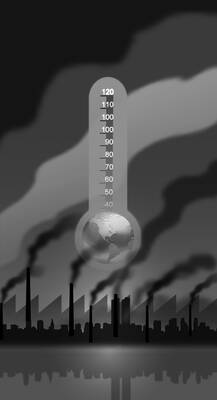
The closure of the Strait of Hormuz has sent the vast Asian chemicals industry into a tailspin. Deprived of the likes of Qatari natural gas and Saudi Arabian oil, the region’s fertilizer and plastics plants are slowing production or even shutting down. Everywhere except China, that is. In petrochemicals, China is unique. As well as a traditional industry that uses oil and gas as feedstock, it has parallel output that relies on its abundant domestic coal. Unsurprisingly, India and other regional powers want to copy and paste the Chinese method. This would not be easy — or climate friendly. The
Indonesian President Prabowo Subianto says he knows how to fix the problems facing Indonesia. Yet his economic mismanagement and authoritarian tendencies are steering the nation toward a familiar mix of currency instability and political chaos. The world’s fourth-most populous nation risks reversing the hard-won democratic and business reforms that came after the Asian Financial Crisis in 1997. At that time, the rupiah collapsed and the political upheaval that followed forced former president Haji Mohamed Suharto from power. Prabowo’s administration is ignoring similar warning signs. That disconnect was apparent in a national address on Wednesday, when Prabowo projected the swagger that has
“Of course you can choose not to be Taiwanese, just do not stay here,” chairwoman of Taipei 101 operator Taipei Financial Center Corp Janet Chia (賈永婕) said in an online interview with local entertainer Tai Chih-yuan (邰智源), triggering intense discussion on social media, with politicians across party lines weighing in. In the interview, which was aired on May 14, Chia and Tai’s discussion over a meal in Taipei 101 covered Chia’s career change from entertainer to chairwoman and US climber Alex Honnold’s free solo climb up the Taipei 101 building. During the interview, Chia said, “Being on this land, we


 RSS
RSS