


Between June and August 1914, in what history remembers as the Taroko War, 3,000 indigenous warriors of the Truku people fought for three relentless months against a force of 20,000 Japanese troops. The Japanese were well-armed with modern artillery, machine guns and a meticulously prepared strategy. Yet the Truku, vastly outgunned and cut off from supplies, resisted with extraordinary resolve in the mountains of eastern Taiwan until they were overwhelmed by exhaustion and a lack of resources.
That story, more than a century old, still resonates today — especially as Taiwan faces the looming threat of an all-out Chinese invasion. While the scale and nature of modern warfare are vastly different, the underlying truth remains: The survival of a people depends not just on firepower, but on the will to resist.
If China launches a full-scale attack, it would encounter not an isolated tribe, but a modern, democratic society with strong civil will, military preparedness and international awareness. Taiwan’s terrain, urban environments and growing civil defense capacity make it unlikely to fall quickly. Like the Truku in 1914, Taiwan might be able to hold out — for three weeks, three months or more.
Why does that time matter?
Because history shows that early resistance buys strategic opportunity. It allows for global attention, potential international assistance and the mobilization of long-term defense.
The lesson of the Taroko War is clear — even in the face of overwhelming odds, the spirit of resistance can shape history. Back then, it was 3,000 warriors in the mountains. Today, it is 23 million citizens defending democracy in a nation that has become a symbol of freedom in Asia.
If war does come, let us remember that if Taiwan can hold for three months, Taiwan can survive, and in doing so, it might secure not only its own future, but the stability of the free world.
Tu Hsin-fu is an indigenous affairs commentator.
KMT Chairwoman Cheng Li-wun’s (鄭麗文) recent visit to Beijing and her upcoming visit to Washington will serve as a high-level test of her diplomatic mettle. In Beijing, Cheng was received with symbolic gestures, a warm reception, and high-level access. In Washington, she will receive far less pomp and far sharper questions about the KMT’s vision for the future of Taiwan. Her challenge will be to persuade Washington that the KMT’s engagement with China can coexist with strong deterrence. Cheng’s April 7-12 visit to mainland China coincided with an intense period of conflict in Iran. Despite the strategic significance of Cheng’s trip,
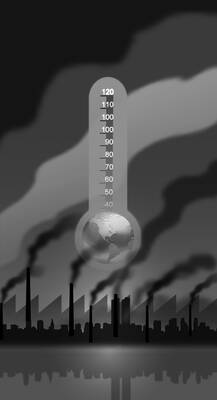
The closure of the Strait of Hormuz has sent the vast Asian chemicals industry into a tailspin. Deprived of the likes of Qatari natural gas and Saudi Arabian oil, the region’s fertilizer and plastics plants are slowing production or even shutting down. Everywhere except China, that is. In petrochemicals, China is unique. As well as a traditional industry that uses oil and gas as feedstock, it has parallel output that relies on its abundant domestic coal. Unsurprisingly, India and other regional powers want to copy and paste the Chinese method. This would not be easy — or climate friendly. The
Indonesian President Prabowo Subianto says he knows how to fix the problems facing Indonesia. Yet his economic mismanagement and authoritarian tendencies are steering the nation toward a familiar mix of currency instability and political chaos. The world’s fourth-most populous nation risks reversing the hard-won democratic and business reforms that came after the Asian Financial Crisis in 1997. At that time, the rupiah collapsed and the political upheaval that followed forced former president Haji Mohamed Suharto from power. Prabowo’s administration is ignoring similar warning signs. That disconnect was apparent in a national address on Wednesday, when Prabowo projected the swagger that has
“Of course you can choose not to be Taiwanese, just do not stay here,” chairwoman of Taipei 101 operator Taipei Financial Center Corp Janet Chia (賈永婕) said in an online interview with local entertainer Tai Chih-yuan (邰智源), triggering intense discussion on social media, with politicians across party lines weighing in. In the interview, which was aired on May 14, Chia and Tai’s discussion over a meal in Taipei 101 covered Chia’s career change from entertainer to chairwoman and US climber Alex Honnold’s free solo climb up the Taipei 101 building. During the interview, Chia said, “Being on this land, we


 RSS
RSS