


Next week, the nation is to celebrate the Lunar New Year break. Unfortunately, cold winds are a-blowing, literally and figuratively. The Central Weather Administration has warned of an approaching cold air mass, while obstinate winds of chaos eddy around the Legislative Yuan.
English theologian Thomas Fuller optimistically pointed out in 1650 that “it’s always darkest before the dawn.” We could paraphrase by saying the coldest days are just before the renewed hope of spring. However, one must temper any optimism about the damage being done in the legislature by the opposition Chinese Nationalist Party (KMT) and Taiwan People’s Party (TPP), under KMT legislative caucus leader Fu Kun-chi’s (傅崐萁) disruptive manipulation: All indications are that the chaos and disruption have only just begun.
Most recently, the opposition parties forced through amendments to hobble the Constitutional Court, impoverished the central government, slashed the defense budget and hindered voters’ right of recall.
Today we publish an open letter to Legislative Speaker Han Kuo-yu (韓國瑜) by representatives of the Taiwanese-American community, who welcome his attendance in the US for President Donald Trump’s inauguration on Jan. 20. The letter speaks of pride in Taiwan’s achievements in freedom, democracy and economic development, but also of frustration that the KMT and TPP legislators are clearly not prioritizing the interests of the country. It condemns their abuse of the power they were given by the electorate.
One is reminded of Han’s KMT-affiliated predecessor, former legislative speaker Wang Jin-pyng (王金平), who served in that position between 1999 and 2016, under KMT and Democratic Progressive Party (DPP) administrations. Wang responded to one of the most serious political disruptions of Taiwan’s democratic era, the constitutional crisis brought about by the storming and occupation of the Legislative Yuan in 2014 over his own party’s attempts to force through the cross-strait trade in services agreement. In his handling of that crisis, he showed political wisdom, integrity and neutrality.
The open letter finds little evidence of Wang’s precedent in Han’s approach, and reproaches him for that, demanding that he put an end to the “ridiculous farce playing out in the legislature.”
Han made a show of cross-party unity in the make-up of the delegation to the US, with members of the DPP, KMT and TPP present, who all expressed hope that the unity among themselves could be maintained when they returned to Taiwan. That is at best an aspiration, at most a cynical soundbite.
Premier Cho Jung-tai (卓榮泰) said on Thursday that the Cabinet is considering asking the legislature to hold a revote on the budget plan, citing the right and obligation of the Executive Yuan under Article 3 of the Additional Articles of the Constitution.
The same day, President William Lai (賴清德) said that although he promulgated the amendments to the Constitutional Court Procedure Act (憲法訴訟法), he would call for a court ruling on their constitutionality.
The KMT said that Lai’s promulgation of the law while applying for a constitutional interpretation is the worst example of going against the public opinion. It is not. It is Lai’s constitutional right.
From 1991 to 2005, seven amendments were made to the Constitution. Little action was taken to bring it more in touch with the needs of today’s Taiwan during the administrations of former presidents Ma Ying-jeou (馬英九) and Tsai Ing-wen (蔡英文). The Constitution is straining under the crisis created by the opposition parties’ egregious actions.
US legal scholar Bruce Ackerman coined the term “constitutional moment” to describe a period of heightened public engagement and deliberation about a nation’s constitution. Taiwan needs to face up to the idea that it is at its own constitutional moment.

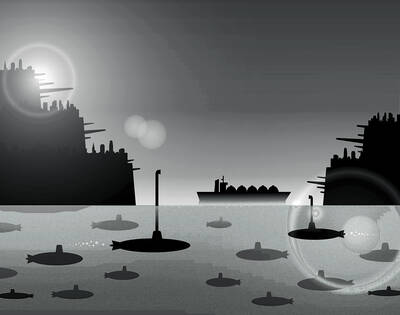
In the event of a war with China, Taiwan has some surprisingly tough defenses that could make it as difficult to tackle as a porcupine: A shoreline dotted with swamps, rocks and concrete barriers; conscription for all adult men; highways and airports that are built to double as hardened combat facilities. This porcupine has a soft underbelly, though, and the war in Iran is exposing it: energy. About 39,000 ships dock at Taiwan’s ports each year, more than the 30,000 that transit the Strait of Hormuz. About one-fifth of their inbound tonnage is coal, oil, refined fuels and liquefied natural gas (LNG),
On Monday, the day before Chinese Nationalist Party (KMT) Chairwoman Cheng Li-wun (鄭麗文) departed on her visit to China, the party released a promotional video titled “Only with peace can we ‘lie flat’” to highlight its desire to have peace across the Taiwan Strait. However, its use of the expression “lie flat” (tang ping, 躺平) drew sarcastic comments, with critics saying it sounded as if the party was “bowing down” to the Chinese Communist Party (CCP). Amid the controversy over the opposition parties blocking proposed defense budgets, Cheng departed for China after receiving an invitation from the CCP, with a meeting with
Chinese Nationalist Party (KMT) Chairwoman Cheng Li-wun (鄭麗文) is leading a delegation to China through Sunday. She is expected to meet with Chinese President Xi Jinping (習近平) in Beijing tomorrow. That date coincides with the anniversary of the signing of the Taiwan Relations Act (TRA), which marked a cornerstone of Taiwan-US relations. Staging their meeting on this date makes it clear that the Chinese Communist Party (CCP) intends to challenge the US and demonstrate its “authority” over Taiwan. Since the US severed official diplomatic relations with Taiwan in 1979, it has relied on the TRA as a legal basis for all
To counter the CCP’s escalating threats, Taiwan must build a national consensus and demonstrate the capability and the will to fight. The Chinese Communist Party (CCP) often leans on a seductive mantra to soften its threats, such as “Chinese do not kill Chinese.” The slogan is designed to frame territorial conquest (annexation) as a domestic family matter. A look at the historical ledger reveals a different truth. For the CCP, being labeled “family” has never been a guarantee of safety; it has been the primary prerequisite for state-sanctioned slaughter. From the forced starvation of 150,000 civilians at the Siege of Changchun


 RSS
RSS