


Within the past month, the world has witnessed the collapse of governments in France and Germany, while South Korea went through a surprise six hours of martial law, resulting in the impeachment of South Korean President Yoon Suk-yeol. In Canada, there have been calls for Prime Minister Justin Trudeau to step down after the resignation of his finance minister.
Amid all this turmoil, Taiwan’s “vibrant” democracy is also facing its own crisis — again. Taiwan has long been thought to have made solid gains in consolidating its democratic systems, but as democracies around the world face increasing pressures, Taiwan is not immune.
Just last week, the opposition Chinese Nationalist Party (KMT), which holds a majority with its junior partner the Taiwan People’s Party (TPP), passed bills that would severely limit the people’s right of recall and paralyze the justices on the Constitutional Court. That has spurred people to take to the streets again, just as they did in May to protest the KMT’s similar proposed overreach.
These issues speak to problems at the heart of Taiwan’s democratic system and how political power should be shared, divided and held accountable. In other words, they are constitutional concerns.
Bruce Ackerman of Yale Law School coined the term “constitutional moment” to describe a period of heightened public engagement and deliberation about a nation’s constitution. His theory originally referred to fundamental changes in how a society constitutes its democracy, even without formally amending the written text of a constitution itself.
Over time, the term has come to encompass times when a nation faces conflicts so sharp and so existential that the functioning of everyday politics is no longer enough to settle them. This is what is happening in Taiwan.
Taiwan’s written Constitution, formally the Constitution of the Republic of China, adopted in 1947, was frozen in time and space by Chiang Kai-shek’s (蔣介石) martial law.
It was not until 1990 that Taiwan’s first constitutional moment began, with the mass student protest known as the Wild Lily Student Movement. Twenty-two thousand students occupied the plaza in front of Chiang Kai-shek Memorial Hall and demanded basic democratic reforms.
Instead of sending in troops, the newly inaugurated president Lee Teng-hui (李登輝) met with student leaders, which led to a rapid succession of constitutional amendments that resulted in the democratic system of today, based on direct popular elections of the president and the Legislative Yuan.
The reform process is considered “peaceful” to international political science academics, as there was no large-scale violence.
However, that remarkable achievement was the result of many rounds of compromises between uneasy political bedfellows, shaping Taiwan’s working constitution in a piecemeal fashion.
In 2004, along with a drastic move to halve the size of the Legislative Yuan, the amendment process itself was changed to include a final approval by nationwide referendum. That threshold for further amending the constitution was so impossible to scale that the constitution effectively became unamendable, most experts said.
With this new change, Taiwan’s long constitutional moment officially came to a close.
Four years later in 2008, then-president Ma Ying-jeou (馬英九) said in his inauguration speech that “in a young democracy, respecting the constitution is more important than amending it. My top priority is ... abiding by it. Serving by example, I will follow the letter and the spirit of the constitution.”
For a president to stress this seemingly uncontroversial fact in his inauguration shows that there were still constitutional questions to be answered, yet those in charge had no more appetite to touch them.
The next impending constitutional moment has been building up over the past two decades since the end of the last constitutional amendment in 2004.
In the past 20 years, there have been several large scale protests that point to Taiwan’s constitutional order itself.
In 2004, opponents of then-president Chen Shui-bian (陳水扁) demanded a recount of his razor-thin margin of victory, and in 2014 the Sunflower Movement occupied the parliament for almost a month, protesting the KMT’s abuse of legislative procedures to approve a trade deal with China.
This year, there have already been two similar protests over the KMT’s proposed expansion of legislative power, including the one that started last week.
At the moment, Taiwan’s Constitution still provides the tools for both sides to check each other: The president can hold off a bill on the grounds of defects in the legislative process, or the Constitutional Court can issue an injunction while the constitutionality of the bills are contested.
More fundamentally, the questions of how political power is separated and checked between the president, the premier and the legislature were never fully considered as a whole.
Both the Sunflower Movement and this year’s “Bluebird” protests revolve around whether the legislature has overreached, whether the president has too much power, or just exactly how the premier and the legislature can check each other through a vote of no confidence or snap elections.
In essence, it is precisely because these questions were never fully settled that the KMT is able to drive these outlandish proposals that threaten the constitutional order.
These constitutional questions are made even more pressing because the Constitution’s procedures and checks and balances are the basic process through which Taiwan decides its most existential question: its identity and policies with regards to China. If the Constitution is gridlocked, Taiwan’s stance toward China is gridlocked, which has profound implications for regional and global peace and prosperity.
As the ruling party, the Democratic Progressive Party (DPP) has been rather passive lately. DPP legislators have been speaking out on social media and even camped inside the legislative floor (a bit of deja vu of the Sunflower Movement, for sure). However, they have only been playing defense, merely trying to prevent the KMT and the TPP from passing their bills.
With the understanding that the controversies ignited by the KMT are really rooted in the constitutional order, the DPP should be on the offensive, raising the proposition of a comprehensive overhaul of the Constitution, in which fundamental questions are open to debate.
President William Lai (賴清德) would do well to officially recognize such a constitutional moment by announcing his intention to engage the public at large on the Constitution as a whole.
Given that the DPP is a minority party in the legislature and the impossibly high threshold to amending the text of the Constitution, formal constitutional amendments in Taiwan remain unlikely in the foreseeable future. However, the nation must begin to address its constitutional questions, not in the piecemeal and reactive way that defined the constitutional moment of the past, but in a holistic and proactive way that might well define the constitutional moment to come.
Yeh Chieh-ting is a venture investor in Silicon Valley, the editor in chief of Ketagalan Media and a director of US Taiwan Watch, an international think tank focusing on Taiwan-US relations.
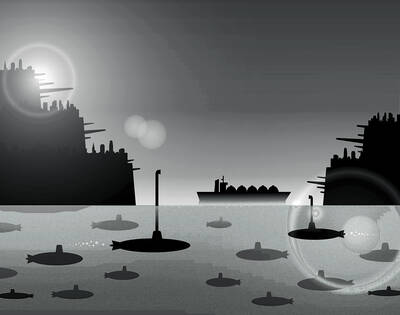
In the event of a war with China, Taiwan has some surprisingly tough defenses that could make it as difficult to tackle as a porcupine: A shoreline dotted with swamps, rocks and concrete barriers; conscription for all adult men; highways and airports that are built to double as hardened combat facilities. This porcupine has a soft underbelly, though, and the war in Iran is exposing it: energy. About 39,000 ships dock at Taiwan’s ports each year, more than the 30,000 that transit the Strait of Hormuz. About one-fifth of their inbound tonnage is coal, oil, refined fuels and liquefied natural gas (LNG),
On Monday, the day before Chinese Nationalist Party (KMT) Chairwoman Cheng Li-wun (鄭麗文) departed on her visit to China, the party released a promotional video titled “Only with peace can we ‘lie flat’” to highlight its desire to have peace across the Taiwan Strait. However, its use of the expression “lie flat” (tang ping, 躺平) drew sarcastic comments, with critics saying it sounded as if the party was “bowing down” to the Chinese Communist Party (CCP). Amid the controversy over the opposition parties blocking proposed defense budgets, Cheng departed for China after receiving an invitation from the CCP, with a meeting with
To counter the CCP’s escalating threats, Taiwan must build a national consensus and demonstrate the capability and the will to fight. The Chinese Communist Party (CCP) often leans on a seductive mantra to soften its threats, such as “Chinese do not kill Chinese.” The slogan is designed to frame territorial conquest (annexation) as a domestic family matter. A look at the historical ledger reveals a different truth. For the CCP, being labeled “family” has never been a guarantee of safety; it has been the primary prerequisite for state-sanctioned slaughter. From the forced starvation of 150,000 civilians at the Siege of Changchun
The two major opposition parties, the Chinese Nationalist Party (KMT) and the Taiwan People’s Party (TPP), jointly announced on Tuesday last week that former TPP lawmaker Chang Chi-kai (張啟楷) would be their joint candidate for Chiayi mayor, following polling conducted earlier this month. It is the first case of blue-white (KMT-TPP) cooperation in selecting a joint candidate under an agreement signed by their chairpersons last month. KMT and TPP supporters have blamed their 2024 presidential election loss on failing to decide on a joint candidate, which ended in a dramatic breakdown with participants pointing fingers, calling polls unfair, sobbing and walking


 RSS
RSS