


Taiwan smoothly completed its presidential and legislative elections, demonstrating its mature democracy and triumph over China’s coercive interference and threats. However, as no party has a majority in the new legislature, the election has created a new “two big and one small” political scenario.
Democratic Progressive Party (DPP) Chairman and Vice President William Lai (賴清德) won the presidency, delivering his party a record third consecutive term in office, the first since the country’s first direct presidential election in 1996. Voters have clearly shown resistance to China’s coercive interference, and endorsed Lai’s plan to continue President Tsai Ing-wen’s (蔡英文) strategy of facing Beijing with neither provocation nor submissiveness, while seeking more support from international allies and working to resume dialogue with China.
However, compared with Tsai’s 2020 landslide win with more than 8 million votes, Lai’s tally, 5.5 million votes, was less than the combined total of the opposition party candidates, indicating that cross-strait tensions played a major, but less critical, role in the election. Lai would have a difficult time in power due to his party’s failure to secure a legislative majority with only 51 seats, while the opposition Chinese Nationalist Party (KMT) won 52 and the Taiwan People’s Party (TPP) claimed eight.
As he promised to do in his post-election news conference, Lai and his administration would need to seek cross-party cooperation to promote policies such as expanding the defense budget, and financial reform of the national health and labor insurance programs, which he named as top priorities. The most urgent and difficult task would be the legislative speaker election and forming a new Cabinet, in which Lai pledged to recruit cross-party talent.
The KMT has gained 10 more legislative seats than in 2020, which once more makes it the biggest party in the legislature and proves its dominance in local factions, despite several candidates facing accusations of illegal property expansion and the leaking of confidential national defense information. Nevertheless, the KMT failed to secure more votes in the presidential election, 4 percent fewer than in 2020, and did not win more party votes in the legislative polling. This perhaps reflects continued public opposition to the party’s pro-China stance and foreign policy strategy.
The KMT could also face difficulties regaining the support of the TPP to secure a leading position in the legislature and to promote policy, due to lingering antipathy following the pre-election “blue-white alliance” debacle. It should also be concerned about internal turmoil as it reviews the electoral defeat and addresses the thorny issue of an intergenerational power shift, with the party failing to appeal to young voters.
The other smaller, but growing, opposition TPP is considered a big winner in the elections, with Chairman Ko Wen-je (柯文哲) winning more than 3.6 million votes, more than most pre-election polls would have suggested. It also picked up three more legislative seats to become a crucial third political force that could be decisive in making national policies. Ko has already announced his intention to run for the presidency in 2028.
However, the elections also affirmed that the TPP is a one-man party, as Ko’s presidential votes far outnumbered the party’s legislative votes. Ko received only 23 percent of votes in Taipei, the city he had been mayor of for eight years, showing his incompetence in administrative management. The party is also expected to face more political turmoil originating from its combination of multiparty politicians holding differing stances.
Taiwanese have voted to keep the DPP in power, while giving the KMT and TPP legislative oversight. Voters will be watching to see whether the three parties use this power responsibility.
KMT Chairwoman Cheng Li-wun’s (鄭麗文) recent visit to Beijing and her upcoming visit to Washington will serve as a high-level test of her diplomatic mettle. In Beijing, Cheng was received with symbolic gestures, a warm reception, and high-level access. In Washington, she will receive far less pomp and far sharper questions about the KMT’s vision for the future of Taiwan. Her challenge will be to persuade Washington that the KMT’s engagement with China can coexist with strong deterrence. Cheng’s April 7-12 visit to mainland China coincided with an intense period of conflict in Iran. Despite the strategic significance of Cheng’s trip,
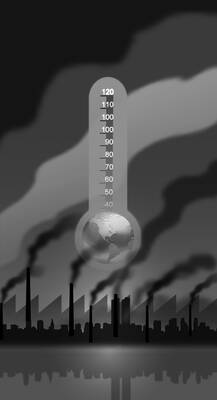
The closure of the Strait of Hormuz has sent the vast Asian chemicals industry into a tailspin. Deprived of the likes of Qatari natural gas and Saudi Arabian oil, the region’s fertilizer and plastics plants are slowing production or even shutting down. Everywhere except China, that is. In petrochemicals, China is unique. As well as a traditional industry that uses oil and gas as feedstock, it has parallel output that relies on its abundant domestic coal. Unsurprisingly, India and other regional powers want to copy and paste the Chinese method. This would not be easy — or climate friendly. The
History might remember 2026, not 2022, as the year artificial intelligence (AI) truly changed everything. ChatGPT’s launch was a product moment. What is happening now is an anthropological moment: AI is no longer merely answering questions. It is now taking initiative and learning from others to get things done, behaving less like software and more like a colleague. The economic consequence is the rise of the one-person company — a structure anticipated in the 2024 book The Choices Amid Great Changes, which I coauthored. The real target of AI is not labor. It is hierarchy. When AI sharply reduces the cost
US President Donald Trump recently repeated his claim that “Taiwan stole America’s chip industry,” reigniting public debate on the issue. As a former Taiwanese minister of economic affairs and an entrepreneur deeply involved in semiconductor supply chain development, I feel a responsibility to clarify this misunderstanding. From the perspective of global industrial evolution and the economic principle of comparative advantage, such a statement appears overly simplistic and risks obscuring the essence of the issue. The rise of Taiwan’s semiconductor industry was not built on “replacing America,” but rather emerged as a result of countries pursuing different development paths within the


 RSS
RSS