


Taiwan is a vibrant hub of technology, innovation and trade flows, yet it has long confronted an international communication bottleneck. Although Taiwanese students are immersed in technology and globalization, they struggle to learn English, struggle to enter international careers and struggle to make Taiwan more competitive.
President Tsai Ing-wen (蔡英文) addressed this issue at the 2030 Education AI Annual Conference, suggesting that the solution lies with artificial intelligence.
The problem, as Tsai correctly observed, is that Taiwanese students simply lack opportunities to “use” the language they learn. This does not mean simply using language to read textbooks and take tests. This might actually be “useless” if the countless number of Taiwanese college students with more than 4,000 hours of English study who remain stuck at the beginner level is evidence.
Language “use” here involves having a need or interest in using it. This real-world motivation generates curiosity, which in turn generates real learning.
The “Bilingual 2030” policy, which was approved by the Executive Yuan in 2018, was created to improve Taiwan’s overall national competitiveness. It was in part borne out of recognizing students’ lack of interest in, as well as the lack of resources and opportunities for, language learning. Unfortunately, the lofty ideals of the bilingual national project quickly got lost in a translation of compromises and diluted efforts.
One lesson learned from the apparent failure of this policy to live up to its name is that any improvement in foreign language education in countries like Taiwan requires looking beyond traditional methodologies.
This is why the president addressed the AI conference: She recognizes the potential that AI has to revolutionize education, especially generative AI tools like ChatGPT that have been freely available to anyone with Internet access.
However, we urge educators to go beyond the president’s suggestion that government or private-sector resources are necessary to realize AI’s potential.
Instead of looking outside itself, the education sector needs to empower teachers and learners to take up revolutionary generative AI tools such as ChatGPT to promote a more autonomous and personalized learning experience.
Teachers, schools and school boards should research, discuss and debate the uses of generative AI in the classroom.
This is most pertinent to the issue of language education in Taiwan. The solution to the language “use” problem is to put power into the hands of teachers and students themselves and to not be tethered to government or private-sector resources.
These generative AI tools can help language teachers and learners tap into the distinctively human creative potential to maximize opportunities for language use and interest in learning.
According to psychologists like Paul Conti, human behavior emerges from three main drives:
We share the pleasure drive and aggressive drive with other animals, but the generative drive seems unique in humans. It is the generative drive that is associated with learning — it drives us to create something new, to grow as a person and to contribute to the world. It is the drive that makes us want to pursue our passions, learn new skills and even help others.
This is where generative AI comes in.
Generative AI is the first technology to truly offer the holy grail of education: to intensify the generative drive of learners. It achieves this through personalization. Since no two learners are the same, tools such as ChatGPT can be adapted to match the unique interests, pace, style and proficiency level of each student.
There is also the potential for interactive practice with AI chatbots to create opportunities for real-time language practice with AI chatbots. With the recent voice and audio capabilities of ChatGPT, for example, students can now engage in written or spoken conversations about any topic in the style or personality of anyone, from Confucius (孔子) to Cardi B. This not only could boost language ability, fluency and confidence, but even more importantly, generate motivation and curiosity.
It is not just about the students, though. Teachers too can harness the power of generative AI.
Imagine a classroom where teachers integrate their lessons with AI-driven tools to create explanations, examples, texts and even high-quality language tests tailored to the interests and ability levels of their students.
This form of empowerment can also intensify the generative drive of educators, invigorating not only their lessons, but also their passion for their work.
While the generative potential of AI in enhancing bilingual education is undeniable, the path is not without challenges. There has been an inherent apprehension and even a strange indifference toward integrating AI into Taiwanese classrooms since ChatGPT’s release almost a year ago.
Changing this mindset is crucial.
To our knowledge, there has also been no coordinated effort or even calls to create training programs for teachers. Yet, there is an urgent need to equip teachers with the right mindset and the right skill set to familiarize them with both the benefits and drawbacks of AI tools in language education.
While the promise of the Bilingual 2030 policy will likely never be realized in any fundamental sense, the move toward a “more bilingual” nation will require new methods and combinations of technology with education, and tradition with innovation.
We see the potential of generative AI to tap into the generative drives of learners and educators to create the only kind of language education that can even remotely approach the original ideals of a bilingual nation by 2030 — a language environment based on the interest, motivation and curiosity to really “use” the language.
Nigel P. Daly PhD is a business communications instructor at TAITRA’s International Trade Institute. Liu Yeu-ting is a professor in National Taiwan Normal University’s English Department and associate vice president for academic affairs.
Minister of Labor Hung Sun-han (洪申翰) on April 9 said that the first group of Indian workers could arrive as early as this year as part of a memorandum of understanding (MOU) between the Taipei Economic and Cultural Center in India and the India Taipei Association. Signed in February 2024, the MOU stipulates that Taipei would decide the number of migrant workers and which industries would employ them, while New Delhi would manage recruitment and training. Employment would be governed by the laws of both countries. Months after its signing, the two sides agreed that 1,000 migrant workers from India would
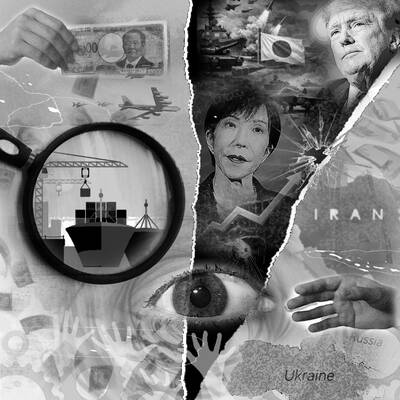
Japan’s imminent easing of arms export rules has sparked strong interest from Warsaw to Manila, Reuters reporting found, as US President Donald Trump wavers on security commitments to allies, and the wars in Iran and Ukraine strain US weapons supplies. Japanese Prime Minister Sanae Takaichi’s ruling party approved the changes this week as she tries to invigorate the pacifist country’s military industrial base. Her government would formally adopt the new rules as soon as this month, three Japanese government officials told Reuters. Despite largely isolating itself from global arms markets since World War II, Japan spends enough on its own
On March 31, the South Korean Ministry of Foreign Affairs released declassified diplomatic records from 1995 that drew wide domestic media attention. One revelation stood out: North Korea had once raised the possibility of diplomatic relations with Taiwan. In a meeting with visiting Chinese officials in May 1995, as then-Chinese president Jiang Zemin (江澤民) prepared for a visit to South Korea, North Korean officials objected to Beijing’s growing ties with Seoul and raised Taiwan directly. According to the newly released records, North Korean officials asked why Pyongyang should refrain from developing relations with Taiwan while China and South Korea were expanding high-level
When 17,000 troops from the US, the Philippines, Australia, Japan, Canada, France and New Zealand spread across the Philippine archipelago for the Balikatan military exercise, running from tomorrow through May 8, the official language would be about interoperability, readiness and regional peace. However, the strategic subtext is becoming harder to ignore: The exercises are increasingly about the military geography around Taiwan. Balikatan has always carried political weight. This year, however, the exercise looks different in ways that matter not only to Manila and Washington, but also to Taipei. What began in 2023 as a shift toward a more serious deterrence posture


 RSS
RSS