


The UK film industry revolves around the US’. The dependence is startling just in money terms: Of the nearly US$2.6 billion spent in film and television production in the UK in 2022, US studio-backed projects totaled US$1.36 billion — a 31 percent increase from 2021, according to the British Film Institute. Think of it another way: That rhapsody-in-pink Barbie Land set in last weekend’s blockbuster hit? It was built in the Warner Bros Studios in Leavesden, just north of London.
So, with Tinsel Town USA shut down by the dual strike by actors and writers, Hollywood-on-the-Thames has sputtered to a stop too. The knock-on effects are huge: There are more than 16,000 UK film and TV production companies, mostly small businesses, that in 2020 employed 86,000 people. While British actors have their own union — Equity — many work in productions shut down by walkouts staged by the Writers Guild of America (WGA) and the Screen Actors Guild-American Federation of Television and Radio Actors (SAG-AFTRA).
People can sense the anxiety when asking film folks here about their US cousins. “We’re hoping the parties resolve their differences soon,” said a spokesperson for Film London, which works with movie companies to set up shoots in the city. Equity is loudly supportive of the strike, but it reminds members that it is illegal to walk out in sympathy from British productions that have no investment from studios that are part of the Alliance of Motion Picture and Television Producers (AMPTP), the US trade association at loggerheads with the writers and actors’ unions.
However, the calamity also raises a tempting opportunity. Should the UK’s skilled film artisans — from actors and writers unaffiliated with US unions to the craftsmen and technicians who build and film extravaganzas such as Barbie — initiate independent productions that they can sell to US studios that might soon be content-starved? That kind of self-starting could help break British dependence on Hollywood financing (and US cinematic visions) — and revive an industry that once rivaled the US’. Indeed, if there is one place where the UK’s soft power has real potency, it is in the anglophilic offices of the big Hollywood studios. Anyway, the British are not up for the strikebreaker role. Everyone here simply says they hope it all blows over fast. At least in public.
However, there is talking going on. US producers have not been quiet. They were scouting for fresh sources even before the 160,000-member actors’ guild joined the WGA strike on July 14. The streaming companies know that overseas productions without big US studio money can come up with gigantic hits (think South Korea and Squid Game).
“Believe me, all conversations are happening,” said one Hollywood insider who asked not to be named because of the sensitivities surrounding the strike. “They’ve been happening in preparation for all this.”
An old-style Hollywood deal is also getting new traction — the so-called “negative pickup.” It’s one where no money exchanges hands until a movie or show is finished. The term originated in the period before digital, when the medium was really film, that is, celluloid — and moviemakers delivered the film negative to the studios. While the filmmakers got no money from the studio, a “negative pickup” in the past was enough to convince a bank to offer financing — the contract being an effective promissory note of money to come once the project was completed. The big studios usually promise to cover all costs and take on distribution (and, of course, the enormous proceeds from that).
That is all sotto voce for now — especially in the UK, where no one wants to damage existing relations with SAG-AFTRA. There is already criticism of potential “backdoor” use of London to circumvent the strike. If it ends soon, the damage would be limited, but the economic pressure on UK film businesses would grow as the US faceoff goes on.
Hollywood insiders do not expect any movement in negotiations until after the US Labor Day weekend in September, the unofficial beginning of fall in the US. Why then? It has little to do with producing fresh content. It is about maximizing the movies already in the pipeline. Fall marks the start of Hollywood’s awards season, when the studios roll out their biggest and most prestigious films. The producers would need the directors, writers and especially the actors who created those movies to promote them — and to juice the box office.
What is the point of the Oscars if the statuettes do not help to sell tickets? After all, the Academy of Motion Picture Arts and Sciences — which gives out the annual prize — was set up by a studio chief, Louis B. Meyer, the founder of MGM. One raison d’etre: to circumvent unions by coddling actors with gilded trophies. It would be ironic if the awards got producers and actors back to the negotiating table.
It would be really bad news if the AMPTP decides to sacrifice the awards season. That means the standoff would become a war of attrition, but maybe then, the UK film industry might just decide it is time to strike out on its own.
Howard Chua-Eoan is a columnist for Bloomberg Opinion covering culture and business. He previously served as Bloomberg Opinion’s international editor and is a former news director at Time magazine. This column does not necessarily reflect the opinion of the editorial board or Bloomberg LP and its owners.
Minister of Labor Hung Sun-han (洪申翰) on April 9 said that the first group of Indian workers could arrive as early as this year as part of a memorandum of understanding (MOU) between the Taipei Economic and Cultural Center in India and the India Taipei Association. Signed in February 2024, the MOU stipulates that Taipei would decide the number of migrant workers and which industries would employ them, while New Delhi would manage recruitment and training. Employment would be governed by the laws of both countries. Months after its signing, the two sides agreed that 1,000 migrant workers from India would
On March 31, the South Korean Ministry of Foreign Affairs released declassified diplomatic records from 1995 that drew wide domestic media attention. One revelation stood out: North Korea had once raised the possibility of diplomatic relations with Taiwan. In a meeting with visiting Chinese officials in May 1995, as then-Chinese president Jiang Zemin (江澤民) prepared for a visit to South Korea, North Korean officials objected to Beijing’s growing ties with Seoul and raised Taiwan directly. According to the newly released records, North Korean officials asked why Pyongyang should refrain from developing relations with Taiwan while China and South Korea were expanding high-level
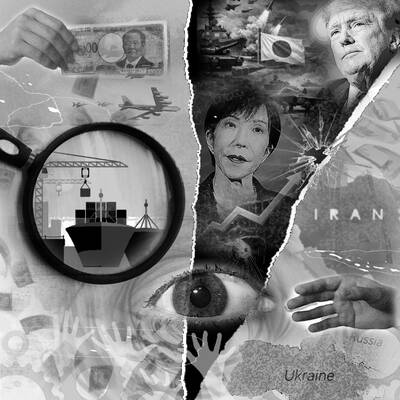
Japan’s imminent easing of arms export rules has sparked strong interest from Warsaw to Manila, Reuters reporting found, as US President Donald Trump wavers on security commitments to allies, and the wars in Iran and Ukraine strain US weapons supplies. Japanese Prime Minister Sanae Takaichi’s ruling party approved the changes this week as she tries to invigorate the pacifist country’s military industrial base. Her government would formally adopt the new rules as soon as this month, three Japanese government officials told Reuters. Despite largely isolating itself from global arms markets since World War II, Japan spends enough on its own
When 17,000 troops from the US, the Philippines, Australia, Japan, Canada, France and New Zealand spread across the Philippine archipelago for the Balikatan military exercise, running from tomorrow through May 8, the official language would be about interoperability, readiness and regional peace. However, the strategic subtext is becoming harder to ignore: The exercises are increasingly about the military geography around Taiwan. Balikatan has always carried political weight. This year, however, the exercise looks different in ways that matter not only to Manila and Washington, but also to Taipei. What began in 2023 as a shift toward a more serious deterrence posture


 RSS
RSS