


The Chinese Nationalist Party (KMT) and Hon Hai Precision Industry Co founder Terry Gou (郭台銘) have again locked horns over the party’s decision to nominate New Taipei City Mayor Hou You-yi (侯友宜) as its presidential candidate.
The spat began when KMT Secretary-General Justin Huang (黃健庭) said that when it was in talks with Gou about the nomination in March, party representatives had offered him a “plan B” of first place on the party’s legislator-at-large list with an option to being legislative speaker.
Gou denied this, accusing Huang of tarnishing his image, peddling lies and distorting the situation.
Huang’s words were more likely an attempt to defuse the situation and demonstrate the KMT’s goodwill, but they had the opposite effect, and now Gou sounds like a jilted lover.
Commentators have asked whether the KMT has been bitten by a benefactor it has come to see as its cash cow. Is the KMT at fault? What does the spat say about Gou, his suitability as a potential political leader and the implications for the presidential race?
Gou has donated to previous KMT presidential campaigns and political events either through personal donations or his company, always within legally allowed limits to keep himself, his company and the KMT above criticism.
He has also become more politically active in the past few years, seeking the KMT presidential nomination on two occasions, in 2020 and this year. His attempts were frustrated both times.
Commentators have asked — some seriously, some with a degree of sarcasm — whether the party had treated its benefactor fairly, or whether it had just used him for campaign financing, perhaps dangling the prospect of the nomination.
It is unreasonable, indeed undemocratic and corrupt, for an individual — especially one who does not even have party membership — to expect special treatment in return for political donations, so that can be discounted as among Gou’s motivations.
When the KMT nominated Hou, many wondered how Gou would respond, but he said that he would fully support Hou’s campaign, as he wanted to see the Democratic Progressive Party (DPP) removed from power.
Things changed when it became obvious that Hou’s campaign was foundering. Gou has started becoming more politically active in the past few days, criticizing the DPP’s record in government and announcing that he would attend a protest rally on Ketagalan Boulevard in Taipei on Sunday.
Former TVBS news anchor Lee Yen-chiou (李艷秋) wrote on Facebook that Gou had “already strung his bow,” predicting that he was preparing to announce plans to run as an independent.
Lee said that if Gou turned the election into a four-horse race, it would further hobble Hou, virtually securing a win for the DPP against a pan-blue vote split between Gou, Hou and former Taipei mayor Ko Wen-je (柯文哲), the Taiwan People’s Party candidate, and potentially consigning the KMT to permanent opposition status.
No wonder the KMT is concerned about Gou’s behavior, leading to Huang’s recent comments.
Has the KMT been bitten by its cash cow? The relationship between Gou’s donations and the KMT’s obligations to him, when not clearly articulated, seem to have become a source of antipathy.
The party itself is guilty of nothing remarkable in political terms, but what does Gou’s reaction say about his understanding of how politics works, the thickness of his skin, his clear-headed conviction of how best to bring down the DPP government or his ability to keep a promise and maintain loyalty?
For this campaign, those questions would be answered by simply continuing to support Hou, as he promised to do in May.
Minister of Labor Hung Sun-han (洪申翰) on April 9 said that the first group of Indian workers could arrive as early as this year as part of a memorandum of understanding (MOU) between the Taipei Economic and Cultural Center in India and the India Taipei Association. Signed in February 2024, the MOU stipulates that Taipei would decide the number of migrant workers and which industries would employ them, while New Delhi would manage recruitment and training. Employment would be governed by the laws of both countries. Months after its signing, the two sides agreed that 1,000 migrant workers from India would
In recent weeks, Taiwan has witnessed a surge of public anxiety over the possible introduction of Indian migrant workers. What began as a policy signal from the Ministry of Labor quickly escalated into a broader controversy. Petitions gathered thousands of signatures within days, political figures issued strong warnings, and social media became saturated with concerns about public safety and social stability. At first glance, this appears to be a straightforward policy question: Should Taiwan introduce Indian migrant workers or not? However, this framing is misleading. The current debate is not fundamentally about India. It is about Taiwan’s labor system, its
On March 31, the South Korean Ministry of Foreign Affairs released declassified diplomatic records from 1995 that drew wide domestic media attention. One revelation stood out: North Korea had once raised the possibility of diplomatic relations with Taiwan. In a meeting with visiting Chinese officials in May 1995, as then-Chinese president Jiang Zemin (江澤民) prepared for a visit to South Korea, North Korean officials objected to Beijing’s growing ties with Seoul and raised Taiwan directly. According to the newly released records, North Korean officials asked why Pyongyang should refrain from developing relations with Taiwan while China and South Korea were expanding high-level
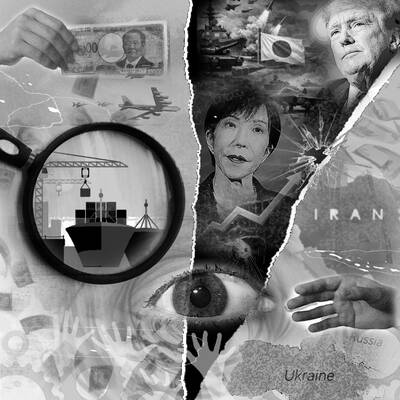
Japan’s imminent easing of arms export rules has sparked strong interest from Warsaw to Manila, Reuters reporting found, as US President Donald Trump wavers on security commitments to allies, and the wars in Iran and Ukraine strain US weapons supplies. Japanese Prime Minister Sanae Takaichi’s ruling party approved the changes this week as she tries to invigorate the pacifist country’s military industrial base. Her government would formally adopt the new rules as soon as this month, three Japanese government officials told Reuters. Despite largely isolating itself from global arms markets since World War II, Japan spends enough on its own


 RSS
RSS