


Broken promises, missed opportunities and a failure to see the bigger picture: That is the story of the West’s approach to developing countries in recent years. Money to help with climate breakdown has been pledged, but not delivered. Vaccines have been hoarded. Aid budgets have been cut.
From any perspective — be it geopolitical, economic, humanitarian or ecological — the indifference to what is happening elsewhere is disastrous.
If the West wants to counter Beijing’s influence in Africa, to secure the raw materials and metals it needs for its green industrial revolution, to prevent a debt crisis and to have any hope of tackling global heating, it needs to sharpen up its act fast.
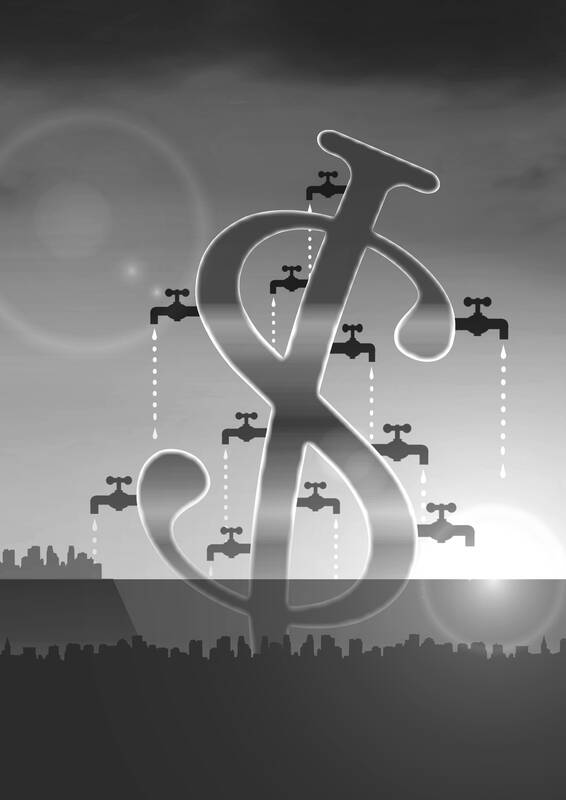
Illustration: Yusha
No question, life in developed countries has been tough recently. High inflation has eroded living standards. Rising interest rates have made it harder for households and governments to service their debts. Money is tight. Everybody gets that.
However, tough though life is in the West, it is a lot tougher in the developing and emerging world. As the World Bank made clear in its update on the global economy last week, poor countries are the biggest losers from the combined effects of the COVID-19 pandemic, Russia’s invasion of Ukraine and the anti-inflationary measures taken by the US Federal Reserve and other Western central banks.
With good reason, developing countries view the protectionist elements of US President Joe Biden’s Inflation Reduction Act, and Europe’s proposed response to it, with concern. They want to be part of the green industrial revolution, not excluded from it by self-serving policy decisions in Washington and Brussels.
While Western countries have been preoccupied with their own problems, the situation in the Global South has been growing progressively darker.
The UN goal of eradicating extreme poverty by 2030 would be comfortably missed, the number of extreme weather events is increasing and the number of countries either in debt distress or on the verge of it is rising.
To make matters worse, the global financial system is broken. Poor countries that borrowed in US dollars are being punished, because US interest rates are going up. Money from the World Bank was supposed to be the catalyst for a wave of private-sector capital to finance clean energy in Africa, but it is not arriving. A new system designed to speed up debt relief is unfit for purpose.
All of which makes French President Emmanuel Macron’s development finance summit in Paris this week a much bigger deal than the average run-of-the-mill talkfest.
Or it will be, if the leaders of the developed world bother to show up. German Chancellor Olaf Scholz plans to be there, but he is the only other G7 leader on the list of attendees.
Fair play to Macron. The French president realizes that poor countries need more financial resources if they are to grow sustainably and that there needs to be reform of the global financial system for this to happen.
It is not hard to sketch out what needs to be done. For a start, there is some low-hanging fruit to be picked. In 2009, developed countries promised they would provide US$100 billion a year by 2020 to help poor countries reduce greenhouse gas emissions and prepare for the effects of global heating. With one last push, the pledge could be met this year.
Likewise, during the height of the pandemic, the IMF issued a US$650 billion tranche of special drawing rights (SDRs) — essentially a form of free money for member countries. Rich countries did not need the boost to their reserves provided by SDRs, even though they were the main beneficiaries, and were urged by the IMF to recycle US$100 billion to help poor countries. Again, the target could be hit with one last push.
Next, the World Bank needs an injection of fresh capital so that it can lend more to developing countries. Under its previous president, David Malpass, the bank was overly cautious. The new man at the helm, World Bank president Ajay Banga, needs to be a lot more ambitious.
It is also vital that money from the World Bank and other multilateral lenders stimulates private investment in the green energy transition.
This is not happening, primarily because developing countries are seen as too risky, with the volatility of exchange rates potentially wiping out any returns on investment. To counter this risk, Avinash Persaud, adviser to Barbadian Prime Minister Mia Mottley, has proposed a new foreign exchange guarantee agency. This would pool risks, reduce the cost of hedging and make projects to tackle the climate crisis more attractive to the private sector.
There was a time when a development finance summit would have been held in London, not Paris. That is because former UK prime ministers Tony Blair and Gordon Brown took a real interest in development, and put pressure on other Western leaders to take global poverty seriously. Yet the current signs are that British Prime Minister Rishi Sunak will not even attend Macron’s summit, but will send British Minister of State for Development and Africa Andrew Mitchell instead.
Mitchell is one of the good guys. He cares about development and is well-regarded by non-governmental organizations.
However, Sunak should make time to support Macron for two reasons. The first is tactical. Sunak is planning a global summit on artificial intelligence safety in London in the autumn, but he is fooling himself if he thinks other leaders will turn up to his event if he cannot be bothered to attend theirs.
The second, and much more important, reason is that Macron is trying to do the right things. If he does not get the full backing of countries such as Britain, his summit would be another missed opportunity.
Larry Elliott is the Guardian’s economics editor.
Minister of Labor Hung Sun-han (洪申翰) on April 9 said that the first group of Indian workers could arrive as early as this year as part of a memorandum of understanding (MOU) between the Taipei Economic and Cultural Center in India and the India Taipei Association. Signed in February 2024, the MOU stipulates that Taipei would decide the number of migrant workers and which industries would employ them, while New Delhi would manage recruitment and training. Employment would be governed by the laws of both countries. Months after its signing, the two sides agreed that 1,000 migrant workers from India would
In recent weeks, Taiwan has witnessed a surge of public anxiety over the possible introduction of Indian migrant workers. What began as a policy signal from the Ministry of Labor quickly escalated into a broader controversy. Petitions gathered thousands of signatures within days, political figures issued strong warnings, and social media became saturated with concerns about public safety and social stability. At first glance, this appears to be a straightforward policy question: Should Taiwan introduce Indian migrant workers or not? However, this framing is misleading. The current debate is not fundamentally about India. It is about Taiwan’s labor system, its
On March 31, the South Korean Ministry of Foreign Affairs released declassified diplomatic records from 1995 that drew wide domestic media attention. One revelation stood out: North Korea had once raised the possibility of diplomatic relations with Taiwan. In a meeting with visiting Chinese officials in May 1995, as then-Chinese president Jiang Zemin (江澤民) prepared for a visit to South Korea, North Korean officials objected to Beijing’s growing ties with Seoul and raised Taiwan directly. According to the newly released records, North Korean officials asked why Pyongyang should refrain from developing relations with Taiwan while China and South Korea were expanding high-level
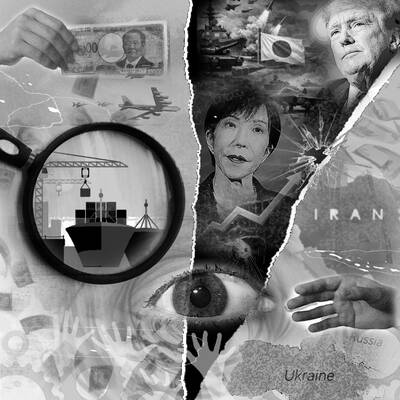
Japan’s imminent easing of arms export rules has sparked strong interest from Warsaw to Manila, Reuters reporting found, as US President Donald Trump wavers on security commitments to allies, and the wars in Iran and Ukraine strain US weapons supplies. Japanese Prime Minister Sanae Takaichi’s ruling party approved the changes this week as she tries to invigorate the pacifist country’s military industrial base. Her government would formally adopt the new rules as soon as this month, three Japanese government officials told Reuters. Despite largely isolating itself from global arms markets since World War II, Japan spends enough on its own


 RSS
RSS