


Global militarization has increased rapidly over the course of the 21st century, with a clear recalibration toward the Asia-Pacific region. From 2000 to 2021, annual military spending increased from US$1.12 trillion (in 2020 US dollar terms) to US$2.11 trillion.
In that time, the share of global defense spending in Asia and Oceania increased from 18 percent to 28 percent, data compiled by the Stockholm International Peace Research Institute showed.
Growing concerns over China, whose defense spending has increased steadily for nearly three decades, has fueled an arms race across the region, upending decades-long regional conventions and revealing several potential flashpoints.

Illustration: Mountain People
TAIWAN
The biggest concern about China’s military expansion is how it ties in to plans to annex Taiwan. The risk of a Chinese invasion of Taiwan is the highest it has been in decades, but predictions of when it might happen vary.
Recently a number of senior US military leaders have offered alarmingly imminent dates including this year, 2025 and 2027. US assessments are crucial, given it is possible the US military could help defend Taiwan against Chinese attacks, but some analysts caution that these military figures are likely exaggerating to lobby for more funding.
Public predictions have frustrated President Tsai Ing-wen (蔡英文), who is trying to ensure people are worried enough about the China threat that they support her policies, but not so much that they give up hope, analysts said.
However, the scale of China’s military expansion offers analysts some clues to its ambitions for Taiwan.
While still spending a smaller share of its GDP on defense than the US, China’s defense budget is to increase by 7.2 percent this year, taking it to the highest point it has ever been.
The US Department of Defense estimates that China’s real military spending could be up to twice as much as officially reported figures.
In response, the defense portion of the most recent US budget has prioritized ramping up the military presence in the Indo-Pacific region.
This month, the US also approved the potential sale of US$619 million of new weapons to Taiwan.
Just as important as the increased spending is how it affects the balance of military strength in the region. In 2000, China was the second-largest defense spender in the Indo-Pacific region. By 2021 it was spending more on defense than the next 13 countries in the region combined.
China has also taken great exception to a tripartite agreement between Australia, the US and the UK. The A$368 billion (US$246 billion) deal, known as AUKUS, would see the US and the UK help Australia acquire at least three nuclear-powered submarines over the next three decades. AUKUS is widely seen as being aimed at countering China’s military expansion, and has drawn mixed reactions. China accused the allies of deception, using loopholes in non-proliferation treaties, and “walking further and further down the path of error and danger.”
“China invests in its own defense capabilities; we are doing that in respect of ours,” Australian Minister for Defence Richard Marles said.
NORTH KOREA
Having launched about 90 ballistic missiles and other weapons last year — more than in any other year — North Korea appears intent on setting a new record. This year, it has held 11 rounds of missile tests, some involving more than one weapon, including two intercontinental ballistic missiles and strategic cruise missiles with a nuclear capability, state media said.
In a sign that the regime in Pyongyang has no intention of relinquishing its weapons of mass destruction, it recently unveiled new, smaller nuclear warheads and vowed to produce more weapons-grade nuclear material.
North Korean leader Kim Jong-un called for an “exponential increase” in the regime’s nuclear arsenal at the end of last year.
The North’s provocations are directed toward its nemeses: the US and South Korea.
At the end of last month, US and South Korean forces engaged in joint maritime exercises that included the nuclear-powered aircraft carrier USS Nimitz, days after they ended their largest joint military exercises in five years.
The allies insist the drills are purely defensive, but Pyongyang condemns them as a rehearsal for an invasion.
Rising tensions on the Korean Peninsula have triggered a hardline response from South Korean President Yoon Suk-yeol, who has warned that Seoul would not provide a “single penny” to the North as long as it continues to develop nuclear weapons.
More worrying for those eager to dial down tensions, a serious debate is unfolding over whether Seoul should acquire its own nuclear deterrent — a move a majority of South Koreans support, polls showed.
In Japan, concern over North Korea and an increasingly assertive China has boosted the case for steering the country further away from its post-war “pacifism.”
At the end of last year, Japanese Prime Minister Fumio Kishida’s government announced that Japan would double defense spending to 2 percent of GDP by 2027, abandoning its self-imposed cap of 1 percent of GDP.
The increasingly unstable security environment in the Asia-Pacific region has been the catalyst for a long-awaited thaw in relations between Japan and South Korea — US allies each with tens of thousands of US troops based on their territories.
Last month, Yoon and Kishida became the first South Korean and Japanese leaders to hold bilateral talks for 12 years. Their summit in Tokyo came amid attempts to resolve disputes connected to their bitter wartime legacy, and resulted in an agreement to resume reciprocal visits and a security dialogue after a five-year hiatus.
SOUTH CHINA SEA
The South China Sea is one of the most strategically and economically important waterways in the world. It is one of the world’s busiest trading routes, rich in marine life and is thought to contain significant reserves of oil and natural gas. It is also highly contested.
China claims almost all of the South China Sea, with its so-called “nine-dash” line marking the limit of the country’s claim — although an international tribunal in The Hague has rejected this.
Taiwan, the Philippines, Vietnam, Malaysia and Brunei also have overlapping claims. The US, while not a claimant, considers the water crucial to its national interests.
Philippine President Ferdinand Marcos Jr has taken a much tougher stance on the dispute, with Manila accusing Chinese vessels of “aggressive actions” in the South China Sea.
Marcos has vowed that the country “will not lose one inch” of its territory, and has overseen a massive shift in foreign policy, strengthening defense ties with the US and its allies.
Last month, the Philippines expanded US access to its military bases, enhancing Washington’s footprint in the region, and enabling it to more easily monitor Chinese activity in the South China Sea near Taiwan.
It has also strengthened military ties with Japan and Australia.
In contrast to neighboring Southeast Asia countries that have expressed concerns over AUKUS, which some nations fear could prompt an arms race that destabilizes the region, the Philippines has supported the development.
The approach taken by Marcos, who came to power last year, is a stark contrast to that of his predecessor, former Philippine president Rodrigo Duterte.
Duterte had sought closer economic ties with Beijing, and was reluctant to confront China over its activities in the South China Sea — even as China constructed military bases on human-made islands, and Chinese vessels harassed, or rammed, Philippine boats.
PACIFIC ISLANDS
Pacific leaders have repeatedly said that they do not want to be drawn into a geostrategic contest between the US and China, and have resisted picking sides. They have also repeatedly said that the climate crisis is their top security threat.
However, China is increasingly active in seeking influence among Pacific island countries, including in security and policing. These efforts have prompted something of a reckoning in Australia, New Zealand and the US, which have all moved to step up their diplomatic efforts.
Beijing’s progress in the region was most sharply illustrated by the signing of a security agreement with Solomon Islands last year.
A leaked draft suggested that the agreement would allow China to respond to requests from police and armed forces to carry out tasks such as maintaining social order and protecting “the safety of Chinese personnel and major projects in Solomon Islands.”
Australian officials had privately raised fears that the deal might pave the way for a Chinese naval presence about 1,700km from the country’s coast, although Solomon Islands Prime Minister Manasseh Sogavare has repeatedly assured Australia and other countries that there would never be a foreign military base in his country.
China also sought a sweeping regional security deal with 10 Pacific countries last year, but this was rebuffed by Pacific leaders over concerns that Beijing was trying to bypass established structures such as the Pacific Islands Forum.
Other countries have scrambled to respond to China’s diplomatic pursuits. Since coming to power last year, Australia’s Labor government has placed a priority on restoring trust with Pacific leaders.
Australian Minister for Foreign Affairs Penny Wong (黃英賢) and others have made a series of high-level visits stressing that security should be the responsibility of the immediate region, not China.
Australia aims to finish negotiating a bilateral security agreement with Papua New Guinea by the end of this month, having signed a deal with Vanuatu in December last year.
The US has acknowledged its need to step up in the region, as it reopened its embassy in Solomon Islands in February, but Western officials are under no illusions about the trends. Despite initial relief at the decision by Pacific island countries to defer China’s sweeping security proposals, the Australian government believes this could be only a temporary reprieve.
“Things aren’t going back to the way they were,” a senior Australian government figure said last year.
Minister of Labor Hung Sun-han (洪申翰) on April 9 said that the first group of Indian workers could arrive as early as this year as part of a memorandum of understanding (MOU) between the Taipei Economic and Cultural Center in India and the India Taipei Association. Signed in February 2024, the MOU stipulates that Taipei would decide the number of migrant workers and which industries would employ them, while New Delhi would manage recruitment and training. Employment would be governed by the laws of both countries. Months after its signing, the two sides agreed that 1,000 migrant workers from India would
In recent weeks, Taiwan has witnessed a surge of public anxiety over the possible introduction of Indian migrant workers. What began as a policy signal from the Ministry of Labor quickly escalated into a broader controversy. Petitions gathered thousands of signatures within days, political figures issued strong warnings, and social media became saturated with concerns about public safety and social stability. At first glance, this appears to be a straightforward policy question: Should Taiwan introduce Indian migrant workers or not? However, this framing is misleading. The current debate is not fundamentally about India. It is about Taiwan’s labor system, its
On March 31, the South Korean Ministry of Foreign Affairs released declassified diplomatic records from 1995 that drew wide domestic media attention. One revelation stood out: North Korea had once raised the possibility of diplomatic relations with Taiwan. In a meeting with visiting Chinese officials in May 1995, as then-Chinese president Jiang Zemin (江澤民) prepared for a visit to South Korea, North Korean officials objected to Beijing’s growing ties with Seoul and raised Taiwan directly. According to the newly released records, North Korean officials asked why Pyongyang should refrain from developing relations with Taiwan while China and South Korea were expanding high-level
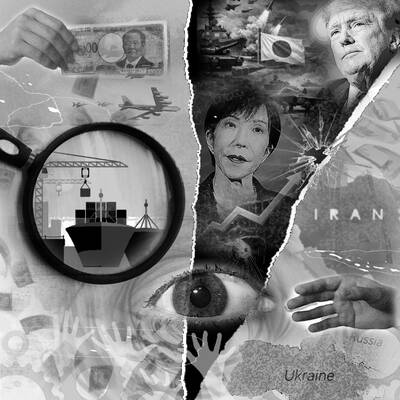
Japan’s imminent easing of arms export rules has sparked strong interest from Warsaw to Manila, Reuters reporting found, as US President Donald Trump wavers on security commitments to allies, and the wars in Iran and Ukraine strain US weapons supplies. Japanese Prime Minister Sanae Takaichi’s ruling party approved the changes this week as she tries to invigorate the pacifist country’s military industrial base. Her government would formally adopt the new rules as soon as this month, three Japanese government officials told Reuters. Despite largely isolating itself from global arms markets since World War II, Japan spends enough on its own


 RSS
RSS